
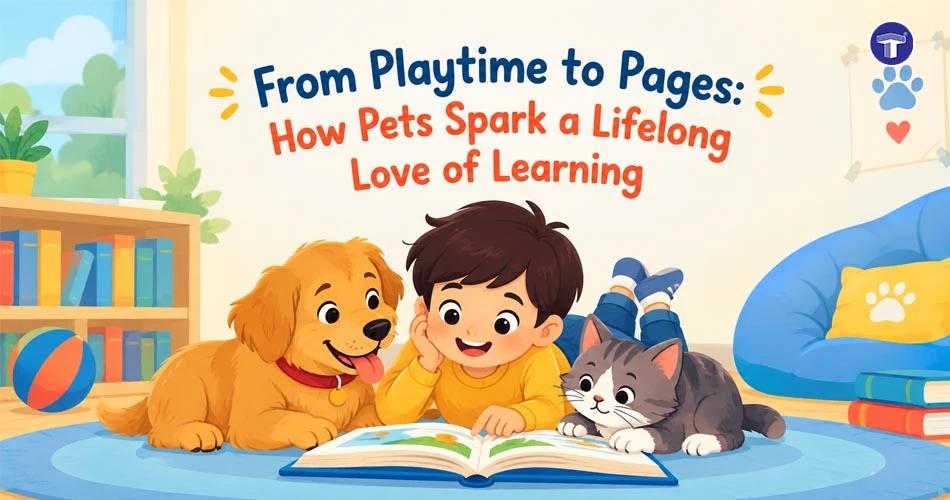
Children are naturally happy and extra cheerful around animals, and each child requests their parents for a pet at least once during toddlerhood. Now, picture your little one sitting beside the family dog with a picture book in their hands, reading every page with total confidence. The dog listens patiently and without any judgement.
That sweet moment holds more learning than it seems. Playtime with pets can spark a lifelong love of learning, long before formal education begins. Here is how it happens, and how you can gently nudge it along.
Pets and Child Development: Where Curiosity Begins
Every pet is a walking question mark for a toddler.
Why does the cat purr?
Why does the dog wag its tail?
How does a fish breathe?
Those little wonders lead to learning new words, funny sounds, new textures, natural colours, and answers to endless 'why' questions. Even quiet moments count, because the brain of a toddler watching a goldfish glide by is practising focus and noticing details.
Learning through Play: What Playtime with Pets Teaches
Once curiosity about pets kicks in, play takes over, and the door to endless learning opens wide.
-
Language and Vocabulary
Toddlers always engage in one-sided chat with their pets, without any interruption. That gives little ones free practice with sentences and tone, enabling language enhancement and speech development right from the early years.
-
Fine Motor Skills and Attention Span
Rolling a ball or brushing soft fur uses tiny hand muscles, effortlessly supplementing a toddler’s motor skills development. Watching a pet's next move also stretches attention span, bit by bit.
| Pet Activity | Skill Built | Learning Link |
| Feeding time | Responsibility | Counting scoops |
| Gentle stroking | Empathy | Fine motor control |
| Story time | Confidence | Early reading habit |
Daily Routines with Pets: Building Responsibility and Confidence
Play is wonderful, but daily routines matter even more for toddler development.
-
Feeding Time and Simple Tasks
Let your toddler pour the biscuits or fill the water bowl for your pet under your supervision. Counting scoops becomes early maths, and 'I did it!' does wonders for boosting confidence.
-
Gentle Touch and Early Empathy
Toddlers learn softness through their upbringing. While you’re close by, show them how to stroke a pet slowly and notice when a pet wants space. This serves as a window to nurture early empathy.
Reading to Pets: The Judgement-Free Audience
Now that pets feel like part of the daily rhythm, let us bring in toddler books that will complement the early learning process.
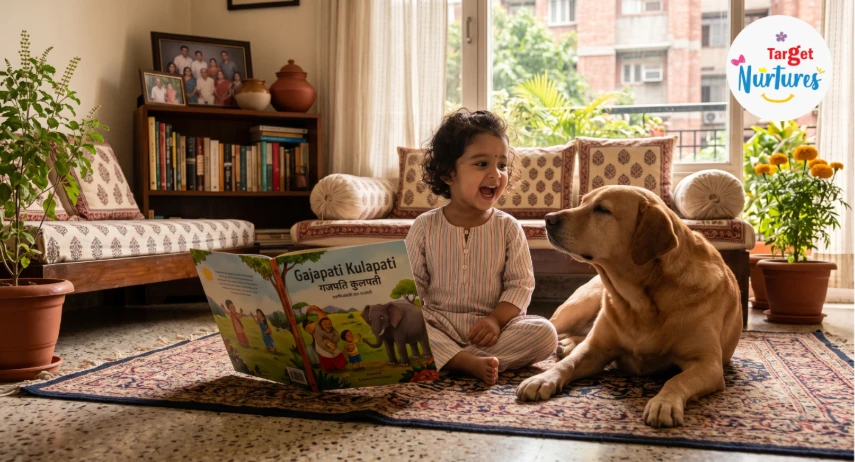
Reading to Pets Builds a Love of Learning
-
Building Reading Confidence at Home
While narrating stories, pets never correct a mistake or get bored. That makes them a relaxed audience, even when 'reading' means telling the story from a picture book.
-
Pet-Themed Picture Books and Story Time
Choose story books with cats, dogs, or rabbits, and then compare the characters with your own pet. Expect requests for the same story again. Repeats strengthen a child’s memory power.
-
Colouring, Drawing, and Storytelling about Their Pet
Hand over crayons and let them scribble their furry friend. Then ask, 'What is our pet doing here?' This brings out a tiny, innocent story. Activity books come in handy when the pet is taking a nap.
-
What Research Suggests
A Tufts University study found that second-graders who read aloud to therapy dogs developed better attitudes towards reading. Though more research on the same is needed, this can be treated as a starting point.
Conclusion
Pets do not teach the alphabet, but they teach toddlers to think, ask, try, and listen. Those habits sit at the heart of a lifelong love of learning.
So let the playtime take its shape and keep engaging books nearby. Apart from contributing to early learning, pets serve as the best childhood friend a toddler can have.
Important Links
| Pre-primary Books | Activity Books |
| Story Books | Learning Kits |
Frequently Asked Questions
1. At what age can a toddler start reading to a pet?
Ans: Toddlers can read to their pet once they start enjoying picture books, often around age two. Keep sessions short and stay close by.
2. Can pets build a lifelong love of learning in toddlers?
Ans: Pets spark curiosity, language and routine, which support learning habits. Supervised play matters most as no pet can replace a parent's warmth.
3. Which pet is best for toddlers?
Ans: Calm, gentle and well-socialised dogs and cats often suit toddlers. Consider your child's temperament, your house space, and always supervise interactions.
4. How do I teach my toddler to be gentle with pets?
Ans: Model soft strokes, gently correct your toddler, and praise kind touches. Teach them to leave a sleeping or eating pet alone.
5. Does reading to a pet really improve a child's confidence?
Ans: Some studies suggest children feel calmer and more motivated while reading to a non-judgmental animal, though more research is needed.