
Every parent wants their toddler to learn and grow, but watching them stack blocks instead of practising letters can feel worrying at times. We have all been there. The good news is that play and early childhood learning are not opposites at all.
In this blog, we share five simple ways to balance playtime and early learning at home, so your toddler can have fun without compromising the most important time for early learning.
5 Ways to Balance Playtime and Early Childhood Education
Here are five gentle ways to weave playtime and early learning together every day.
- Start with unstructured play-based learning
- Turn everyday chores into learning moments
- Use storytime as a bridge between fun and focus
- Balance screen time with hands on play
- Follow a loose daily rhythm, not a rigid schedule
1. Start with Unstructured Play-Based Learning
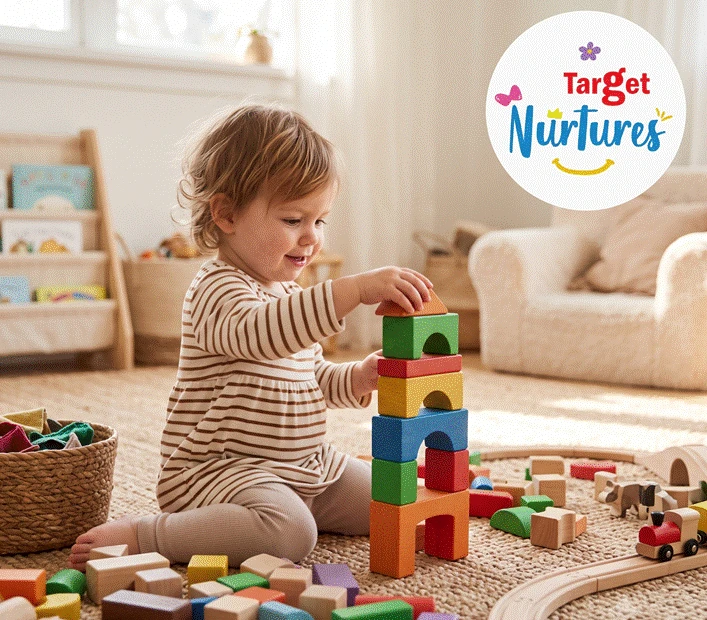
A toddler engaged in unstructured play, building curiosity
Let your toddler lead the first part of the day with open-ended play-based learning using blocks, clay or a pretend kitchen set. This kind of unstructured play at home builds kids’ decision-making abilities and confidence. Resist the urge to direct; just sit back and let them explore their imagination.
2. Turn Everyday Chores into Learning Moments

A toddler folding the clothes and sorting them by colour
Folding clothes can become a colour sorting game.
Setting the dinner table can quietly teach counting.
This kind of learning through everyday activities feels effortless for toddlers because it is wrapped inside routine. Hand them a small task, guide them on how to do it, and watch new words and numbers slip in naturally.
3. Use Storytime as a Bridge Between Fun and Focus

A parent and child reading a bedtime story together
A bedtime story does double duty; it entertains while teaching at the same time. Storytelling for toddlers builds vocabulary, attention span and empathy all at once, gently pulling their mind from play towards focused listening.
Colourful, illustrated and age-appropriate picture books make the bridge between fun and focus more enjoyable.
4. Balance Screen Time with Hands-On Play
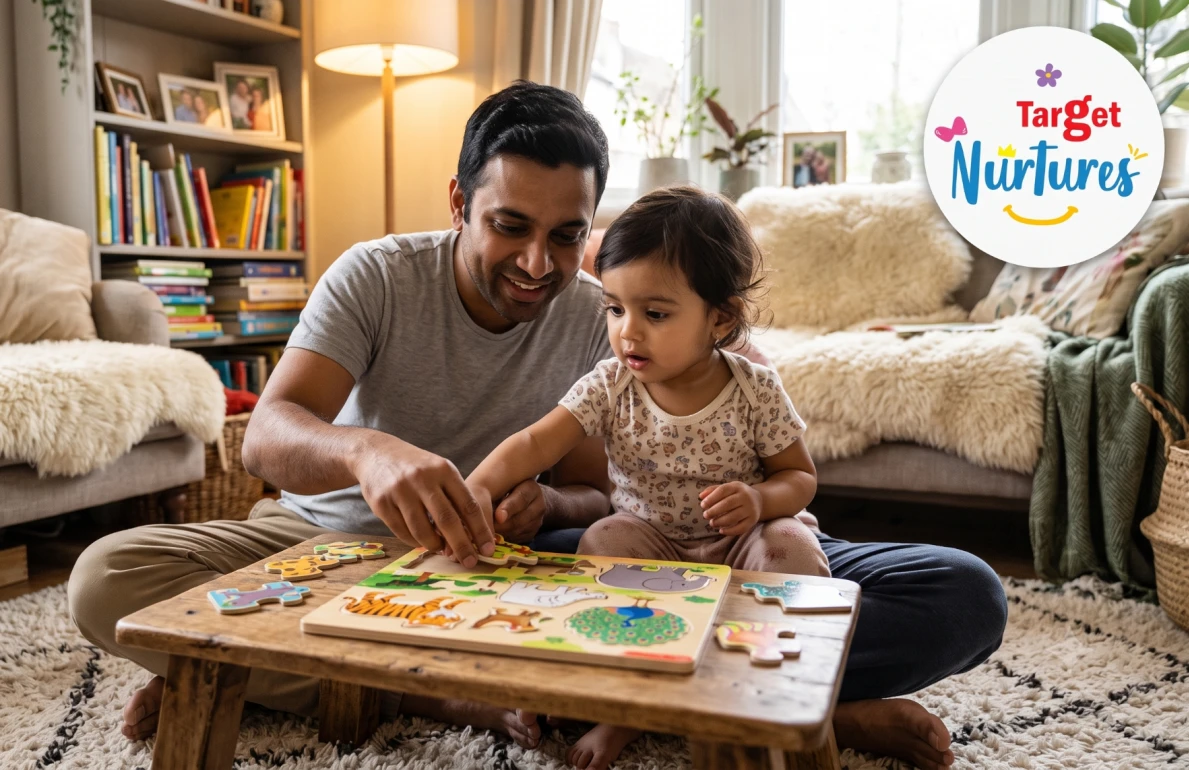
A parent and toddler solving a puzzle, right after screen time
Screens are not the enemy, but they should never replace your little one’s creativity. Balance screen time by offering a hands-on activity kit for every short cartoon episode, keeping your child’s curious mind engaged with the real, textured world.
5. Follow a Loose Daily Rhythm, not a Rigid Schedule
Toddlers thrive on gentle predictability, not strict precision. A loose daily routine for toddlers, where they wake, play, eat, learn, rest and repeat, gives comfort without the pressure of a fixed timetable. Let mornings stay flexible for free play and save short learning moments for whenever your child feels most alert.
Conclusion
Balancing playtime and early learning at home really comes down to noticing the learning already hidden inside play itself. Your toddler does not need elaborate schedules; just curiosity, patience and everyday creativity.
Try one idea per week and see what fits your toddler's own rhythm best. Small, joyful moments add beautifully to a lifetime of curious and confident learning.
Important Links
Frequently Asked Questions
1. How can I balance playtime and early learning at home?
Blend daily routines and play into gentle learning chances, rather than scheduling separate lessons, keeping the experience natural and joyful for your toddler.
2. What is the right amount of playtime for toddlers?
Toddlers benefit from several hours of active play daily, mixing free play, outdoor time and guided activities to support healthy physical and cognitive growth.
3. Does screen time affect early learning in toddlers?
Excessive screen time can reduce hands-on exploration, essential for early learning, so balance it with plenty of sensory and imaginative play instead.
4. How does play support a toddler's brain development?
Play strengthens focus, memory and self-control, while building language, social and problem-solving skills that boost a toddler’s brain development.
5. Should toddlers follow a strict daily schedule?
No, toddlers respond better to a loose, predictable rhythm than a rigid schedule, since flexibility reduces stress while still offering familiar daily comfort.