
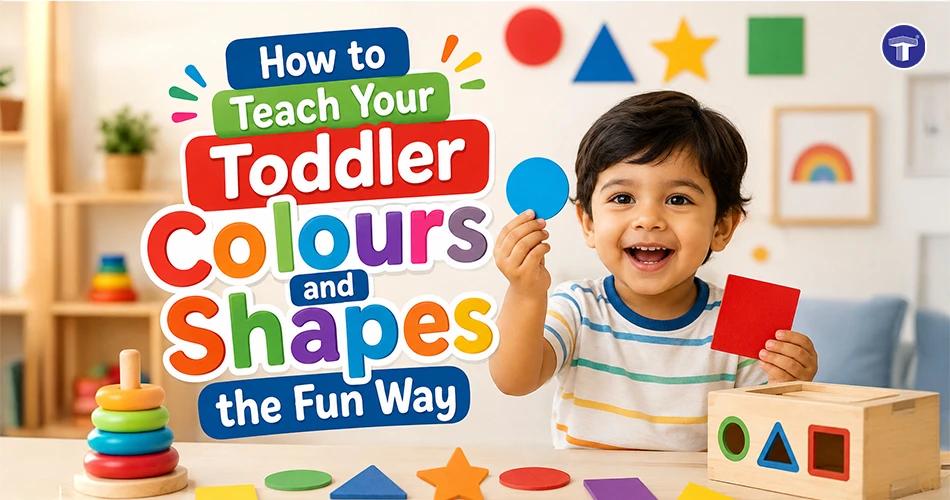
Every parent watches their toddler point at a red ball or a round plate and wonders when exactly this difference in colours and shapes is supposed to click. The truth is, it happens gradually, through play, not through pressure.
Apart from just flashcard drills, a few playful habits woven into your daily routine can make colours and shapes feel like a game your toddler actually looks forward to, rather than a boring lesson they have to sit through.
Why Colours and Shapes Matter for Your Toddler's Growth
Recognising colours and shapes is not just about naming objects correctly. It helps toddlers tell things apart, along with matching and grouping, building early logical thinking that later supports reading and maths. A study published in NCBI's PMC even found that toddlers who were better at recognising shapes went on to show stronger language development and cognitive skills years later. It is a reminder that small, everyday moments of noticing truly add up.
Fun and Easy Ways to Teach Your Toddler Colours and Shapes
Simple Games to Teach Your Toddler Colours
- Colour hunt: Walk around the house and spot everything that is ‘blue’ or ‘yellow’ together.
- Colouring regularly: A little colouring book also lets your toddler connect colours to their own hands, turning identification into real creative expression.
- Sock matching: Pair up socks by colour during laundry time, it doubles as a chore and a lesson.
- Snack sorting: Separate fruit slices or veggie sticks by colour before eating them.
- Rainbow scavenger hunt: Give your toddler a colour and let them race to bring back something that matches it.

Toddler Sorting Colourful Socks During Playtime
Fun Shape-Recognition Activities for Toddlers
- Shape hunts: Point out circles, squares and triangles on doors, clocks and windows.
- Building blocks: Let your toddler stack and sort blocks by shape, not just size.
- Shape puzzles: Simple wooden puzzles build both shape memory and finger strength.
- Shape snacks: Cut fruit or toast into circles and triangles so learning meets fun time most creatively.
To teach colours and shapes to your toddler, you do not need a set ‘learning time’. Mealtimes, bath time, and even folding laundry are natural chances to mention colours and shapes.
Books and Stories That Make Learning Fun
Stories are one of the gentlest ways to teach without feeling like a lesson. Brightly illustrated picture books and colourful charts keep your toddler curious and asking for ‘one more page’. Over time, these small story sessions build vocabulary alongside recognition.
A Quick Look: Teaching Colours and Shapes Through Everyday Moments
| Everyday Moment | Colour or Shape Idea |
| Bath time | Name the colours of bath toys as your toddler plays |
| Mealtime | Sort fruit or veggie pieces by colour before eating |
| Laundry time | Match socks by colour, sort clothes by shape of fold |
| Story time | Point to colours and shapes on every illustrated page |
| Walks outside | Spot shapes in windows, signs and doors along the way |
Everyday Moments to Teach Colours and Shapes to Toddlers
Conclusion
There is no right pace for learning colours and shapes, and comparing your toddler to others rarely helps anyone. What matters most is consistency, patience and plenty of playful repetition.
Celebrate the small wins; these moments add up faster than you think, and soon enough, colours and shapes will simply be part of how your toddler sees, sorts and describes their entire world.
Important Links
Frequently Asked Questions
1. At what age should a toddler know colours and shapes?
Ans: Most toddlers recognise basic colours and shapes between eighteen months and three years, though every child develops at a different pace.
2. How many colours should a two-year-old know?
Ans: Many two-year-olds can confidently identify one or two colours, with more added gradually through consistent and playful exposure at home.
3. What is the easiest way to teach shapes to toddlers?
Ans: Everyday objects work best. Point out shapes in food, furniture and toys during regular activities, since hands-on recognition sticks forever.
4. Why is my toddler not recognising colours yet?
Ans: This is usually normal and tied to individual pace. Keep activities playful and pressure free, and mention it to a paediatrician if concerns persist.
5. How long should colour and shape learning sessions be?
Ans: Short, playful and unstructured sessions of five to ten minutes work best, since toddler attention spans are naturally brief.