
Being a parent is a bit like being a first-time gardener. You feed, you water, you wait, and some days nothing seems to change. But the little life lessons every parent plants now quietly shape the kind, capable adults the children will one day become.
Nurturing these little plants doesn’t require much hassle. A cosy bedtime story, a shared chore, or a simple ‘thank you’ moment can do more than you think. Here are 10 important life lessons every parent should teach their child, woven gently into everyday life.
10 Important Life Lessons for Children Every Parent Should Teach
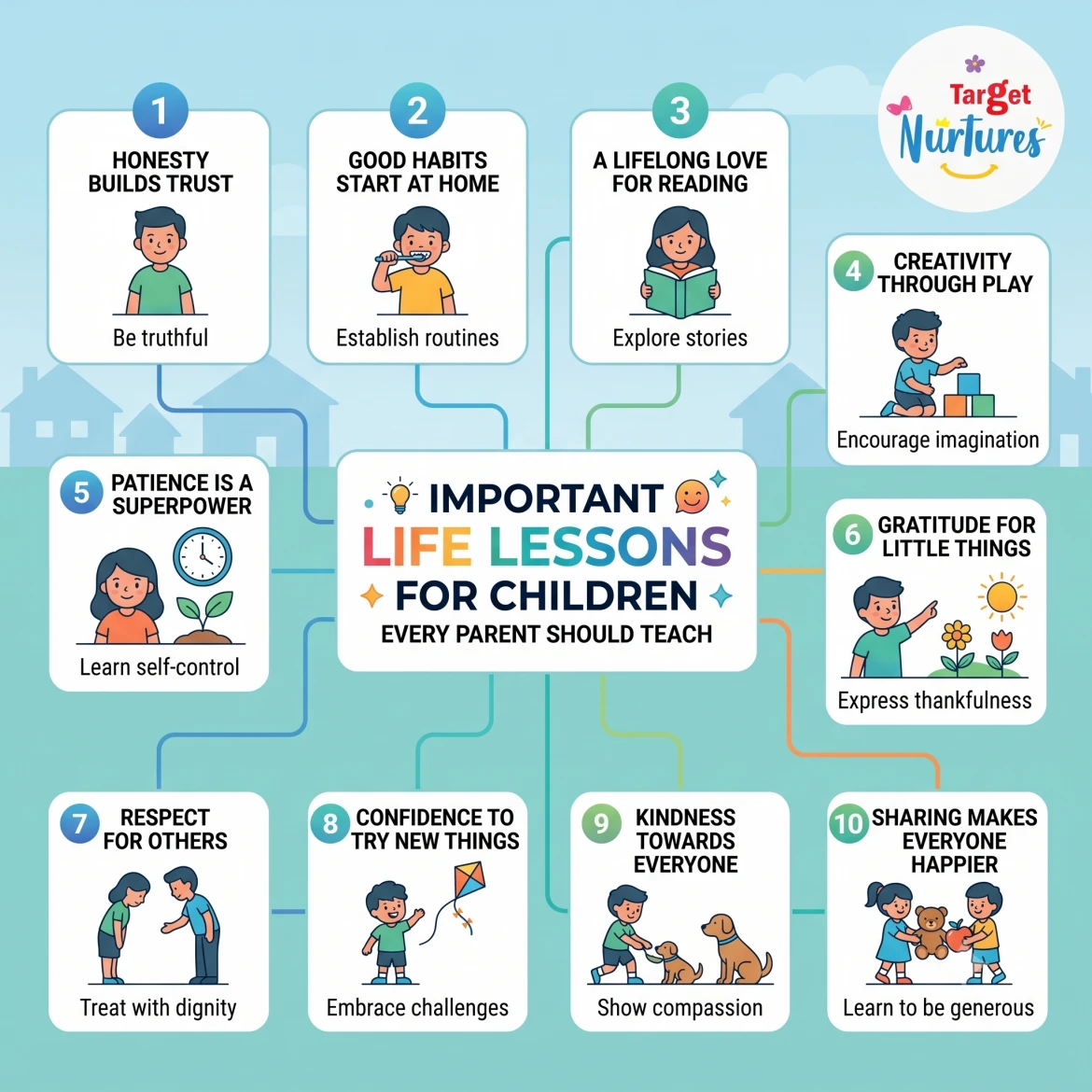
Life Lessons for Children Every Parent Should Teach
1. Honesty Builds Trust
Teaching honesty to kids starts small, like admitting who broke the toy. Praise your child when they tell the truth, so honesty always feels like a better option than hiding things.
2. Good Habits Start at Home
Simple daily routines like brushing teeth, tidying toys, and sleeping on time bring structure into daily life, building the self-discipline your child will lean on for years. Good habits, once developed, will remain with the child for long.
3. A Lifelong Love for Reading
Curling up with a colourful storybook does more than entertain. A recent Cambridge University study found that children who read from early on showed stronger cognitive skills and wellbeing later on. Illustrated picture books keep little ones curious, turning pages happily.
4. Creativity Through Play
Not every lesson needs a textbook. Handing your toddler crayons and a jumbo colouring book invites them to imagine freely. This kind of open-ended play quietly nurtures problem-solving and self-expression alongside pure fun.
5. Patience is a Superpower
Waiting for their turn on a swing or for food to be ready teaches patience naturally. Gently convey the waiting time so it feels manageable, not endless.
6. Gratitude for Little Things
Encourage your child to notice small joys, a sunny day, a favourite snack. Raising grateful kids means pausing often to say what you are both thankful for.
7. Respect for Others
Respect for elders and friends grows through example. When children see you greet elders and neighbours warmly, they naturally mirror that same respect.
8. Confidence to Try New Things
Let your child attempt small tasks alone, as small as picking their outfit. Every independent task builds the confidence they will carry into bigger challenges.
9. Kindness Towards Everyone
Show your child how a kind word or shared smile can brighten someone’s day. Kindness taught early becomes a lifelong habit.
10. Sharing Makes Everyone Happier
Sharing toys or snacks teaches toddlers that joy multiplies when it is shared, making them ready to make friends and have social interactions.
Conclusion
Raising a child who is honest, kind, and curious does not happen overnight. Every bedtime story, shared chore, and patient wait is quietly doing its job.
With warmth, consistency, and a little help from the right books and activities, parents can teach these life lessons to their children naturally, one small moment at a time.
Frequently Asked Questions
1. What is the best age to start teaching life lessons to kids?
Ages two to three is ideal for teaching life lessons to kids since they begin imitating parents during this stage.
2. How can I teach honesty without scolding my child?
Praise truthful moments warmly, stay calm during mistakes, and avoid harsh punishment, since fear often pushes children towards hiding things instead.
3. Does reading really help a toddler’s development?
Yes, early reading for pleasure is strongly linked to better language development, cognitive skills, and emotional well-being as children grow older.
4. How do I make chores feel fun instead of forced?
Turn tasks into short games, use timers or songs, and praise effort generously so toddlers associate helping with happy feelings, not pressure.
5. What if my child struggles with patience?
Practise with short waits first, narrate time simply, and stay consistent. Patience develops gradually with gentle repetition, not sudden expectations.