
If you are a parent, you know that moment when your toddler babbles something, you lean in trying to decode it, and you both end up giggling. Speech development in toddlers is one of the most exciting journeys you will share with them.
The everyday moments, like mealtimes, bath time, and bedtime, are full of chances for speech development in children. Small, consistent habits make a big difference in how toddlers learn to talk.
Ask Questions and Give Them Time to Answer
One of the best tips for toddler speech development is asking questions and then, waiting. Many parents feel the urge to jump in and it’s totally understandable! But giving your little one space teaches them that their voice matters.
- Start Small: Offer choices like, 'Do you want the red cup or the blue cup?' Great for practising words with low pressure.
- Try Open-Ended Questions: 'What do you see outside?' encourages far more than a yes or no.
- Embrace the Silence: If your child is taking time to think, that pause is their brain working hard.
How Reading Aloud Every Day Boosts Children’s Language Skills
Reading aloud is one of the most research-backed ways to support early language development. Simple rhymes and engaging storybooks with repetition work brilliantly.
- Point and Name: As you read picture books together, point to pictures and ask your child to name them. Combine it with open-ended questions like 'What sound does a cat make?'
- Let Them Read to You: Asking your toddler to narrate builds confidence and early language skills.
The Power of Songs, Rhymes, and Silly Sounds
Never underestimate a nursery rhyme! Repetitive sounds and rhythms teach toddlers the patterns of language. Phonological awareness is one of the strongest predictors of later speech fluency.
- Sing Together Daily: Songs like 'Wheels on the Bus' when sung repeatedly, build memory and pronunciation through repetition.
- Make Up Rhymes: Rhyming your child's name or favourite foods makes language feel personal and easy to memorise.
- Celebrate Silly Sounds: Phonics greatly contributes to early learning by building strong reading foundations and improving writing skills in kids.
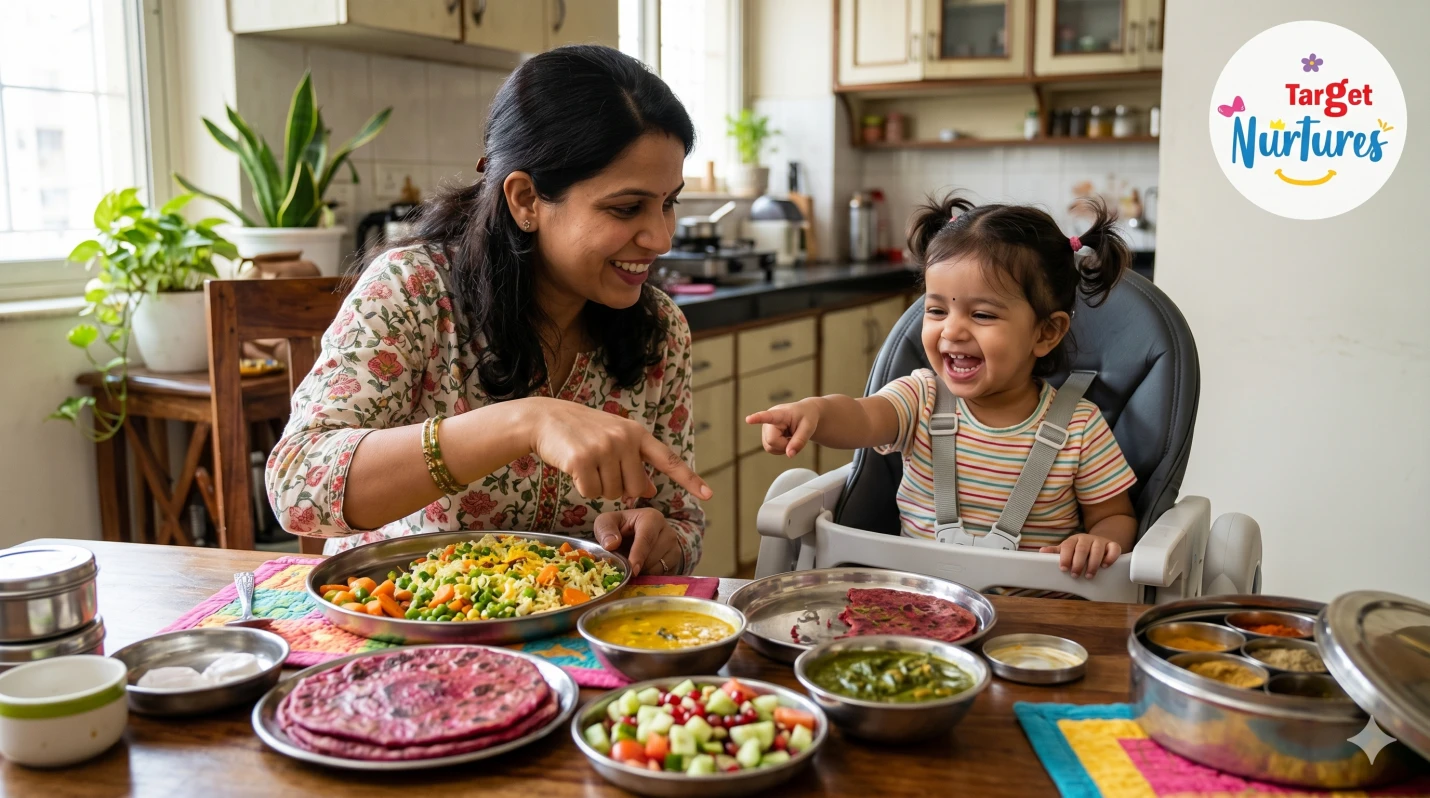
Family mealtime chat, boosting toddler language skills
Everyday Moments That Secretly Teach Children to Talk
Your home is already full of language-learning opportunities.
- Bath Time Chat: Name body parts, describe the water, and ask what they feel.
- Grocery Trips: 'Can you find the yellow bananas?' turns a trip into a vocabulary lesson.
- Mealtime Conversations: Talk about the food or the day. Toddlers absorb everything, even with limited replies.
Important Links
Conclusion
Supporting toddler speech development does not need to be complicated. The conversations, songs, and stories you share every day are building the foundation for confident communication.
Be patient, be present, and above all, have fun! Every little word your child attempts is a step forward, and consistency over time will surely help your child in speech development.
Frequently Asked Questions
1. At what age should toddlers start talking clearly?
Ans: Most toddlers say around 50 words by age two and begin forming short phrases, though every child's timeline differs slightly.
2. How many words should a 2-year-old know?
Ans: By age two most toddlers know around 50 words and begin combining two words together, like 'more juice' or 'big dog'.
3. What causes speech delay in toddlers?
Ans: Speech delays in children can stem from hearing issues, limited interaction, or developmental differences. A paediatrician or speech therapist can offer the best guidance.
4. Should I correct my toddler when they mispronounce words?
Ans: Avoid direct corrections. Instead, gently repeat the word correctly in your response. This naturally models pronunciation without discouraging your child.
5. Does too much screen time affect toddler speech development?
Ans: Yes, excessive screen time reduces the back-and-forth interaction toddlers need. Active shared viewing with a parent is far better for a child’s development.