
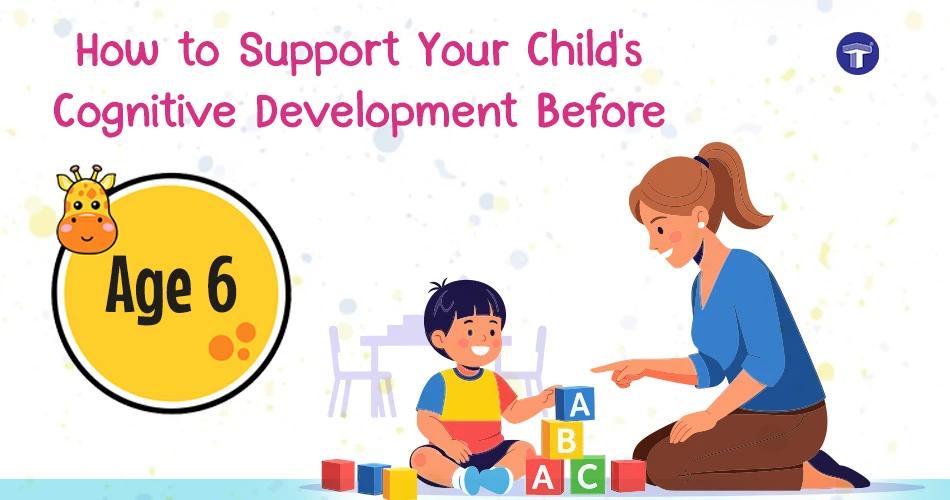
If you have ever watched your toddler figure out how a toy works or surprise you with a question you did not expect, that is their brain doing something truly remarkable. The years before age 6 are when cognitive development moves at its fastest pace, and every small moment counts.
Simple, everyday choices can have a lasting impact on how your child thinks, learns, and grows. This guide walks you through what to know and what to do.
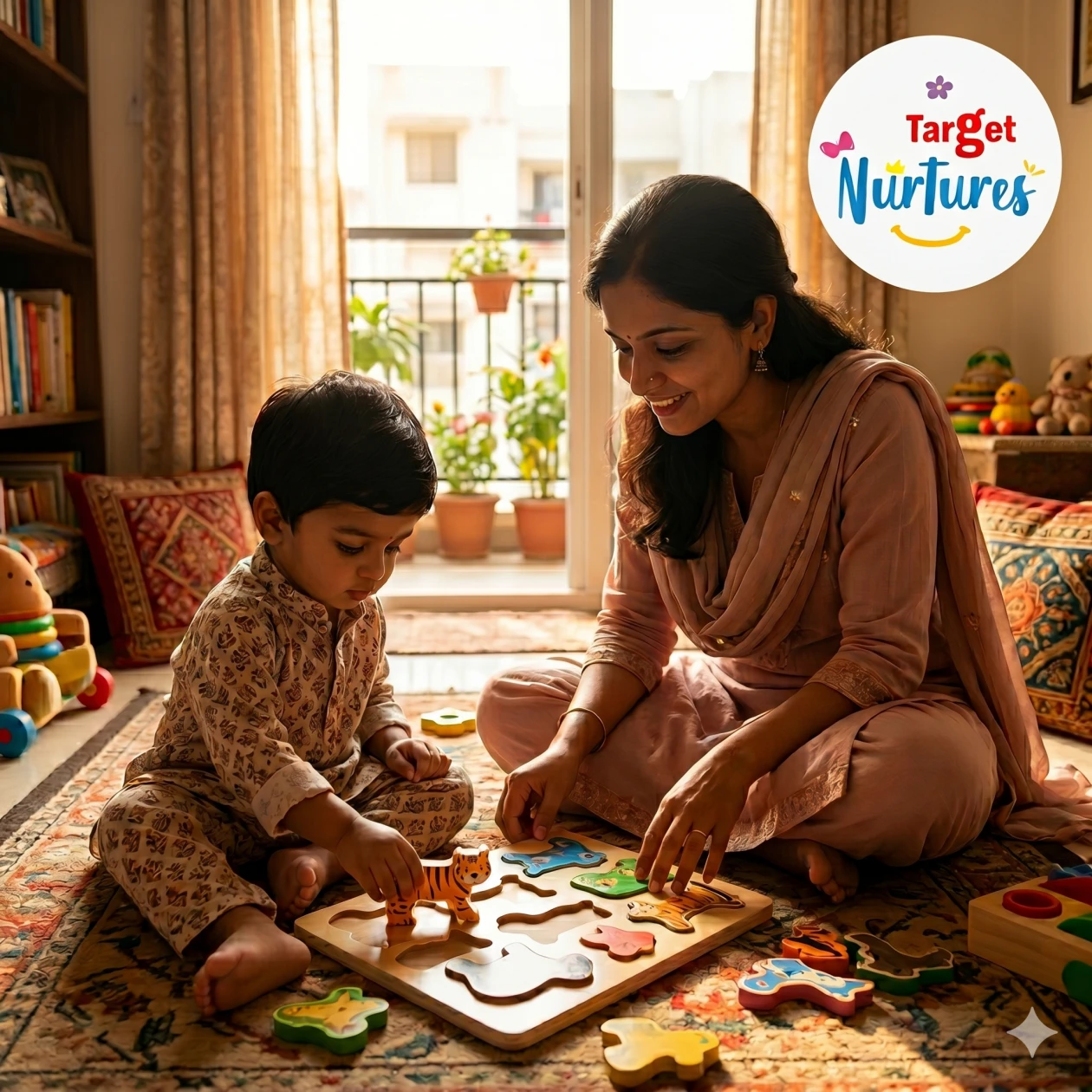
A parent supporting child’s cognitive development through play
What Cognitive Development in Early Childhood Really Means
-
More than just being smart
Cognitive development covers thinking, memory, attention, problem-solving, and language. It is about how your child processes the world around them, not just what they know.
-
It happens in stages
From object permanence (understanding that an object’s existence is independent of our perception of it) in infancy to imaginative thinking by age 5, each stage of cognitive development builds on the last.
-
Language and play are at the core
When your child speaks, asks questions, or pretends to cook in a toy kitchen, they are building real cognitive skills. These are not just cute moments; they are crucial for brain-building.
Key Cognitive Milestones to Watch for Before Age 6 in Kids
Ages 1 to 2: Object permanence and early problem-solving
Your child begins understanding that things exist even when hidden. Simple puzzles for kids and peek-a-boo are not just games; they are cognitive workouts.
Ages 2 to 3: Language explosion and why questions
Vocabulary grows fast. The endless questions can feel tiring, but they signal healthy curiosity and developing reasoning.
Ages 3 to 4: Imaginative thinking and early logic
Pretend play in childhood becomes rich and detailed. Children start understanding cause and effect.
Ages 4 to 6: Planning, memory, and attention
Executive function skills, including working memory and flexible thinking, shape lifelong learning.
| Ages 1-2 | Ages 2-3 | Ages 3-4 | Ages 4-6 |
| Object permanence; early problem-solving | Language explosion; curiosity questions | Imaginative thinking; cause and effect | Planning; memory; executive function |
A Child's Cognitive Journey: Ages 1 to 6
Simple Activities to Boost Cognitive Skills in Young Children
-
Read together every day
Shared reading builds vocabulary, comprehension, and imagination. Storybooks and activity books that blend reading with hands-on tasks make this even more effective and fun.
-
Ask open-ended questions
Instead of ‘did you like that’, try ‘what was your favourite part and why’. This nudges deeper thinking without pressure.
-
Introduce simple puzzles and sorting games
These strengthen problem-solving and pattern recognition. Even sorting socks by colour counts.
-
Limit passive screen time
Replace screen time with activities that need interaction, such as building, drawing, role play, or nature walks.
Conclusion
Supporting your child's cognitive development before age 6 does not require expensive tools or structured lessons. It requires presence, patience, and creativity. The everyday moments, the stories, the questions, the play, are doing more than you think.
Every child develops at their own pace. Trust the process, enjoy the journey, and know that being an engaged, curious parent is already one of the best things you can do for your child's growing mind.
Frequently Asked Questions
1. At what age does cognitive development start in children?
Cognitive development begins at birth. The brain grows rapidly in the first three years, making early experiences especially important for long-term learning.
2. How does play support cognitive development in toddlers?
Play builds problem-solving, memory, and creativity. It is how toddlers explore cause and effect and develop early thinking skills naturally.
3. What are signs of healthy cognitive development in a 3-year-old?
Asking lots of questions, engaging in pretend play, recognising familiar people, and beginning to understand simple rules are all healthy signs.
4. Should I be worried if my child is not hitting cognitive milestones on time?
All children develop differently. If you have consistent concerns, speak with your paediatrician. Early support, when needed, makes a significant difference.