
If you have ever caught yourself wondering whether your toddler should be saying more words by now, you are not alone. Language development in toddlers is one of the most common things parents watch closely and worry about. The truth is, every child grows at their own pace, and that is perfectly okay.
This guide walks you through what is typical at each stage, what activities support your toddler's speech, and when it might be worth a gentle chat with your paediatrician.
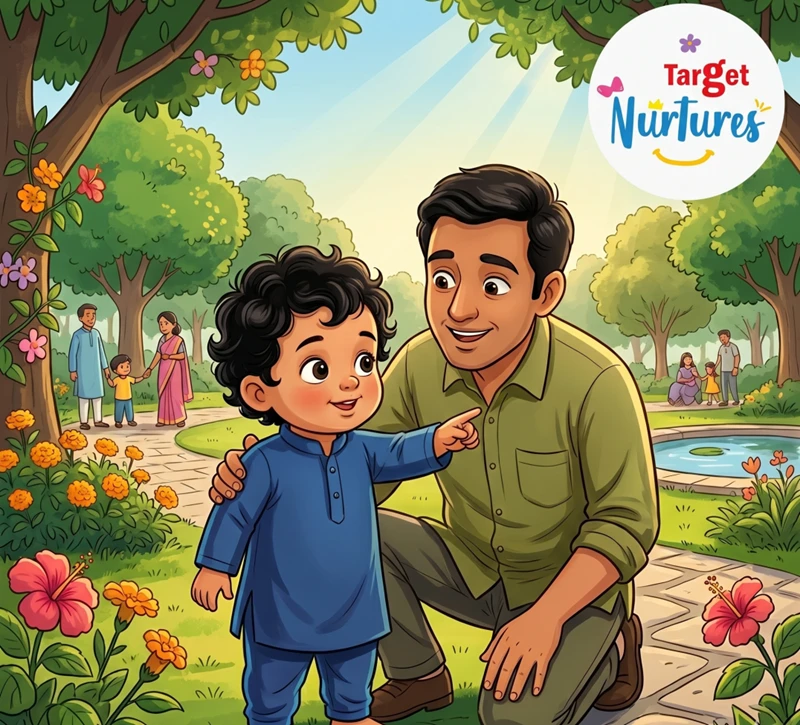
A Toddler Pointing at an Object While Parent Engages Warmly
The Magic Behind Your Toddler's First Words
Long before a toddler says their first word, a whole lot is happening inside their busy little brain. Babies begin absorbing language from the moment they are born by listening to your voice, watching your expressions, and picking up your rhythm and tone. This early 'input' phase is what makes those first words possible.
Around 12 months, most toddlers say one or two words intentionally. By 18 months, that number grows to around 10 to 20 words. What is fascinating is that toddlers often understand far more than they can express.
Toddler Language Development Milestones: Age by Age
Understanding language development milestones in toddlers at each stage can help you feel more confident as a parent.
12 to 18 Months
- First words begin to emerge: mumma, dada, names of familiar objects.
- Toddler begin pointing to things they want.
- They respond to simple instructions like 'come here'.
18 to 24 Months: The Word Explosion Stage
- Vocabulary jumps rapidly, sometimes several new words a week.
- Toddlers usually start combining two words ('more milk', 'daddy go').
- Strangers understand about 50% of what they say.
Ages 2 to 3 Years
- Sentences grow to three to four words.
- Toddlers begin asking simple questions like, 'What is that?'
- Speech becomes clearer; familiar adults understand most of it.
Everyday Activities that Boost Language Development in Toddlers
-
Talk through your day:
Narrate what you are doing while cooking or tidying up. For example, 'Now we are washing the apples' teaches words through real context.
-
Read together daily:
Picture books can make a lovely addition to your reading routine. Pointing at images and naming them can develop a toddler’s language naturally and joyfully.
-
Sing nursery rhymes:
The repetition and rhythm in songs help toddlers predict and practise new sounds.
-
Ask open questions:
Instead of 'Did you like the park?', try 'What did you see at the park?' It encourages more than a yes or no.
Conclusion
Language development in toddlers is rarely a straight line, and that is completely normal. Some children talk early, others take a little longer, and most catch up beautifully with time and support. What matters most is that your toddler feels heard, loved, and surrounded by conversation.
Keep talking, keep reading, and keep celebrating every new word. If you ever feel unsure, your paediatrician is always a good first step.
Frequently Asked Questions
1. When should I be concerned about my toddler's speech delay?
Ans: If your toddler has fewer than 50 words by age 2 or is not combining words, it is worth discussing with your paediatrician.
2. How many words should a 2-year-old know?
Ans: Most 2-year-olds know around 50 words and are starting to put two words together, like 'more juice.'
3. Does watching TV help toddlers learn to talk?
Ans: Screen time has limited benefit for language development in toddlers under 2. Live interaction with people is far more effective.
4. Can bilingual toddlers have speech delays?
Ans: Bilingual toddlers may mix languages, which is normal. Their total word count across both languages should still meet typical milestones.
5. How can I encourage my quiet toddler to talk more?
Ans: Talk to them often, read together, and respond warmly to all their communication attempts, be it words, gestures, or babble.