If your toddler has started speaking comfortably, gone are the times when you were the narrator. Toddlers are highly inquisitive and chatty, turning every event of their day into a storyline, only to put the ending before the beginning.
With some playful story sequence activities, you can help your little one discover how they can communicate and narrate their innocent stories better.
What is Story Sequencing for Toddlers?
First, Next, Last: Understanding Story Sequence
Every story has an order. Perhaps a rabbit wants a carrot, finds it, washes it, and finally eats it. It’s very essential for your child to notice what happened first, next, and last, or their mind might jumble the whole sequence of events.
How Story Sequencing Builds Early Reading Skills
When children connect events, they begin to understand why things happen in stories. A 1985 study by L. Morrow found that children who would retell the stories they heard had better story comprehension and oral language by the time they were in kindergarten.
Fun Story Sequence Activities for Toddlers at Home
Sequencing skills cannot be built overnight, so try these story sequencing activities for kids using familiar characters and everyday objects.
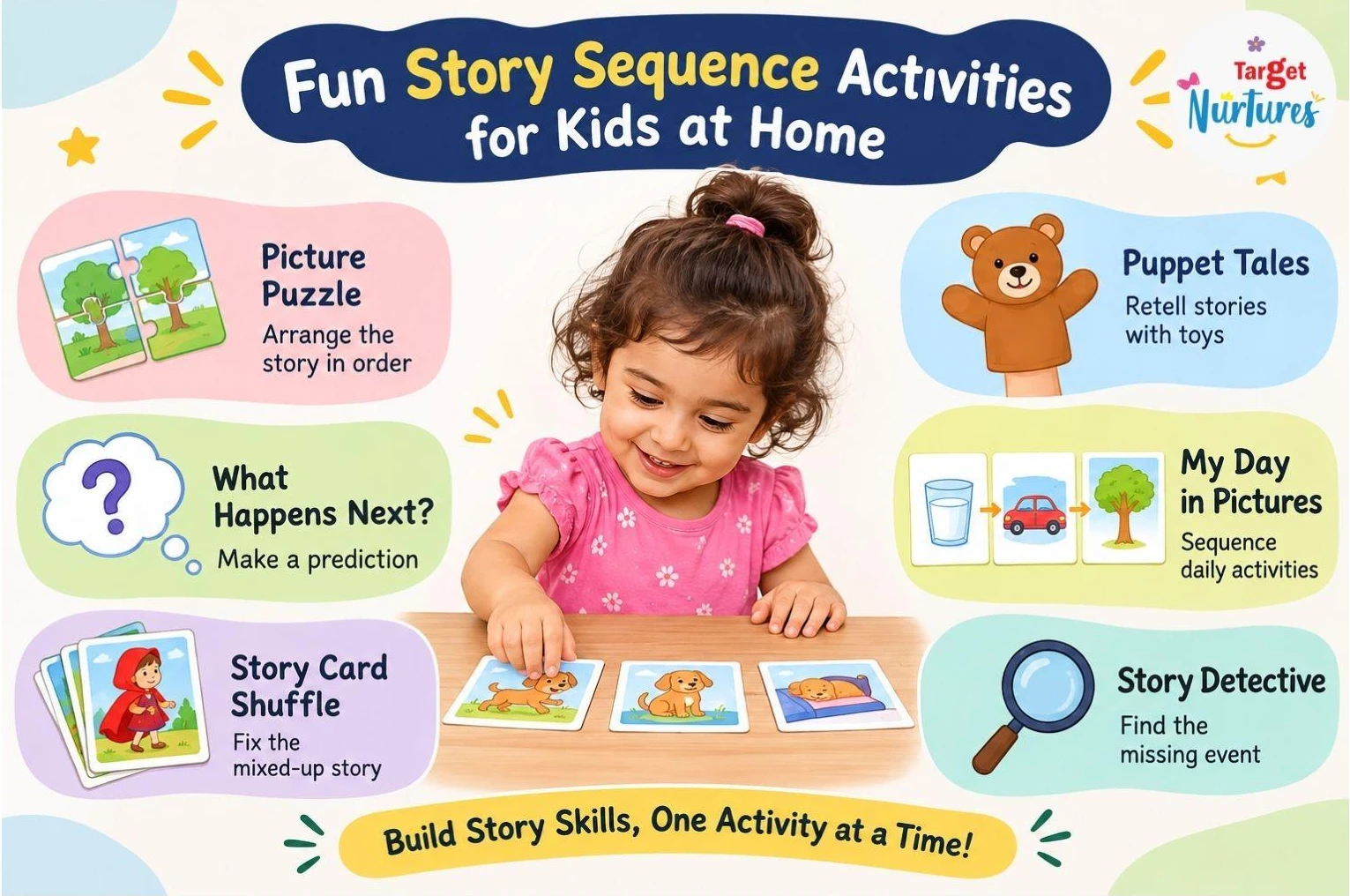
1. Picture Puzzle: Arrange the Story in Order
Draw three pictures: a seed going into soil, a sprout appearing, and a flower blooming. Mix them up and invite your toddler to arrange them. A colourful picture activity book can provide more scenes to talk about.
Fun Story Sequence Activities for Kids at Home
2. What Happens Next? Predict and Complete the Story
Read a familiar tale, then pause before an exciting moment. Ask, ‘What happens next?’ Let your child guess before turning the page. This will enhance your child’s memory too.
3. Story Card Shuffle: Fix the Mixed-Up Story
A level up from the first activity of this list, make three large cards showing a child putting on shoes, stepping outside, and reaching the park. Shuffle them and let your little detective fix the story. Offer a gentle clue if required.
4. Puppet Tales: Retell Stories with Toys
Grab a teddy, a toy car, and a small box. Tell a tiny story: Teddy climbs into the car, drives to the box-house, and goes to sleep. Now see if your toddler can replay the events. Puppets make story sequencing games wonderfully interactive, especially for children who prefer playing to speaking.
5. Story Detective: Find the Missing Event
Tell a three-part story but skip the middle: ‘Mia mixed the cake batter. Then everyone ate cake.’ Ask what might have happened between those moments. Your child might say, ‘Bake it!’ or invent something hilarious. Try this with familiar stories from their favourite storybooks.
6. My Day in Pictures: Sequence Daily Activities
Take simple photographs of breakfast, playtime, and bedtime, or just draw the objects associated with each. Arrange the pictures together and talk about the day's order. These picture sequencing activities make the act of storytelling personal.
7. Add to Drama: Act out the Story
Narrate a story full of emotions and loud expressions. Then ask your toddler to act it out in the same way as you did. They can also use soft toys to act out the story in a sequence.
Conclusion
From jumbled cards to puppet acts, story sequence activities bring a little extra wonder to ordinary storytelling sessions. They help toddlers explore the order of events while enjoying stories with someone they love.
No long sessions are needed for this. Just keep asking ‘What happens next?’ and let your child lead. Each guess and effort is a lovely step towards better sequencing.
Important Links
Frequently Asked Questions
1. At what age can toddlers start story sequencing?
Many children can explore two-picture sequences around age two, with adult support. Follow your child’s interest and gradually introduce more events as confidence grows.
2. Can non-verbal toddlers enjoy sequencing games?
Absolutely. Children can point, arrange pictures, gesture, or move toys to show sequence understanding. Speaking is not necessary for enjoying simple story sequencing play together.
3. How long should a toddler sequencing activity last?
A few enjoyable and attentive minutes may work best. Watch for signs of tiredness or distraction, and stop while the activity still feels playful and relaxed.
4. Do I need special story sequencing cards?
Not at all. Picture books, hand-drawn images, and illustrated storybooks work beautifully. Choose large, clear, and colourful images that are easy to understand.
5. What if my toddler keeps mixing up events?
That is common while children are learning. Tell them the correct order gently, repeat their favourite stories, and praise their attempts rather than expecting accurate answers every time.