We have all seen little hands attempting to balance block towers or chasing a rolling ball. This type of play requires hand eye coordination which eventually fuels their pre-writing skills. With a few simple hand eye coordination activities, everyday play can become a lovely opportunity to learn.
The best part is that you need neither fancy equipment nor a perfect playroom. These toddler activities at home fit easily into your day, with plenty of giggles.
Understanding Hand Eye Coordination in Toddlers
What is Hand Eye Coordination?
Hand eye coordination is the ability to use what we see to guide our hands. It’s when eyes and hands are working as a team.
Why is it Important for Toddlers?
This teamwork supports everyday tasks, including eating with a spoon, turning pages, and drawing. The American Academy of Pediatrics highlights stacking, scribbling, and handling objects as useful ways to develop motor skills in early childhood. Every attempt counts! A little independence at mealtimes or playtime can act like a big boost of confidence for your child.
Eight Hand Eye Coordination Activities for Toddlers at Home
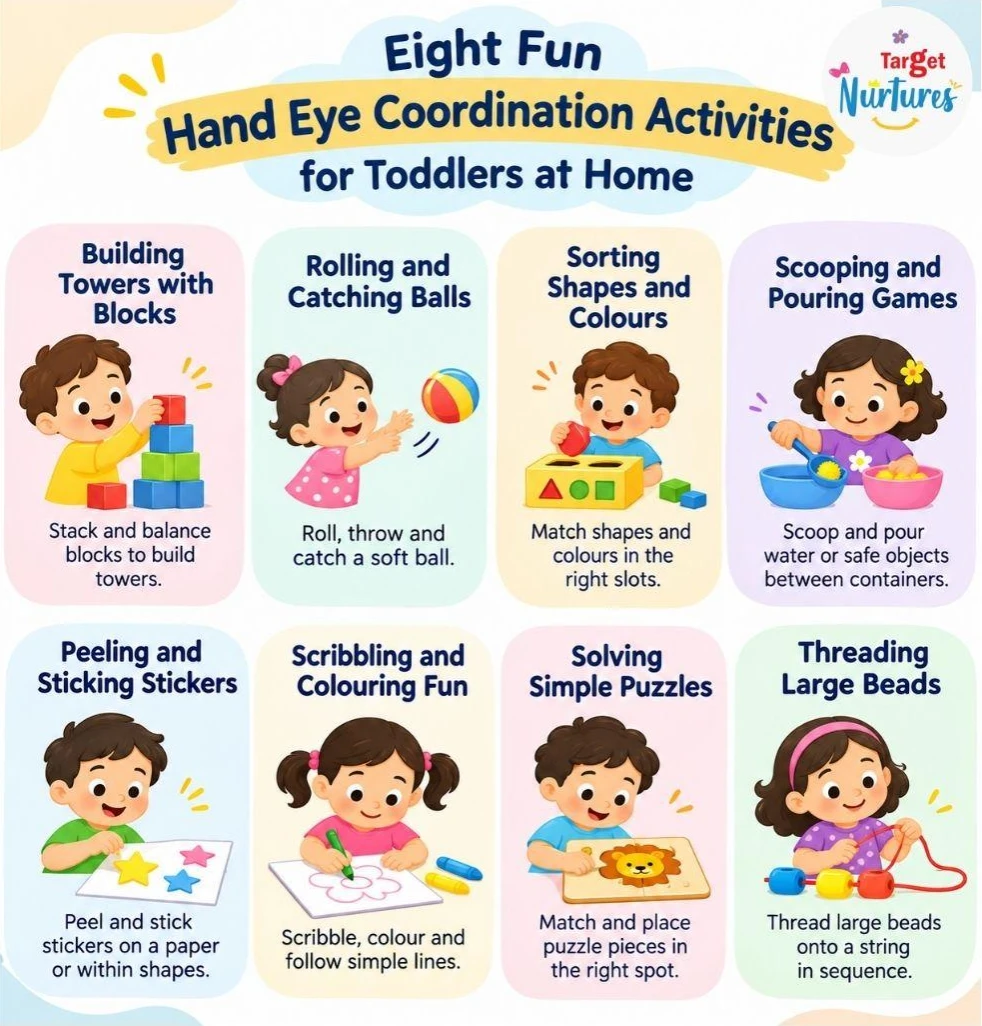
Eight Hand Eye Coordination Activities for Kids at Home
1. Building Towers with Blocks
Start with two or three large blocks and invite your little builder to stack them. Watch their eyes follow each block into place and their little fingers do the stacking. This is fine motor skills practice disguised as fun.
2. Rolling and Catching Balls
Sit opposite your toddler and gently roll a soft ball towards them. Encourage them to stop it and send it back. It helps them follow movement with their eyes and respond with their hands, encouraging hand eye coordination.
3. Sorting Shapes and Colours
Place a few large, colourful shapes beside matching containers. Let your toddler choose where each belongs. A simple shape-matching activity book can add on to further learning.
4. Scooping and Pouring Games
Give your toddler two plastic bowls and a large spoon. Place some large, toddler-safe objects in one bowl and encourage them to scoop the objects into the other. These hand eye coordination games encourage careful and purposeful movements.
5. Peeling and Sticking Stickers
Give your toddler large, easy-peel stickers, and a sheet of paper. Draw a big circle and invite them to decorate inside it. This also brings out a child’s creativity.
6. Scribbling and Colouring Fun
Spread out plain paper and chunky crayons. Let your child make swirls, dots, and wonderfully wobbly lines using them. Later, you can also explore jumbo colouring books for toddlers. You could even draw alongside them and take turns choosing colours, making the moment feel like shared play.
7. Solving Simple Puzzles
Choose a sturdy puzzle with just a few large pieces and enjoy while your toddler experiments with turning and fitting it. Matching what they see with where it goes builds confidence.
8. Threading Large Beads
For older toddlers who no longer mouth objects, try an age-rated threading toy with oversized pieces and a firm cord. Demonstrate first, then let them explore with close supervision. Avoid loose small beads or long cords, which can be unsafe.
Tracking Hand Eye Coordination Development
You may notice your toddler stacking higher, aiming more accurately, or turning pages with greater control. These are the signs of a strong hand eye coordination. Don’t forget to celebrate their small wins while waiting for big milestones. Some days your child may require you to demonstrate before they join in. If you have concerns about your child’s skill development, speak with your paediatrician.
Conclusion
A block tower, a crayon, and a rolling ball can turn an ordinary afternoon into a playful learning adventure.
Choose the hand eye coordination activities for toddlers your child enjoys the most. With patience, encouragement, and time spent together, those little hands will keep discovering what they can do.
Important Links
Frequently Asked Questions
1. At what age can toddlers begin these activities?
Simple stacking and rolling games can begin from early toddlerhood. Choose activities based on your child’s interests, and safe supervision needs.
2. How long should a toddler play each day?
There is no fixed session length for play-based learning. Follow your toddler’s attention and energy, keeping short sessions throughout the day.
3. What type of games help with future writing skills?
Playful grasping, scribbling, and doodling support early motor skills that children later use for drawing and writing, without needing formal lessons.
4. What household items are safe for coordination play?
Large blocks, soft balls, sturdy cups, and chunky crayons are safe choices. Avoid choking hazards, sharp edges, and anything unsuitable for your child’s age.
5. What if my toddler refuses an activity?
That is perfectly normal. Offer a different game or try another day. Following your child’s curiosity usually makes shared play more enjoyable for everyone.