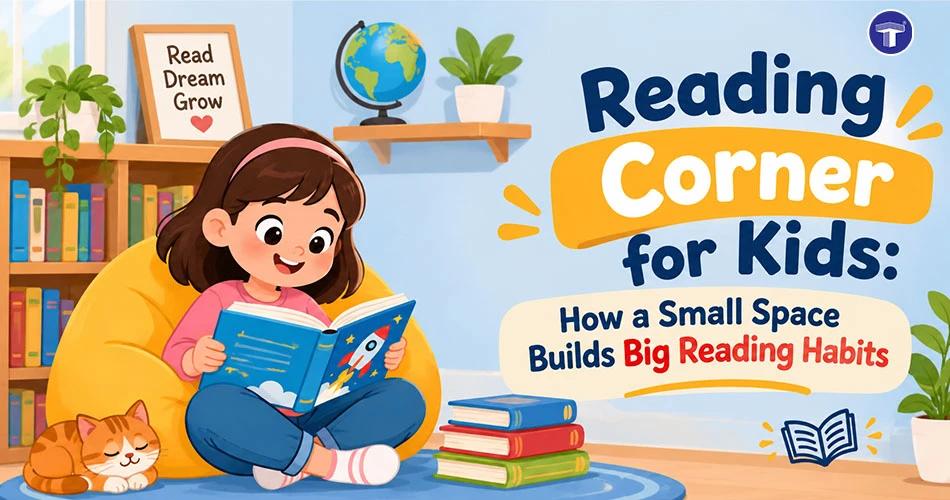
Does your toddler pull every toy off the shelf but leave their books untouched? Sometimes, all it takes is a welcoming reading corner for kids to make stories feel just as exciting as playtime.
You don't need a spare room or fancy furniture for this. A cosy reading corner at home can give your little one a familiar place to explore pictures, hear stories and slowly fall in love with reading books.
Why Does Your Child Need a Reading Corner?
A Little Space that Makes Books Feel Special
Children love having a place that feels like theirs. A cushion, a favourite teddy and a few colourful children’s books can turn an ordinary corner into a tiny adventure spot. When books have their own corner, the reading habit becomes important and established in a child’s routine.
How a Reading Corner Builds Reading Habits
A dedicated reading spot keeps books in sight, making impromptu story sessions easier to execute. Your toddler might browse pictures while you finish a chore. These small, repeated moments help develop reading habits for kids without pressure.
There's research behind making books accessible, too. A 2024 National Literacy Trust survey found that 50% of book-owning children aged five to eight reported reading daily, compared with 35.6% without a book of their own. The finding shows an association, though not a proof that a reading corner causes reading.
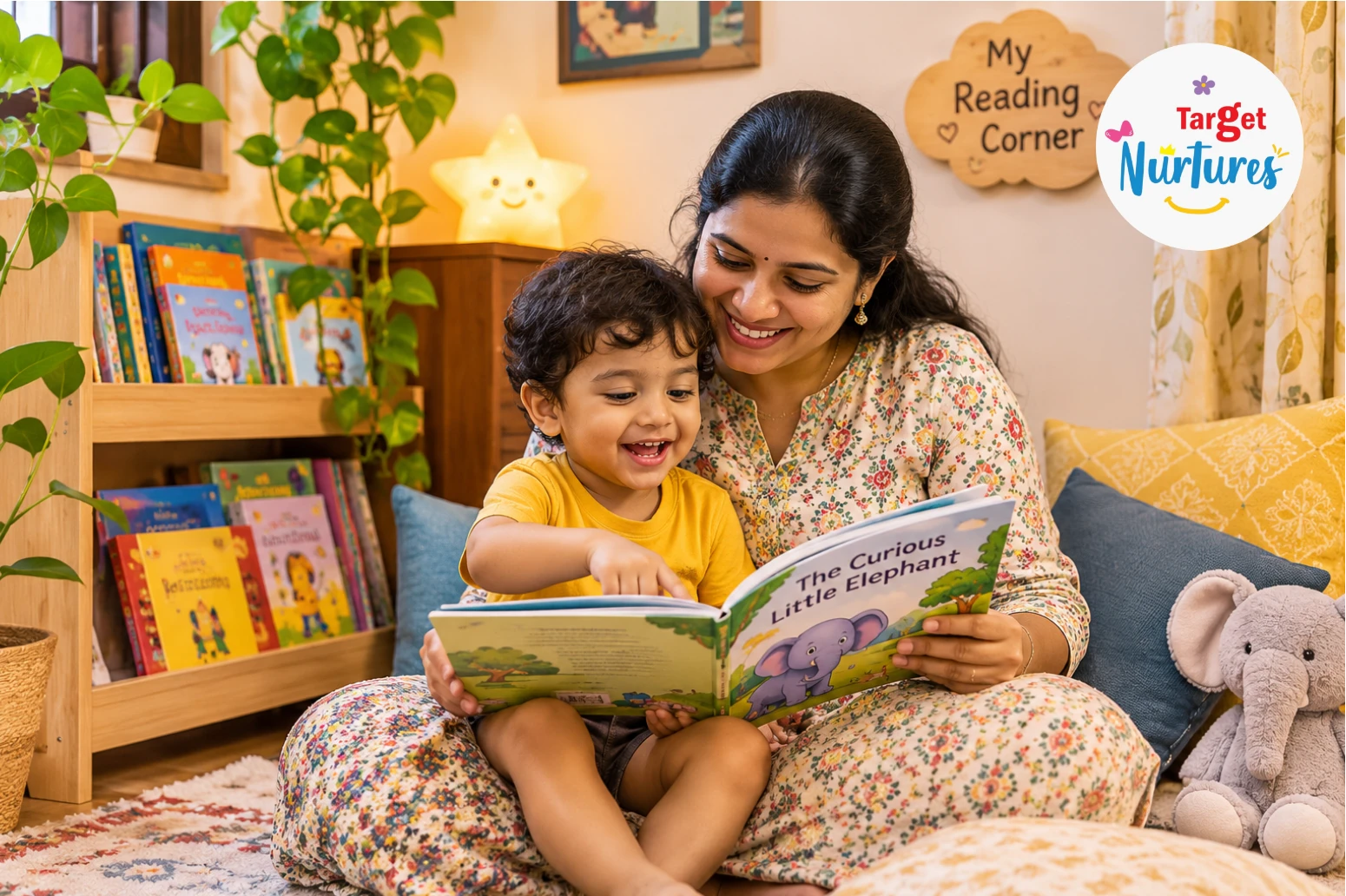
Toddler enjoying a cosy reading corner at home
How to Create a Reading Corner for Kids at Home
Find the Perfect Little Spot
Choose a peaceful, well-lit area away from the television. Even an unused bedroom corner works beautifully. Keep the space somewhere your child can visit independently.
Make Your Reading Nook Cosy and Inviting
Add a washable mat, soft cushions and a cuddly companion. A source of natural light is lovely during the day and a safe, gentle lamp helps for evening story sessions.
Keep Books within Little Hands’ Reach
To encourage independent learning in kids, keep the shelf low with book covers facing out. A visible collection looks more inviting, making choosing easier and giving your toddler the pleasure of finding a favourite independently.
Let Your Child Personalize their Reading Space
Choose your child’s favourite corner of the house and their favourite color for the kids reading nook. Ask them to pick a soft toy and a name for this space. Personalization makes things feel more familiar and more inviting, building a consistent reading habit for kids.
What Books Should Go in Your Child’s Reading Corner?
Picture Books that Spark Curiosity
Begin with bright illustrations, familiar animals and everyday scenes. Picture books for toddlers invite attention, pointing and delightful questions, even before children recognise letters.
Storybooks that Make Reading Fun
Add short storybooks for kids with playful characters and moral values. Illustrated early-learning story collections can make shared reading feel like a smooth journey rather than a strict lesson.
Add Interactive Books for Little Learners
Lift-the-flap stories, touch-and-feel pages and simple activity books for kids invite them to explore new pages on their own.
Rotate Books to Keep the Reading Corner Exciting
Keep a handful of favourite books always on display and swap a few each week.
Common Reading Corner Mistakes to Avoid
- Avoid cluttering the space with toys that distract from books.
- Don't choose every book yourself; follow your child's interests.
- Never turn cosy storytime into a test or homework session.
Conclusion
A beautiful reading corner for kids isn't measured by its size. It's the place where your child can comfortably curl up and enjoy the reading time together with you or alone.
Start with a few things like a soft couch and two or three inviting books. Soon, your little reader may begin reaching for books without being asked, one story at a time.
Important Links
Frequently Asked Questions
1. At what age can I introduce a reading corner?
You can start during babyhood with illustrated books and shared reading. As your child grows, adapt the space for more independent exploration.
2. How long should toddlers spend reading each day?
Begin with a few enjoyable minutes of reading, follow your toddler's attention and gradually build a relaxed daily reading routine.
3. What if my toddler keeps leaving during storytime?
That's completely normal. Try shorter stories, allow movement and invite them back to their reading corner later. Listening while playing can also be a meaningful experience.
4. Are audiobooks suitable for toddlers?
Audiobooks can add variety, especially when you listen together. For younger children, physical books remain particularly valuable for early learning.
5. Can bilingual books help my child learn languages?
Yes, bilingual stories can introduce familiar ideas in two languages. Your child can enjoy the pictures and speak naturally in the languages your family uses.