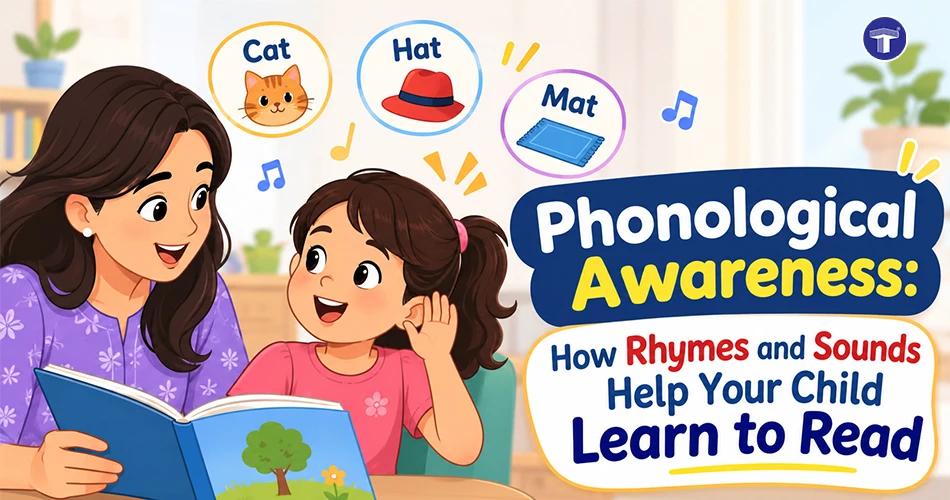
Ever noticed your little one repeating ‘cat, hat, bat, rat’, or finishing a favourite nursery rhyme? Those playful moments are doing more than making you smile. They are helping build your child’s phonological awareness, an important foundation for learning to read.
Everyday sounds and repeated songs can turn listening time into a delightful learning experience.
What is Phonological Awareness?
Phonological awareness means noticing and playing with the sounds of spoken language. Children might hear that ‘sun’ and ‘fun’ rhyme, clap the beats when they hear ‘banana’ or spot words beginning with the same sound. Phonological awareness starts with listening words and their sounds, not reading printed letters.
Phonological Awareness vs Phonics
These two skills work together but are different. Phonological awareness is about hearing sounds in words, while phonics connects those sounds to letters. Your toddler can enjoy sound games long before they start recognising the alphabet.
The US National Reading Panel found that teaching children to work with individual speech sounds improved reading skills and spelling outcomes.
How Rhymes Build Phonological Awareness in Early Childhood
Recognising Rhyming Words
Words such as ‘cake’ and ‘lake’ share an ending sound. When children notice this similarity in nursery rhymes, they begin recognising patterns in speech. Try elaborating words with similar sounds while singing your child’s favourite rhyme, until they notice the similarity.
Learning through Repetition
Does your toddler request the same rhyme again and again? Repetition plays a big role in making sounds familiar and easier to anticipate. Illustrated nursery rhymes books can make these repeated listening moments even more enjoyable.
Predicting Rhyming Sounds
Pause gently just before the final word of a familiar verse. Your child may excitedly fill the gap! Predicting a rhyme encourages careful listening habit and builds a toddler’s confidence without feeling like a strict lesson.
Exploring Alliteration and Word Sounds
‘Busy bees buzz’ is fun to say because several words begin alike. This is alliteration. Playfully exaggerating the first sound helps children hear similarities beyond rhyming endings.
From Rhymes to Individual Sounds
As listening develops through nursery rhymes in early childhood, children can then explore smaller sound parts. Soon, they begin clapping to the syllables in ‘butterfly’, noticing the first sound in ‘ball’ and slowly blending /s/ /u/ /n/ into ‘sun’. Later, phonemic awareness helps them identify individual sounds. There is no need to rush: begin with easy, playful activities, and follow your child's interest.
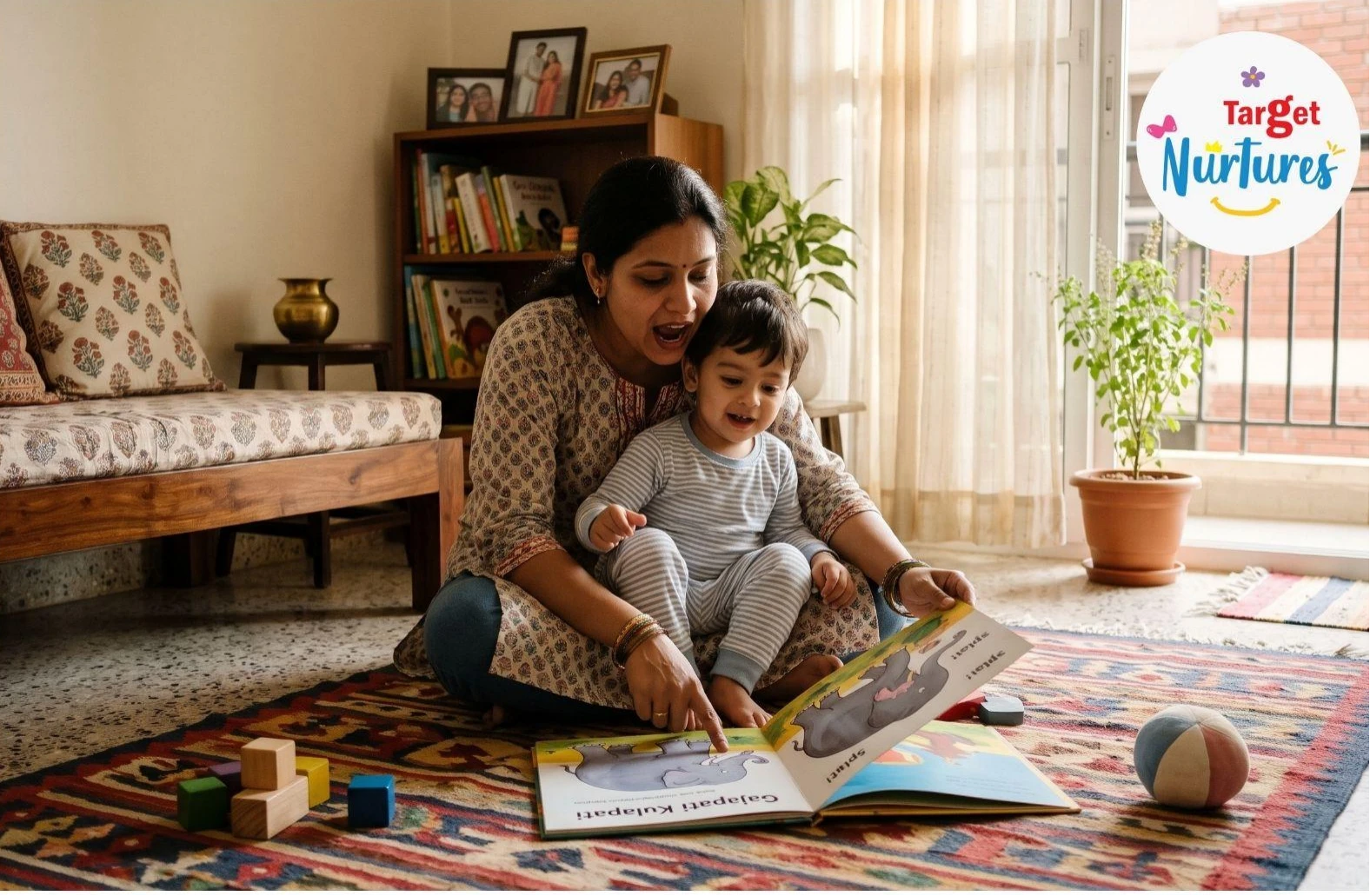
Phonological Awareness through Playful Rhyming Sounds
Phonological Awareness Activities for Kids
1. Rhyming Word Games
Say ‘boat’ and offer ‘goat’ or ‘tree’. Ask which word rhymes. Picture-based early learning activity books can provide familiar objects to talk about together.
2. Clap the Syllables
Choose everyday words such as ‘mummy’, ‘banana’ or your child's name. Clap once for each spoken beat, and let them follow your lead. Add gentle tapping or jumping to make it lively.
3. Beginning Sound Hunt
Pick a sound, such as /b/, and ask you child to search the room for a ball, bag, or book. Say each word aloud so your child hears the matching beginning sound.
4. Complete the Nursery Rhyme
Read a verse familiar to your child, and stop at the final rhyming word. Give your child time to respond. Linking this to the bedtime story session makes it part of the daily routine.
5. Sound Switching Games
If your child is ready for a challenge, say ‘mat’ and replace /m/ with /s/. What new word appears? Keep it light, and model the answer when needed.
Conclusion
Learning to read begins with listening closely to language. Through rhymes, syllables, and playful sound recognition, children discover that words are made of sounds they can notice and explore.
So sing their favourite song once more and enjoy the giggles. Every little sound game can nurture phonological awareness, at your child's own comfortable pace.
Important Links
Frequently Asked Questions
1. At what age can children start sound games?
Babies enjoy songs and speech rhythms from infancy. Toddlers can join simple rhymes, while more complex sound games usually suit older preschoolers.
2. Does speaking two languages confuse sound learning?
No. Children can enjoy rhymes in both languages. Familiar songs and conversations offer valuable opportunities to notice different speech sounds naturally.
3. Should I correct every mispronounced word?
Not usually. Model the word gently in conversation rather than interrupting while playing. If speech concerns persist, seek advice from a qualified professional.
4. Can music help a child who dislikes books?
Yes. Action songs and playful rhythms help in listening without requiring a book. Follow your child’s favourite tunes and keep sessions enjoyable.
5. When should I seek help with sound awareness?
If your child consistently struggles with age-appropriate listening or speech activities, discuss your observations with their teacher or a paediatrician.