
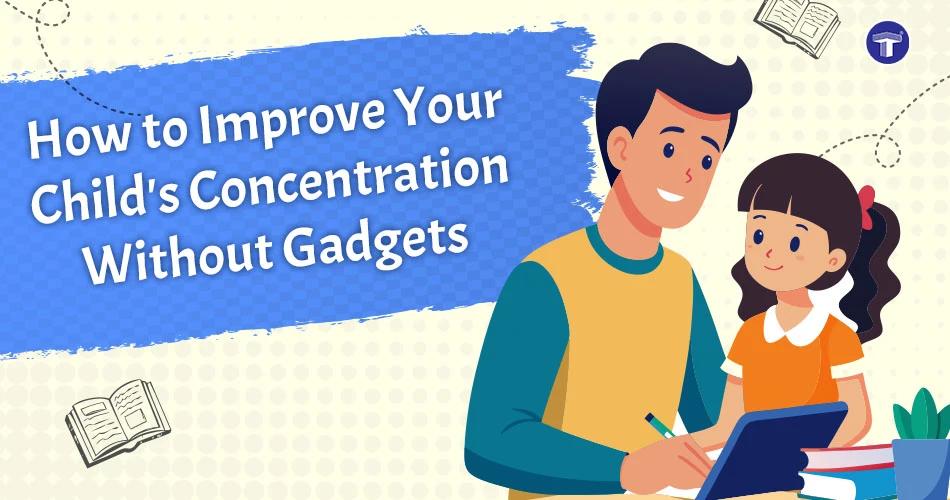
If you have ever sat next to your little one during storytime, only to watch their eyes wander within minutes, you are not alone. Helping your child improve concentration without gadgets is one of the most common concerns parents of toddlers face today.
To build focus, you do not need screens or fancy technology. With a few mindful habits and some playful moments, you can nurture your child's attention span right at home.
How Gadgets Are Quietly Affecting Your Child's Concentration
It is hard not to hand your toddler a phone when you need five minutes to yourself. We have all been there. But it is worth knowing what is happening behind the scenes.
Excessive screen time in children under five is linked to shorter attention spans and reduced self-regulation. Every swipe and flash on a screen trains young brains to expect constant stimulation. So, when it is time for a book or a puzzle, the slower pace feels frustrating to them.
Balance matters. And building focus in children away from gadgets is absolutely possible.
Setting Screen-Free Hours at Home: A Practical Guide for Parents
This is truly the heart of the matter. Creating intentional screen-free time is one of the most powerful things you can do to improve your child's focus. It does not have to be a battle. Small, consistent steps make a lasting difference.
1. Building a Simple Daily Routine
Children thrive on predictability. A consistent schedule gives toddlers a sense of security, which helps them focus better. Set fixed times for meals, play, stories, and rest. When the brain knows what is coming next, it is ready to engage, not distracted.
You can support this routine with illustrated activity books designed for toddlers, which make screen-free time feel fun rather than restrictive.
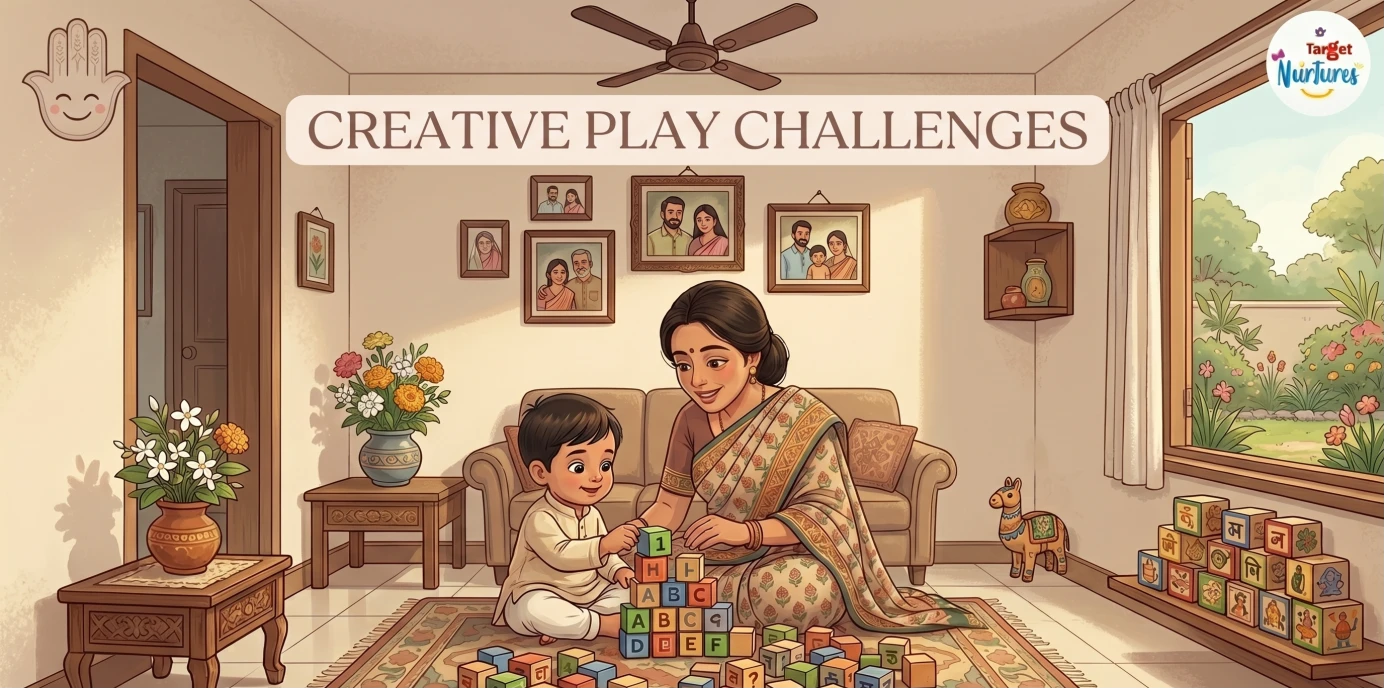
Toddler Improving Concentration Without Gadgets through Play
2. Creating a Clutter-Free Play Space
Your child's environment has a huge impact on their ability to focus. A cluttered, noisy space pulls attention in too many directions. Clear one small corner: keep it tidy, well-lit, and stocked with crayons, puzzles, or building blocks.
When toddlers know where their things are, they settle into activities more easily and stay engaged longer.
3. The Role of Sleep and Nutrition in Your Child's Attention Span
Often overlooked but truly a game-changer: toddlers need 11 to 14 hours of sleep daily. Without proper rest, no activity will hold their attention long. A diet rich in omega-3 fatty acids, iron, and whole grains also supports brain development and focus.
Sleep and nutrition are the invisible foundations of every learning moment.
Storytelling and Reading Aloud: A Forgotten Tool for Kids' Focus
There is something magical about a good story. When you read aloud to your toddler, you are training their brain to listen, visualise, and follow a sequence, all without a single screen.
Storytelling sessions of just 10 to 15 minutes gently stretch your child's attention span day by day. Ask questions as you go: 'What do you think happens next?' This turns passive listening into an active, focused experience.
Looking for the right books? Age-appropriate storybooks for young learners can make a real difference in how much your child enjoys and engages with reading time.
Conclusion
Improving your child's concentration without gadgets is not about perfection; it is about small, loving choices made every day. A bedtime story, a tidy play corner, and a consistent routine may feel like tiny things, but they quietly shape a focused, curious, and confident little mind.
You are already a thoughtful parent simply by asking the right questions. So, take a deep breath, go easy on yourself, and enjoy the journey. The results will follow, one playful moment at a time.
Frequently Asked Questions
1. At what age should children start developing concentration skills?
Ans: Children begin building basic focus as early as 12 months, through simple activities like looking at picture books. By age 3, most toddlers can sustain attention for about 3 to 5 minutes on a single task. The key is not to rush it.
2. How long should a toddler's screen-free activity session be?
Ans: Start with 5 to 10 minutes and gradually increase as their attention grows. Consistent short sessions, done daily, are far more effective than occasional long ones. Over time, you will notice your child staying engaged with activities for longer without any prompting.
3. My child refuses to sit still. Is that normal?
Ans: Absolutely. Toddlers are naturally energetic. Short, varied activities work better than long sit-down tasks. Movement-based play builds concentration too.
4. Does reading aloud help even if my toddler does not seem to listen?
Ans: Yes. Even when distracted, toddlers absorb language and story patterns. Consistent reading aloud builds vocabulary, listening skills, and attention span over time.