
As parents, you would want your little ones to grow up confident and capable. But are you giving them enough space to think for themselves?
Independent thinking in kids does not develop on its own. It needs gentle nurturing from the toddler years. Read along and discover how you can start with small everyday moments to encourage critical thinking in kids.
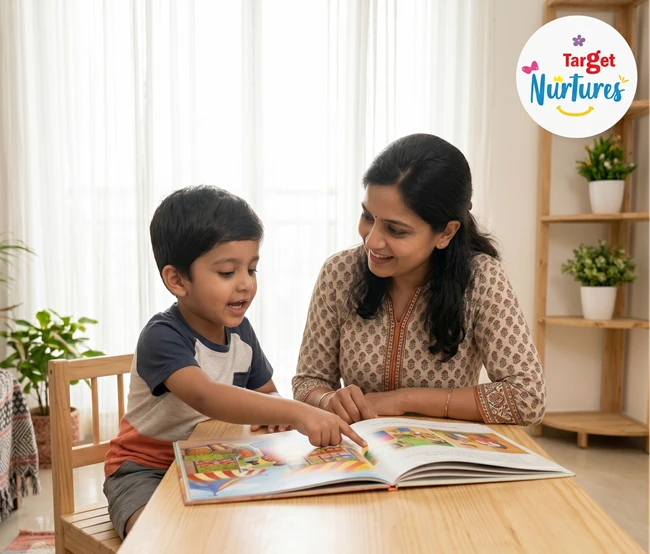
Parent and child practising open-ended thinking together
How to Ask the Right Questions to Spark Critical Thinking in Children
One of the simplest ways to build independent thinking is through questioning. Instead of telling your child what to think, invite them to think out loud.
-
Swap Closed Questions for Open Ones
Rather than asking ‘Did you enjoy that story?’ try ‘What was your favourite part and why?’ Open-ended questions encourage children to think and reason, not just say yes or no.
-
Let Them Lead the Conversation
When your child shares an idea, resist correcting them immediately. Ask questions like ‘What made you think of that?’ It shows their thoughts have value and quietly builds confidence.
-
Use Everyday Moments as Prompts
Whether it’s a walk to the park or a journey to school, every moment can be a thinking exercise. ‘Why do you think the sky looks orange today?’ is more powerful than it seems.
5 Daily Habits to Nurture Independent Thinking in Kids
| Habit | Why It Works | |
| 1 | Give Them Real Choices | Two or three options teach decision-making gently. |
| 2 | Ask Open-Ended Questions | Replace 'yes/no' questions with 'what do you think?' |
| 3 | Let Them Struggle a Little | A short pause before helping builds problem-solving skills. |
| 4 | Celebrate Effort | Praise the thinking process, not just the right answer. |
| 5 | Read and Discuss Stories | Ask what a character should do next to spark creative thinking. |
How Play-Based Learning Develops Problem-Solving in Young Children
Play is not just fun; it requires serious brainwork. Through play-based learning, children develop the ability to think, create, and solve problems independently.
-
Unstructured Play Builds Creative Thinking
Unstructured play, where children explore without a fixed outcome, enables them to experiment and try again, building a foundation of independent problem-solving.
-
Use Activity Books to Guide Thinking
Thoughtfully designed activity books weave problem-solving into play through puzzles, stories, and creative tasks, a lovely way to engage young minds.
-
Role Play Encourages Decision-Making
Role-play games like ‘doctor’ put children in charge. They think carefully, make decisions and face outcomes in a safe, creative space.
Important Links
Conclusion
Encouraging independent thinking in kids is one of the greatest gifts parents can give them at an early age. It starts with letting them make small choices and fuelling their curiosity by asking them questions, building their confidence to lead sometimes.
Just keep nurturing those moments of curiosity and watch your child’s creative thinking flourish.
Frequently Asked Questions (FAQs)
1. At what age should I start encouraging independent thinking in my child?
Ans: You can start as early as age two, by offering simple choices and asking open questions during everyday play and meals.
2. What are the best activities to develop critical thinking in toddlers?
Ans: Open-ended play, puzzles, and storytelling are among the most effective and enjoyable activities you can try with young children.
3. How do I encourage independent thinking without losing authority as a parent?
Ans: Offering guided choices and asking questions does not reduce your authority. It builds mutual respect while helping children think independently.
4. Can screen time help build independent thinking in kids?
Ans: Limited, purposeful screen time can support learning, but unstructured play and real-world exploration remain far more effective for developing critical thinking.