
Have you ever done a silly voice for the big bad wolf, only to catch your toddler copying that exact growl the next day?
That is not a coincidence. Every time you read aloud or make a sound, your little one soaks up the rhythm and the pronunciation of words, long before they can read a word themselves.
This is why reading aloud is one of the simplest, most joyful ways to help improve your child's pronunciation. In this blog, we will look at why it matters, how it works, and a few easy techniques to try at home.
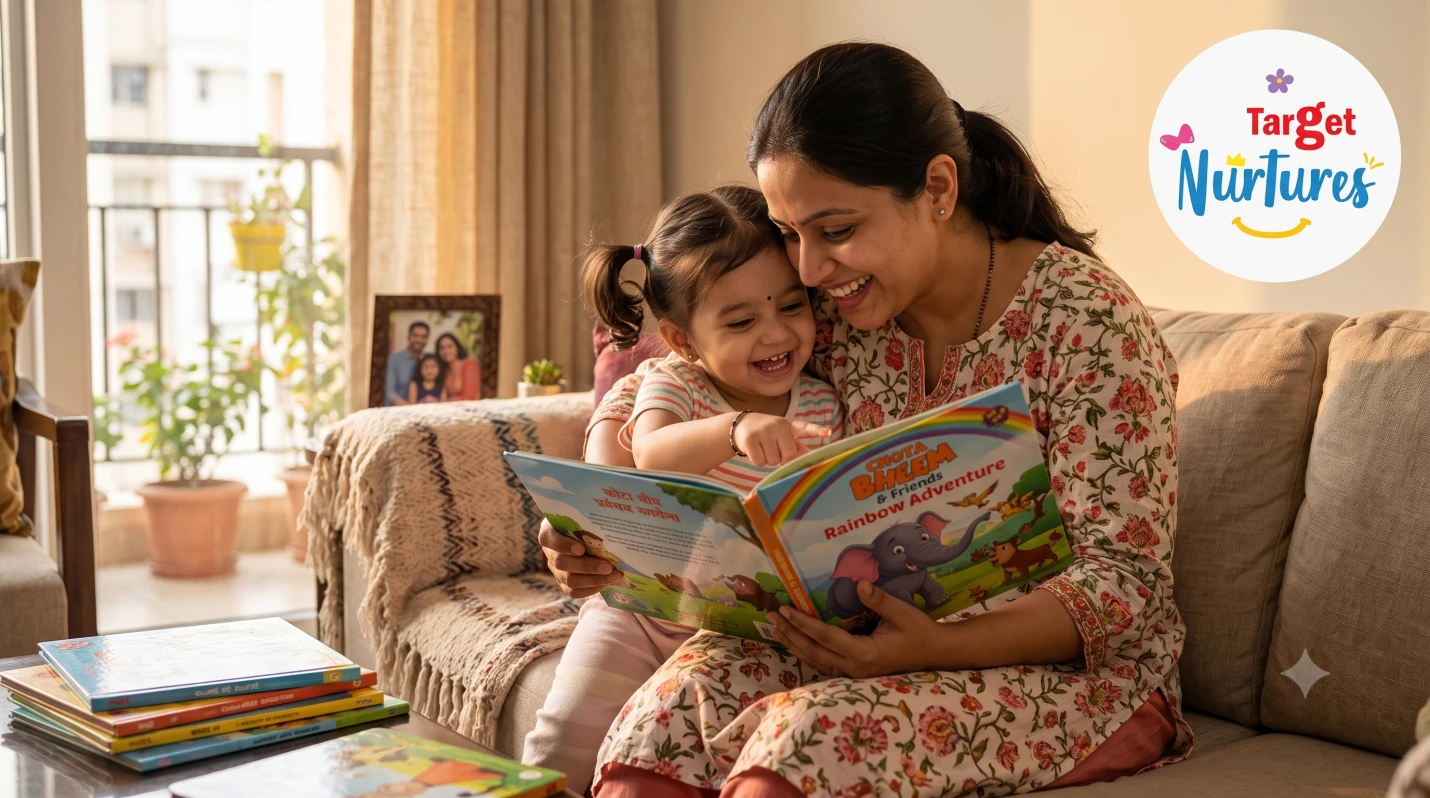
Reading aloud together builds pronunciation and bonding
Why Reading Aloud Actually Matters
It is not just about reciting stories. Reading aloud gives your child a live demonstration of how words are meant to sound. Your voice becomes their first pronunciation coach, without either of you realising it.
It builds listening skills, the foundation for speech development. And there is more to it than skill-building alone. Reading aloud is also a lovely way to bond with your child, and the stories you choose together quietly shape how they see the world.
How Reading Aloud Shapes Your Child's Pronunciation
- Repeated Exposure to Correct Sounds: When you read aloud, your child hears correct sounds and word endings repeatedly, subconsciously enhancing their pronunciation.
- Building the Brain's Sound Map: This repetition helps their brain map how sounds are meant to feel and flow, the groundwork for clear pronunciation.
- Quiet Practice for Tricky Sounds: They rehearse every ‘th’ or tricky consonant blend you read aloud.
A 2024 policy statement from the American Academy of Paediatrics notes that parents who read aloud to children regularly help them develop a broader vocabulary and stronger language skills by school age.
Simple Reading Aloud Techniques to Improve Pronunciation
- Slow down: During bedtime story sessions, there is no need to rush pages. Toddlers need extra time to catch each sound.
- Exaggerate gently: A slightly bigger mouth movement on tricky words helps your child observe and hear the sound clearly.
- Repeat favourite words: If a word makes them giggle, say it again. Repetition is how pronunciation sticks.
- Pause and let them fill the blank: This invites them to attempt pronouncing the word themselves.
Important Links
- Tips to Encourage Speech Development in Children: What Parents Can Do Every Day
- How To Encourage Independent Thinking in Kids?
- Why Kids Lose Focus While Studying and 5 Simple Ways to Fix It
- How to Support Your Child’s Cognitive Development Before Age 6
Choosing the Right Books to Improve Your Child's Pronunciation
- Look for books with rhyme and repetition. These naturally encourage your child to predict words as you read aloud.
- Picture books with simple illustrations that match the words can help your toddler connect sound to meaning easily.
- Thoughtfully designed story books, built around toddler speech patterns and playful repetition, can make this journey smoother for parents.
Conclusion
Reading aloud will not turn your toddler into a perfect narrator overnight, and that is fine. What matters is the warmth, the repetition and the fact that you show up, page after page, as their first pronunciation teacher.
So, pick a favourite book and let your voice do the work. Somewhere between the giggles and the copied growls, your child’s pronunciation will be quietly improving.
Frequently Asked Questions
1. At what age should I start reading aloud to my child?
You can start from birth. Even babies benefit from your voice, and by toddlerhood, reading aloud actively supports pronunciation and vocabulary growth.
2. How long should a reading aloud session be for a toddler?
Ten to fifteen minutes is plenty. Short, cheerful sessions hold a toddler's attention far better than long, drawn out ones.
3. Does reading aloud really help pronunciation, not just vocabulary?
Yes. Hearing sounds repeated clearly helps your child's brain practise forming them accurately, supporting pronunciation alongside speech development.
4. What if my child does not repeat words while I read?
That is completely normal. Children absorb pronunciation passively first. Repetition often appears weeks or months later, at its own time.
5. Should I correct my child if they mispronounce a word?
Gently repeat the word correctly yourself instead of correcting them directly. This keeps reading time positive and pressure-free.