
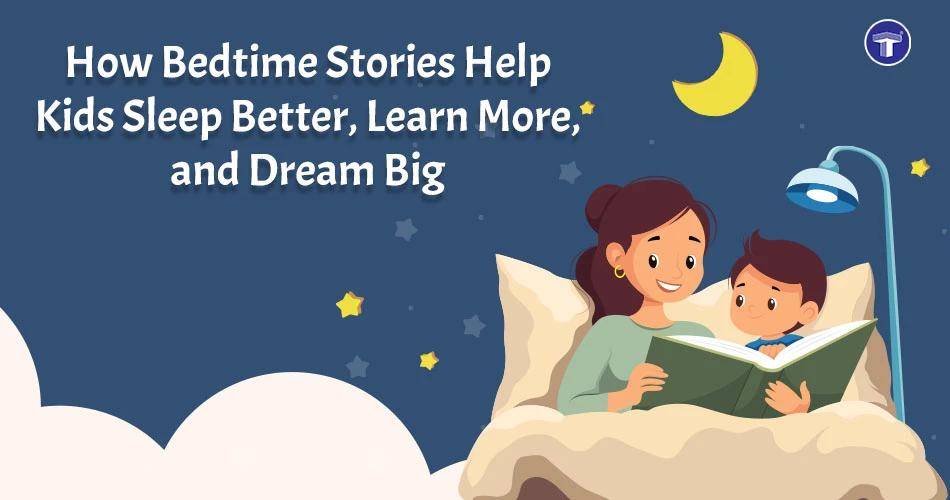
If you have ever snuggled up with your toddler at night, book in hand, you already know the magic bedtime stories bring. Their benefits go well beyond simply entertaining toddlers before lights-out.
Whether your child is two or six, a consistent bedtime story routine works wonders for their sleep, their growing mind, and their biggest dreams. Let us explore why this small habit is one of the most powerful gifts you can give your child.
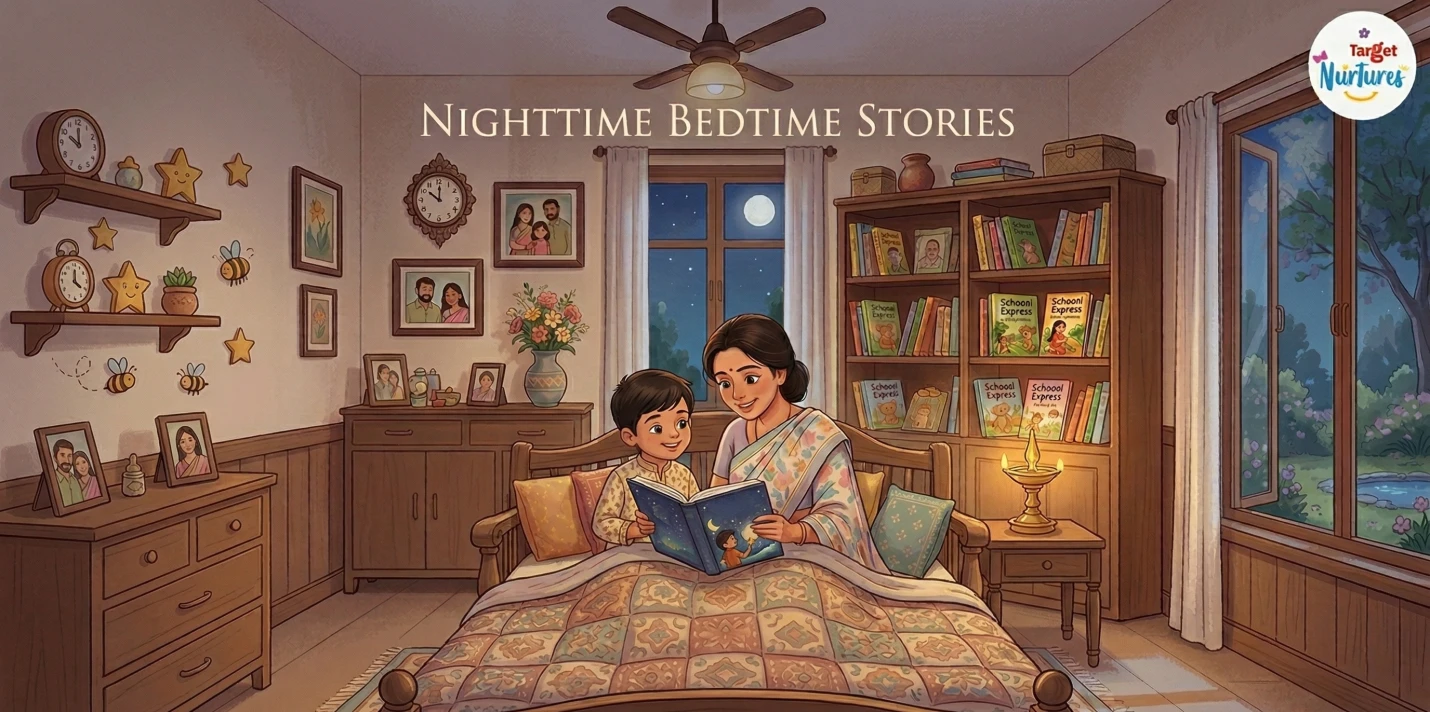
Reading Bedtime Stories with Kids for Better Sleep
The Magic Behind Bedtime Stories for Kids
A good story has something effortless about it. The gentle rhythm of your voice, the colourful characters, the unfolding of a simple plot, it all creates a calming experience just right for little ones at bedtime.
1. Signals Sleep Time to Their Brain
When bedtime stories become part of a nightly routine, your child's brain starts to associate story time with winding down. This predictability reduces bedtime resistance and helps little ones fall asleep faster.
2. Creates a Safe, Calm Space
Reading with your young child lowers their cortisol levels, i.e., it reduces the stress levels in kids. Research from the American Academy of Paediatrics found that shared reading from infancy significantly improves cognitive and emotional outcomes. Your calm voice becomes their comfort.
How Stories Spark Imagination and Creativity in Young Minds
1. They Become Active Thinkers
Stories invite children to imagine. 'What happens next?' or 'Why did she do that?' These questions naturally arise. This open-ended thinking is the very foundation of creativity in young minds.
2. Language and Vocabulary Grow Quietly
Every new word in a story is one your child absorbs. Children read to regularly build richer vocabulary and stronger early literacy skills, often without realising they are learning at all.
3. Inspires Their Own Storytelling
Children who hear lots of stories begin to tell their own. They narrate play, invent characters, and build adventures. This imaginative play links to problem-solving skills. A well-designed early learning kit can nurture this creative spark even further.
Teaching Values Through Bedtime Stories for Toddlers
1. Characters Become Role Models
Toddlers learn by watching and listening. A brave character who speaks up, or a rabbit who shares his carrots, teaches values that stick far better than a lecture ever could.
2. Emotions Become Easier to Understand
Stories let children safely explore big feelings like fear, jealousy, and joy through fictional situations. This emotional rehearsal builds empathy and helps kids identify and manage their emotions.
3. Values Sneak in Without Pressure
There is no lesson-time pressure during story time. Children absorb values naturally, making bedtime stories one of the gentlest tools in your parenting toolkit.
How Bedtime Stories Shape a Child's Dreams and Ambitions
1. They See a Bigger World
From astronauts to kind-hearted farmers, from undersea adventures to royal kingdoms — bedtime stories show children the world is wide. This quiet exposure plants seeds of curiosity and ambition.
2. The Stories They Hear Become Part of Who They Are
The characters, choices, and values in the stories you read together become part of your child's inner world. What your toddler dreams big about tomorrow is often shaped by the stories they hear today.
Conclusion
Bedtime stories are not just a lovely habit, they are a meaningful investment in your child's development. From better sleep to richer imagination, stronger values, and bigger dreams, this ritual touches nearly every part of your little one's growing world.
So tonight, pick a book, get cosy, and let the bedtime story begin. You are doing far more than reading; you are helping your child sleep better, learn more, and dream a little bigger.
Frequently Asked Questions
1. At what age should I start reading bedtime stories to my child?
Ans: You can start from birth. Babies respond to your voice, and early reading builds strong bonding foundations that continue to grow with your child over time.
2. How long should a bedtime story session be for a toddler?
Ans: For toddlers aged one to three, ten to fifteen minutes of a bedtime story session works well. Keep it enjoyable, quality truly matters more than length.
3. Can bedtime stories replace other forms of learning for toddlers?
Ans: Not entirely, but bedtime stories complement learning beautifully. They build vocabulary and imagination in ways that structured activities alone cannot match or replicate.
4. What types of bedtime stories are best for young children?
Ans: Simple stories with repetition, relatable characters, and gentle themes work best for toddlers. Bright illustrations help little ones stay engaged and naturally support their visual learning.
5. Do audiobooks count as bedtime stories for kids?
Ans: They can help, but reading aloud together is far more beneficial. Your voice and expressions create a special bonding experience with your child.