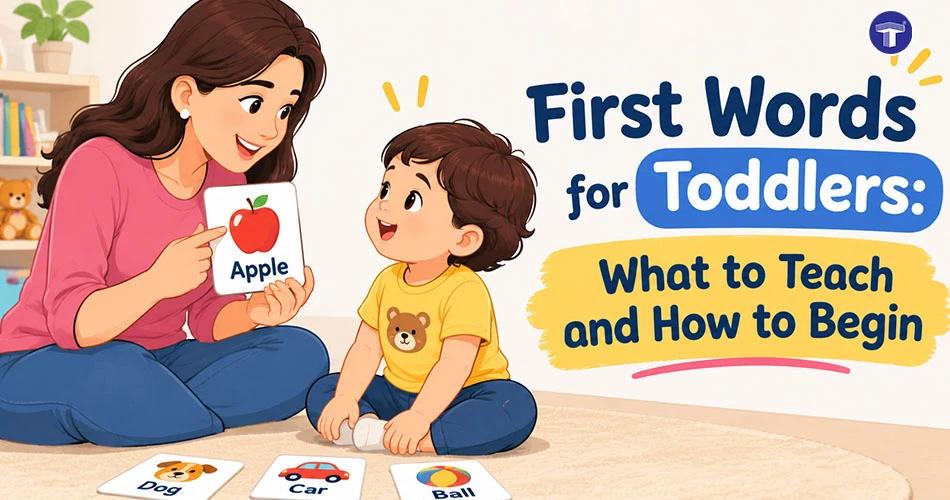
Hearing your toddler say their first words is a moment to treasure. Whether it is ‘mama’, ‘dada’ or an excited ‘woof’, that little sound marks the start of a new way to communicate needs, feelings and excitement.
Wondering which first words for toddlers to introduce? It’s convenient to start with people, objects and activities your child already knows. Including those words in everyday conversations with repetition and friendly books combines learning with playtime.
When Do Toddlers Start Saying their First Words?
Babies move from babbling and gestures towards meaningful words at different rates. The CDC milestone guidance notes that most children try one or two words besides ‘mama’ or ‘dada’ by 15 months, and three or more by 18 months. These are just guideposts, not strict milestones.
Children often start understanding the meaning of certain words before they can even pronounce them. Patience and persistence are the keys to language development in toddlers. Every little attempt to communicate, whether through sounds, gestures or words, is a step forward in the right direction. When you respond warmly to these attempts, your toddler feels encouraged to express themselves with even more confidence.
First Words to Teach Your Toddler
Choose useful first words that your toddler hears often and can connect with real experiences.
1. Everyday Words
Begin with titles such as ‘mama’, ‘dada’, ‘nana’ or a sibling’s name. Say each while looking at the person or pointing to a family photograph to enhance recall. A curated toddler’s first 1200 words book acts as an easy guide.
2. Food and Drink
At meals, name familiar eatables such as ‘milk’, ‘water’, ‘apple’ or ‘roti’. When your toddler enters the kitchen, ask, ‘Do you want water?’ to help them associate the meaning with words.
My First 1200 Words: Building Vocabulary and Communication Skills
3. Animals and their Sounds
To introduce animal names, try making sounds like ‘woof’, ‘meow’, ‘moo’ and ‘quack’, identifying each as ‘dog’, ‘cat’, ‘cow’ and ‘duck’. Animal toys and an illustrated animal book make naming a fun guessing game.
4. Everyday Objects
Name things your child can touch and play with, such as ‘ball’, ‘book’, ‘cup’, ‘shoe’ and ‘car’. A toddler picture dictionary offers colourful objects to explore together.
5. Action Words
Use ‘go’ as a toy car moves, ‘open’ after handing over a candy and ‘up’ when pointing to the sky. Pairing words with actions makes their meaning easier to understand.
6. Social Words
Use courtesy words like ‘hi’, ‘bye’, ‘please’ and ‘thank you’ during everyday interactions. Wave as you say ‘bye’ and watch your toddler innocently and playfully repeat your actions.
Fun Activities to Encourage Toddler’s First Words
Repetition works best when it feels like conversation. If your toddler says ‘ball’, respond, ‘Yes, a big ball!’ This adds a little confirmation while modelling the word naturally.
Try a picture-naming game with a sturdy picture book. Point to one familiar image, name it and pause. Your toddler may look, point, make a sound or try pronouncing the word. You can also play ‘point and find’: ask, ‘Where is the dog?’ If there is no answer, name it yourself and continue.
Keep a toddler’s first words book handy for practical guidance. A phonics book further improves their pronunciation and use of vowels.
Conclusion
Teaching first words for toddlers needs no strict timetable or special lessons. Naming fruit at breakfast, chatting during playtime or reading together can all become valuable learning moments.
Give your child time to listen and observe. All they need is your warmth and patience. If you are concerned about their progress, seek professional advice rather than comparing your toddler with others.
Important Links
Frequently Asked Questions
1. What are the easiest first words for toddlers?
Familiar people, favourite foods, toys and routine words are useful starting points for a toddler’s first words because toddlers hear them often and understand their context.
2. Should I correct my toddler’s pronunciation?
Avoid expecting perfect pronunciation during your child’s learning phase. Repeat the mis-pronounced word clearly in your reply, giving your child a helpful example without sounding dominating.
3. Can toddlers learn words in two languages?
Yes, use the languages you are most comfortable speaking. Regular conversations in each language support communication and do not cause language disorders.
4. How often should I practise new words with my toddler?
There’s no formal routine. Include new words during conversations during meals, play, walks and reading so language practice becomes part of everyday life.
5. When should I seek advice about delayed speech?
If your child is not meeting communication milestones or you are concerned about speech or hearing, discuss it with your healthcare professional.