Every child knows the ABC song by heart. Still, your little one may mix up ‘b’ and ‘d’. Have you ever wondered why this happens? Your toddler’s brain remembers the alphabets in sequence as part of a song and might not recall them individually. Teaching alphabets as part of a story will lead to easier recall.
Alphabet story books for kids tuck letters inside little tales, so learning feels like playtime. Here, we explore why ABC story books work and how to enjoy them at home.
How Alphabet Stories Make Children Learn Better
Stories give letters a reason to matter.
Making Letter Learning More Engaging
A says ‘A for apple’ and stops there. A story shows an ant dragging that apple home. Toddlers remember characters far better than rows of letters, so this keeps them more engaged.
Connecting Letters with Real-Life Experiences
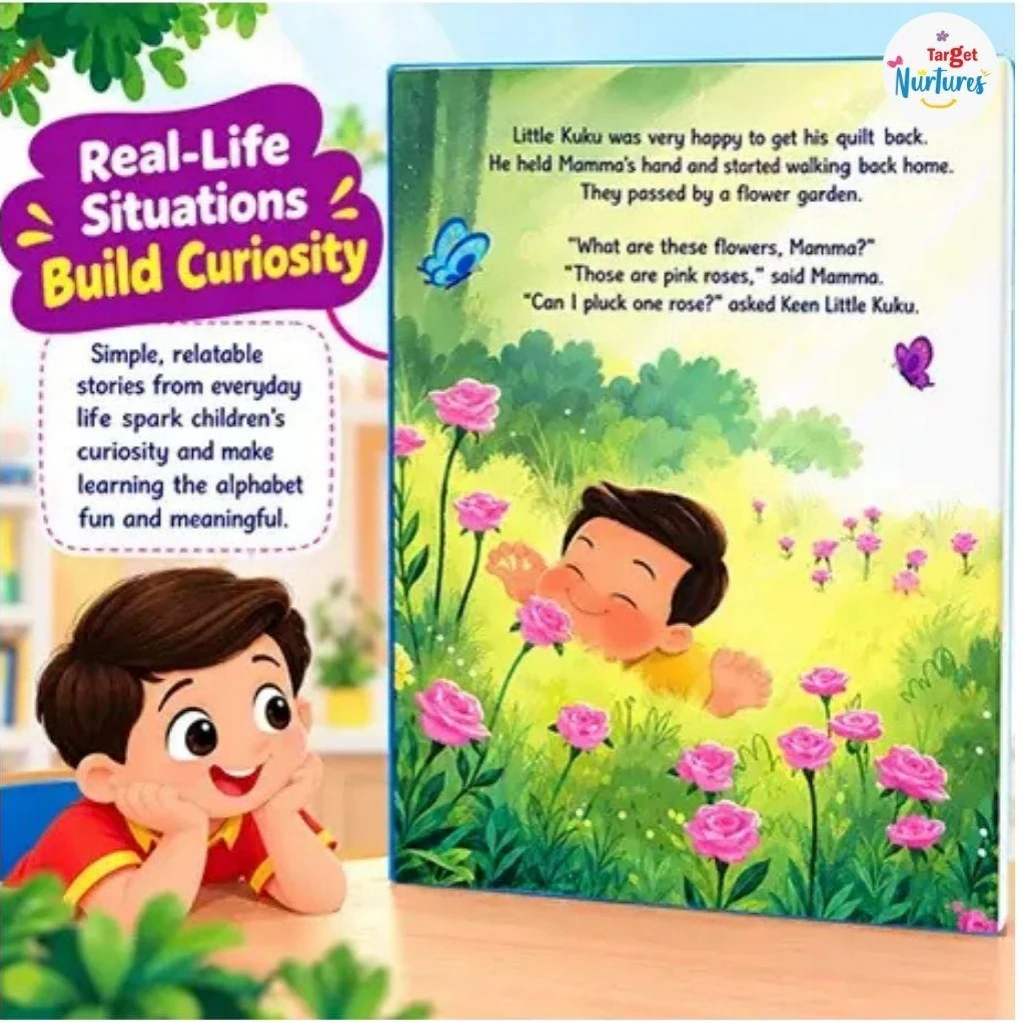
When ‘S’ is the sun on your balcony or ‘M’ is the milk in their cup, letters stop being strange wobbly shapes and start making sense. Soon your child will spot them on cereal boxes and shop signs.
Alphabet Story Books for Kids to Read at Home
What Children Learn from Alphabet Story Books
Letter Recognition and Vocabulary
A letter beside a bright picture sticks easily, which supports letter recognition for kids. A 2019 Ohio State University study found that children who regularly read books hear about 1.4 million more words by kindergarten than children never read to, enhancing vocabulary skills from early childhood.
Listening and Comprehension Skills
Stories have a beginning, middle and end. Your child learns to sit, listen and follow what happens next. Not only does this improve their attention span but also their sequencing skills.
Imagination and Creative Expression
An ‘M’ for Monkey in one story can be linked with an ‘M’ for Money in another. As their understanding of letters and words develop, children start inventing connections and voices.
Choosing the Right Alphabet Books for Kids
Age-Appropriate Stories and Illustrations
Toddlers aged 1-2 years like picture books with sturdy pages, while older preschoolers can benefit from a longer plot in story books. This quick guide may help.
| Age | What to Look For |
| 1 to 2 years | Sturdy board books, one letter per page |
| 2 to 3 years | Rhyming ABC stories with big pictures |
| 3 to 4 years | Short stories built around each letter |
Alphabet Books for Kids by Age
Simple Language and Familiar Words
Pick books with short sentences around words your child already hears, such as ‘ball’ or ‘cat’. Stories offer a great way to repeat words and their meanings.
Interactive and Repetitive Story Patterns
Same stories can be repeated once in a while, encouraging your child to join in. This will help strengthen their memory skills and assist in brain development.
Simple Ways to Make ABC Reading Fun at Home
Point, Name and Repeat
Let your child point to a letter, name it together and then wait for them to repeat it. A few alphabet practice books with tracing pages can allow them to practice writing alphabets alongside.
Make Up Little Stories Together
After reading, let your child invent a mini tale around the day’s letter. Perhaps ‘B’ is a bear who loves bananas. Let your child add the next part.
Conclusion
Alphabet learning for toddlers doesn’t always have to feel like homework. When stories revolve around letters, children listen, laugh and remember, and you get to spend some lovely time together too.
So choose one of the alphabet story books for kids that catches your little one’s attention, read it slowly and witness their progress proudly.
Important Links
Frequently Asked Questions
1. At what age should I start reading alphabet books to my child?
You can begin when your child is six months old, with sturdy board books. Most children start recognising a few letters between two and three years.
2. How many letters should a two-year-old know?
There is no fixed number. Many two-year-olds know a few letters, often from their own name. However, they should not be compared to others, as every child differs.
3. Should I teach uppercase or lowercase letters first?
Many teachers begin with uppercase because the shapes are simpler. Lowercase follows soon after, once they’re familiar with writing uppercase letters.
4. Is it better to teach letter names or letter sounds first?
Both help. Names are easy to sing along with, while sounds prepare children for reading. Teaching them together through stories works nicely.
5. How long should an ABC reading session last?
Ten to fifteen minutes of daily reading session is plenty for toddlers. Stop while they are still attentive and then re-start later. Shorter sessions are more effective than longer ones.