
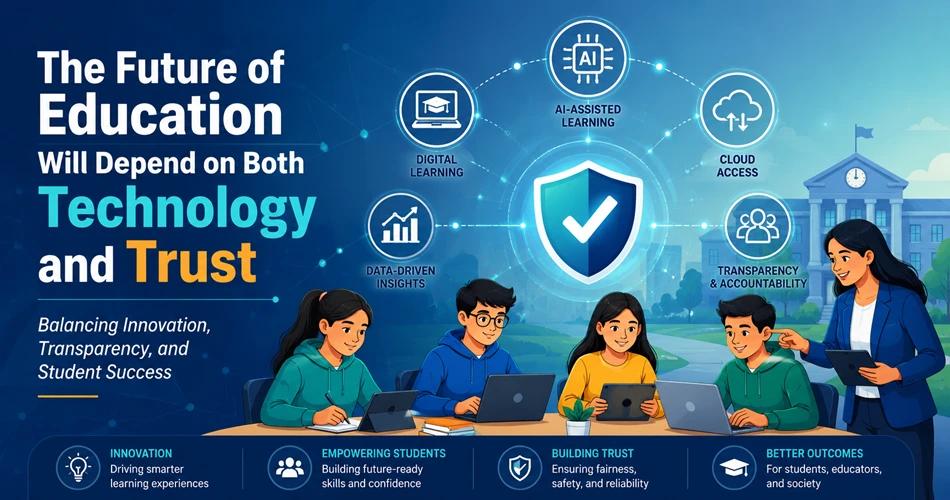
Recent conversations around CBSE OSM have sparked discussions among you students, parents, and educators across the country, questioning the digital accuracy and transparency of digital evaluation. While opinions may differ, one thing remains clear — students need confidence, clarity, and reliable academic support in times of uncertainty. The future of education will not be shaped by technology alone. It will depend on the balance between technological advancement and the trust that you students, parents, teachers, and institutions place in those systems.
The Scale of What We Are Building
Before discussing what needs to change, it is worth acknowledging the scale of what India has already built. India is now the second-largest e-learning market in the world after the United States. The Indian EdTech sector was valued at approximately US$12.75 billion in 2024 and is projected to reach US$50 billion by 2035.
This is not a system that is resisting technology. It is a system that is embracing it at enormous speed. The challenge is whether that speed is matched by quality, equity, and trust.
However, as educational systems become more digital, expectations also increase. You expect accuracy, transparency, and consistency from the technology being used by the authorities conducting exams. This is where trust becomes a critical factor.
Why Trust Matters More Than Ever
Technology can improve efficiency, but education is fundamentally a human-centred process. You invest years of effort into examinations, assignments, and academic preparation. Parents invest their hopes and resources. Teachers dedicate significant time to mentoring and evaluation.
When digital systems are introduced into important academic processes, people naturally want assurance that these systems are reliable, transparent, and designed with student welfare in mind.
Trust helps students feel confident about their learning journey. It allows parents to feel reassured about educational decisions. It also enables educators to embrace innovation without worrying that technology will replace the human judgement that remains essential in teaching and assessment.
In many ways, trust acts as the foundation upon which successful educational technology is built.
Technology Should Support Educators, Not Replace Them
One misconception about educational technology is that it aims to replace teachers. In reality, the most effective innovations are those that support educators and allow them to focus on what matters most: teaching and guiding students.
For example, AI-assisted systems are increasingly being explored to help manage large-scale academic workflows. Technology in education today is not limited to classrooms and learning apps. It is also gradually supporting educators in handling evaluation processes at scale. AI-assisted evaluation support tools can help reduce manual workload for teachers while maintaining smoother academic processes. As student numbers and academic responsibilities continue to grow, educational institutions are exploring solutions that help educators work more efficiently while keeping teachers at the centre of decision-making.
The goal should never be automation for its own sake. The goal should be better educational outcomes for students.
The Importance of Transparency and Guidance
As education continues to evolve, transparency will become increasingly important. You need clear communication about how systems work. You need confidence that academic processes remain fair. Teachers need adequate training and support when new technologies are introduced. This is why educational institutions must focus not only on adopting new tools but also on explaining them clearly and building confidence around their use.
When transparency and trust accompany innovation, technology becomes an enabler rather than a source of uncertainty.
Preparing Students for the Future
The future workforce will require both technological skills and human skills. You will need to understand artificial intelligence, data, and digital tools. At the same time, they will need critical thinking, communication, ethics, and adaptability.
This is where organised preparation becomes valuable. Structured CBSE study material, revision notes, and concept-based learning resources can help you focus on understanding rather than memorisation. Reliable academic support creates stability even when educational systems are changing rapidly.
The future of education is not a choice between technology and people. It is about combining the strengths of both. Technology can improve accessibility, efficiency, and learning experiences. Trust ensures that these improvements genuinely benefit students.
As education enters a more digital era, the institutions that succeed will be those that embrace innovation while maintaining transparency, reliability, and human connection. Ultimately, the future of education will depend on both technology and trust — and students deserve nothing less.
Important Links
| CBSE Announces Resource Books for Course On CT and AI for Students and Teachers | CBSE Clarifies Mark Calculation When Attempted Extra Questions |