


Homework time at home can feel overwhelming, especially with young children who are still learning how to sit, focus, and follow instructions. Tears, distractions, and frequent breaks are common. This suggests that kids may not always struggle with the homework itself, but rather with how it’s presented.
As parents, your goal isn’t to finish homework quickly. It’s to help children build routine, comfort, and a positive relationship with learning. With the right idea to tackle homework and a calm approach, homework can slowly become a smoother part of the day.
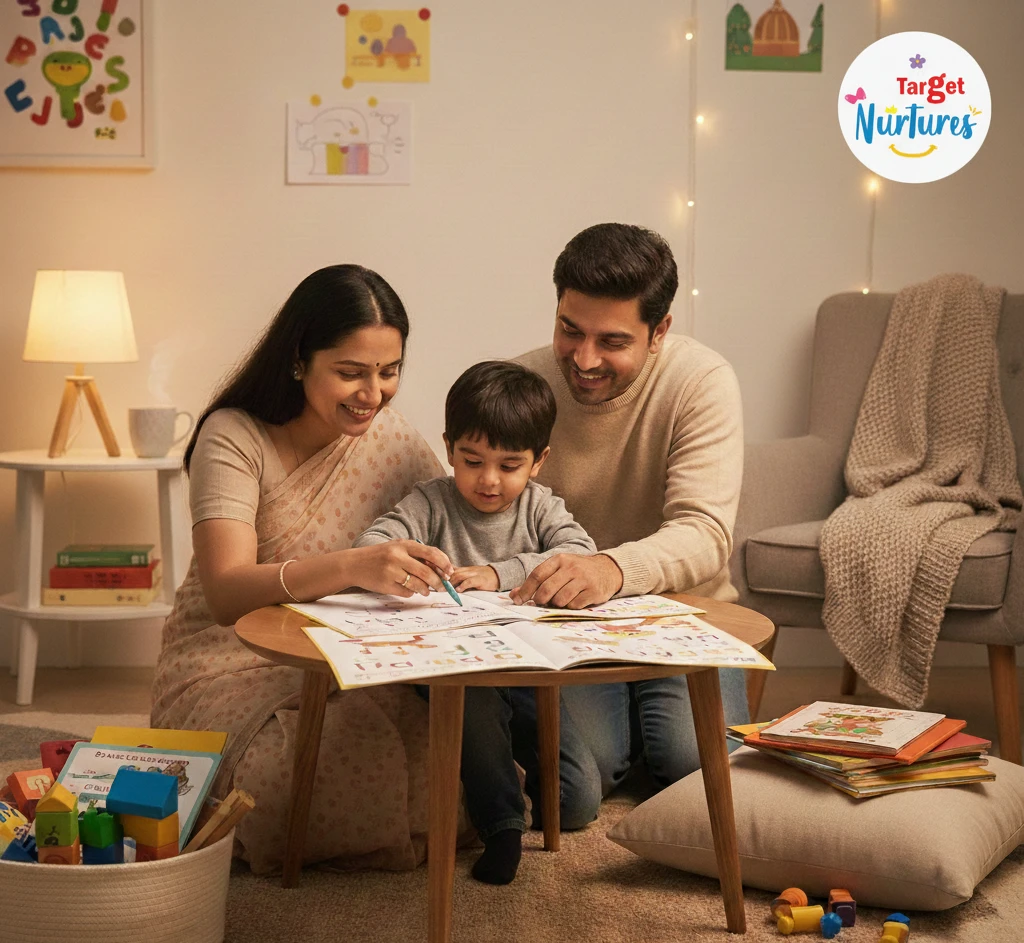
Parents calmly helping their child with homework
Why Homework Feels Challenging for Young Kids
- Young kids are still developing attention span, which makes sitting through homework feel tiring.
- Many children struggle with understanding instructions, not the homework itself.
- Homework time at home can feel overwhelming when children are mentally tired from the day.
- Preschoolers are learning fine motor skills, so writing-based homework needs extra effort.
- Without routine and support, homework for young kids can quickly lead to frustration.
Simple Tips for Parents to Help Kids with Homework
Below are 8 simple tips and ideas for parents to help their kids struggling with homework at home.
1. Create a Consistent Homework Routine
- Children respond well to predictability. Choose a fixed time and place for homework every day, even if it’s just 10–15 minutes.
- A routine helps kids mentally prepare and reduces homework resistance over time.
2. Keep Homework Time Short and Realistic
- Young children don’t need long study hours. Short, focused sessions are more effective than extended ones.
- Break tasks into smaller steps and allow quick movement breaks in between. These simple homework ideas make learning fun and help maintain attention without causing stress.
3. Sit With Your Child, But Don’t Take Over
- Children feel more secure when parents stay nearby during homework time. Sit next to them, guide gently, and let them attempt tasks independently.
- Avoid correcting every mistake in the homework. In young kids, encouragement matters more than perfection.
- At the end, gently guide your kids by helping them understand their mistakes and how to correct them.
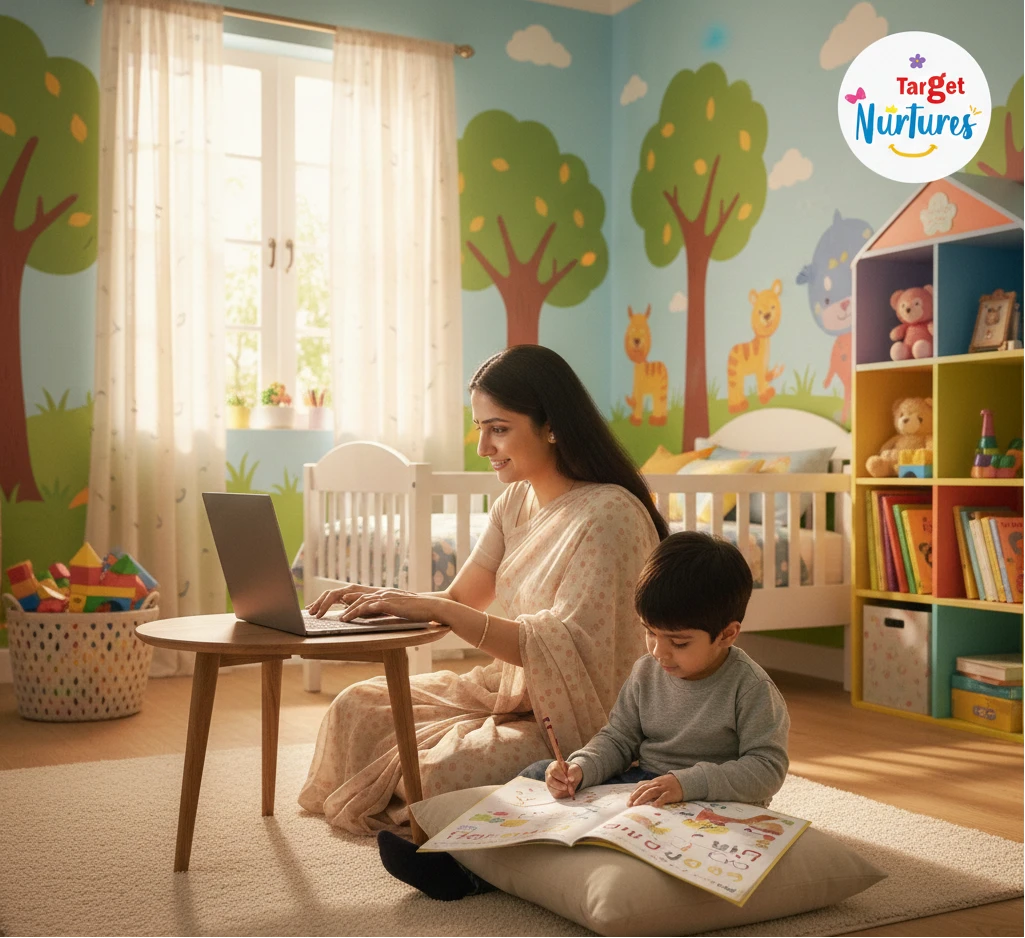
A mother sitting next to her son while he finishes his homework
4. Use Simple and Creative Homework Ideas
Homework doesn’t always need to look like worksheets.
- Counting toys instead of writing numbers
- Reading instructions aloud together
- Colouring, sorting, or matching activities
Creative homework ideas make learning feel less formal and more approachable.
How to Make Homework Time More Fun?
- Read a short rhyme from Nurture English Popular Nursery Rhymes Books for Preschool before homework to help your child relax, focus, and ease into learning time.
- Use quick colouring breaks to calm your child and make homework time feel fun and stress-free. The 101 Unicorn Colouring Book can be used for these little breaks.
5. Give Clear and Calm Instructions
- Young kids process information slowly. Give one instruction at a time using simple words.
- Instead of saying, ‘Finish everything quickly,’ try saying, ‘Let’s complete this one page together.’
6. Praise Effort, Not Just Results
Acknowledging effort builds motivation. Simple phrases like ‘You tried hard’ or ‘You stayed focused’ encourage children to keep doing their best during homework time.
7. Reduce Distractions Around Homework Time
Switch off the TV, keep phones away, and clear the study area. A calm environment helps children concentrate better.
8. Know When to Stop
- If your child feels tired or frustrated, pause the activity. Forcing homework often leads to resistance later.
- Sometimes, stepping back and slowing down is better than implementing some homework ideas for young learners, because what comes first is your child’s well-being.
Conclusion
Homework, at a young age, isn’t about getting everything right, it’s about learning how to try. When parents slow down, stay patient, and focus on support rather than speed, homework becomes less of a struggle and more of a shared moment. These small daily interactions help children feel understood, capable, and willing to engage.
With simple homework ideas, a calm routine, and gentle encouragement, parents can help kids with homework in a way that feels positive and reassuring. Over time, these everyday efforts shape a child’s attitude towards learning, making homework time at home a space for growth and gradual independence.
Frequently Asked Questions (FAQs)
1. How can parents help kids with homework without stress?
Ans: Parents can help kids with homework by keeping sessions short, calm, and pressure-free while offering encouragement instead of constant correction.
2. How much homework is appropriate for preschoolers?
Ans: Preschoolers benefit from 10–15 minutes of light homework that focuses on play-based and hands-on learning.
3. What are some easy homework ideas for young kids?
Ans: Easy homework ideas include colouring, counting household objects, reading together, and matching or sorting activities.
4. Should parents correct every homework mistake?
Ans: No. Parents should guide gently and allow their children to learn through mistakes to build confidence and independence.
5. Why does my child resist homework at home?
Ans: Homework resistance in young kids often comes from fatigue, distractions, or lack of routine rather than difficulty with learning.