
Every parent dreams of raising a child who believes in their own potential. That belief, the one that says ‘I can get better at this’, is what we call a growth mindset. This mindset can be nurtured right from the toddler years.
You do not need to follow some hard-and-fast rules to raise your child with a growth mindset. A few small, consistent habits woven into your child’s daily routine can make a real difference.
What is a Growth Mindset?
A growth mindset is simply the belief that abilities grow with effort and practice. A toddler with a mindset to grow might see a wobbly tower of blocks not as failure, but as a chance to try again. This shift shapes how confidently your child approaches every new skill.
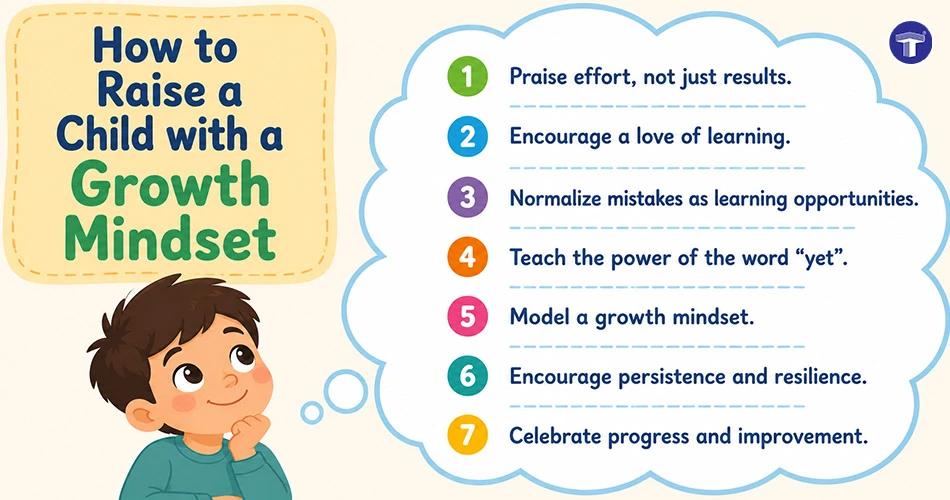
7 Simple Habits to Raise a Child with a Growth Mindset
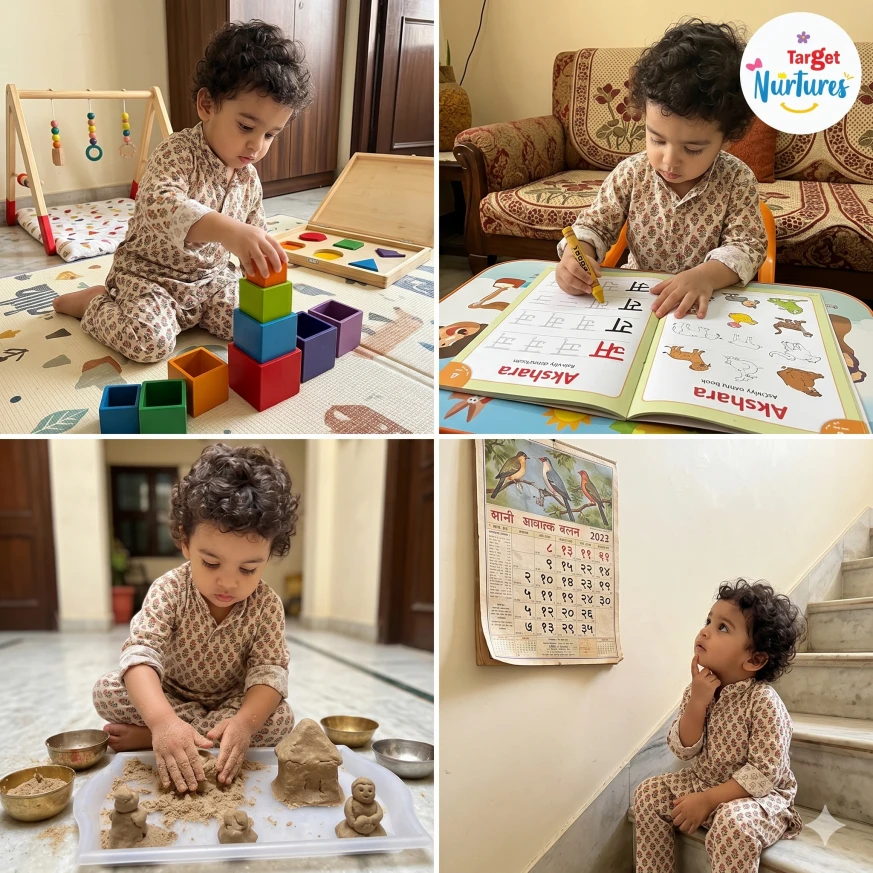
Different activities to raise a child with a growth mindset
1. Praise the Effort, Not Just the Result
Try saying ‘you worked so hard on that’ instead of ‘you are so smart’. This helps your toddler value the process of trying, not just the outcome, building lasting confidence.
2. Let Your Child Struggle a Little
It is tempting to swoop in the moment your toddler falters over a puzzle. But if you want to raise a child with problem-solving abilities, give them some moments to work it out first. Healthy struggle builds a growth mindset in kids.
3. Use the Power of ‘Yet’
Swap ‘I cannot do this’ for ‘I cannot do this yet’. This tiny word reminds your child that skills are always growing and improving, a gentle path forward, not a fixed fear.
4. Turn Mistakes into Mini Learning Moments
Instead of fixing the error straightaway, ask ‘what could we try next?’ This shows your toddler that mistakes are part of learning.
5. Model a Growth Mindset Yourself
Let your child see you trying new things and occasionally getting them wrong. Children copy what they see more than what they are told.
6. Encourage Curiosity Through Open-Ended Play
Encourage play-based learning with no single ‘correct’ way to play. Engaging activity books also invite exploration, nurturing a growth mindset in young kids.
7. Celebrate Progress with Simple Routines
Put up a small ‘growth wall’ or sticker chart, and mark all the new things your toddler tries. This will foster in them a sense of achievement and confidence.
Research led by Stanford psychologist Carol Dweck, who introduced the growth mindset idea, found that children praised for effort chose harder challenges far more often than those praised for being clever.
Important Links
Conclusion
Raising a child with a growth mindset does not happen overnight or through inconsistent efforts. It happens in small moments, through your kind words and a little patience, repeated over the years.
Some days will go smoothly, others may not, and that is simply part of your own growth mindset journey as a parent.
Frequently Asked Questions
1. At what age can toddlers start developing a growth mindset?
Ans: Toddlers as young as two can begin developing a growth mindset, since they already learn through trial, error, and repetition during everyday play.
2. What is the difference between a growth mindset and a fixed mindset?
Ans: A growth mindset believes abilities improve with effort, while a fixed mindset believes abilities are unchangeable, leading children to avoid challenges.
3. How can I praise my toddler without overpraising them?
Ans: Focus your praise on specific actions and effort, and avoid giving general labels like ‘smart’, to keep praise meaningful and balanced.
4. Can a growth mindset help with tantrums and frustration?
Ans: Yes, children with a growth mindset see frustration as temporary and solvable, which often helps them recover from tantrums faster and try again calmly.
5. Do schools also teach growth mindset habits?
Ans: Many preschools now work towards building a growth mindset in children, but consistent reinforcement at home remains the strongest influence.