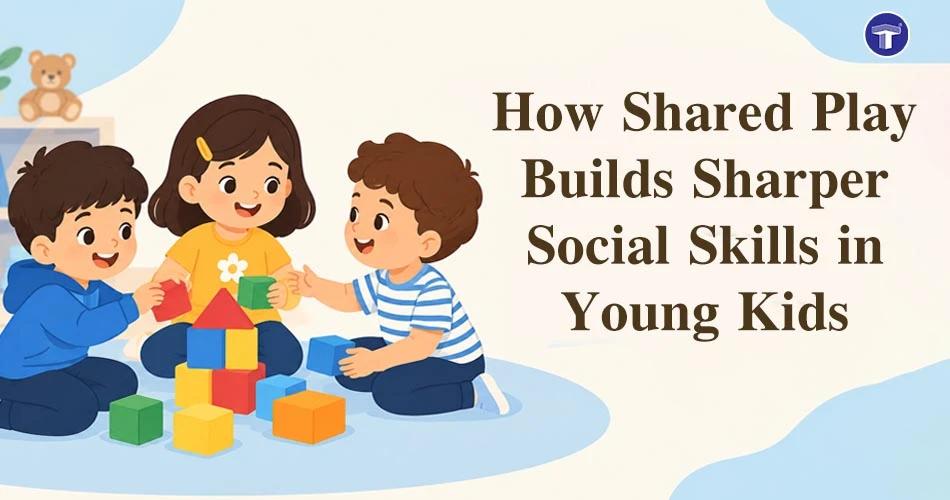

Watching your toddler play, share, or even chat with another child can stir up a lot of feelings. You might wonder if your little one is doing fine with others, or if you should be doing more to help them along.
Improving social skills in your child is less about fixing something and more about gentle, everyday guidance. Let’s first look at the significance of understanding why kids require social skills from a young age.
Why Social Skills Matter for Toddlers and Preschoolers
Social skills help your child make friends, manage big feelings, and feel at ease in new situations. These early years are when little brains are most active in building the lifetime foundations for social skills like empathy, patience, and cooperation. Strong social skills also support emotional regulation during tricky, overwhelming moments.
Simple Ways to Improve Social Skills in Toddlers at Home
All you need to do to improve social skills in your child is to have small and consistent yet impactful moments woven into your daily routine.
- Set an example of sharing and saying 'please' and 'thank you' during everyday routines for your child.
- Let your child take turns choosing a game, a song, or a story.
- Praise kind gestures specifically. Make them aware of the type of behaviour that’s acceptable.
- Use simple learning kits or guided play sessions to practise cooperation in a fun, structured way.
These tiny habits, repeated often, slowly become a second nature for your child.

Pretend play helps toddlers practise social skills naturally
The Role of Storytelling and Pretend Play in Building Social Skills
Stories and pretend play gently let your child step into someone else's shoes, which is really the heart of empathy. A 2007 review published in Pediatrics by the American Academy of Pediatrics found that play, especially with peers, strongly supports social, emotional and cognitive growth in young children.
- Acting out a story helps children safely practise big emotions.
- Pretend play teaches negotiation, like deciding who gets to play which role.
- Immersive storybooks can spark imaginative play that naturally builds these social skills.
When your child plays 'shopkeeper' or 'doctor', they are quietly rehearsing real conversations and turn-taking for later.
How Screen Time Affects Social Skill Development in Children
Too much screen time encourages passive attention, replacing the back-and-forth questioning that children genuinely need to grow socially. A mindful balance goes a long way here.
- Keep screen time limited and always paired with gentle discussion.
- Choose interactive, story-driven content over passive watching whenever you can.
- Swap one screen session a day for a shared game, puzzle, or picture book instead.
Important Links
Conclusion
There is no single right way to improve social skills in your child. Every child has their own social capacity and blooms at their own pace.
Keep offering your child small chances to share, play, and talk, and trust that your child is learning every single day.
Frequently Asked Questions
1. At what age should I worry about my child's social skills?
Ans: Most toddlers develop social skills gradually through the preschool years. If your child shows little interest in others by age four, you can consult a paediatrician.
2. How can I help my shy toddler socialize?
Ans: Start with small, familiar settings, like one playdate at a time. Let your child observe first, then gently encourage them to join in without forcing interaction.
3. Do siblings help improve social skills in children?
Ans: Yes, siblings offer daily practice in sharing, negotiating, and resolving small conflicts. These everyday interactions naturally strengthen a child's social confidence over time.
4. Can pretend play really improve a child's social skills?
Ans: Absolutely. Pretend play helps children practise cooperation and communication by acting out different roles and emotions in a safe, imaginative setting.
5. How much screen time is okay for toddlers?
Ans: Experts generally suggest limiting screen time for toddlers and prioritising interactive play. Pairing any screen time with conversation helps protect social skill development.