
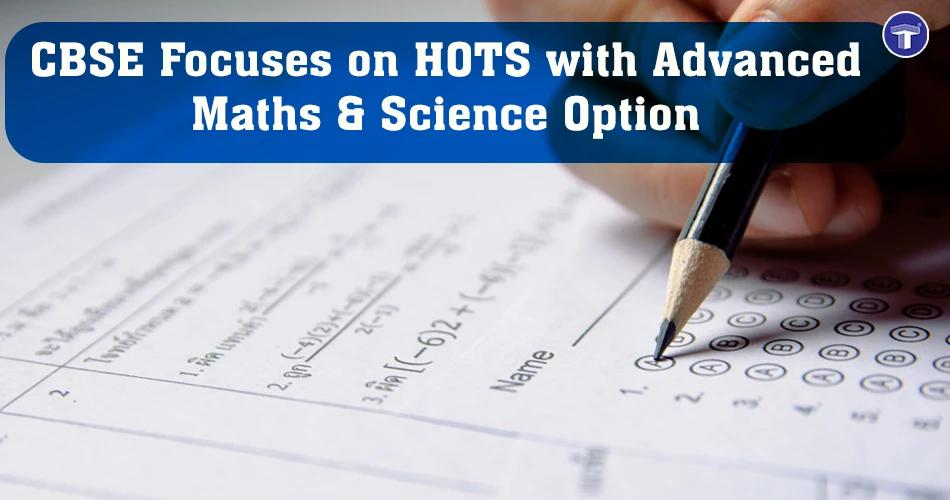
The Central Board of Secondary Education (CBSE) is set to bring a major shift in how students learn Maths and Science. From the 2026–27 academic session, a new two-level structure will be introduced to strengthen Higher-Order Thinking Skills (HOTS) and promote deeper conceptual understanding.
If you are a student or teacher, here’s everything you need to know about this new structure.
What Is Changing in CBSE Maths and Science?
CBSE plans to introduce two levels for Maths and Science:
Standard Level (Compulsory)
- All students will study a common syllabus
- A compulsory 80-mark exam (3 hours) will be conducted
- Focus: Building a strong foundation through application-based learning
Advanced Level (Optional)
- Designed for students who want to go deeper into concepts
- Focus on HOTS (Higher-Order Thinking Skills)
- Helps improve conceptual clarity without affecting overall scores
When Will These Changes Be Implemented?
These changes will happen majorly in two phases:
Class 9
Under the revised framework you will take the compulsory exam for standard subjects for Class 9 as a school-based annual exam from 2026–27. Additionally you can opt for Advanced Mathematics and/or Advanced Science.
Class 10
If you are a Class 10 student you will be giving the compulsory subject Board exam from 2027–28 with an additional choice of choosing Advanced Mathematics and/or Advanced Science.
This gives schools and students enough time to adapt to the new system.
Key Features of the Advanced Level
The optional advanced papers come with some important highlights:
- Duration: 1 hour
- Marks: 25 marks
This acts as an indicator of aptitude for higher studies. These marks will not be added to the overall aggregate. If you score 50% or more, you will receive a note indicating successful completion of advance level in your marksheet.
Internal Assessments
Internal assessments will continue as before and account for 20 marks as before.
Important Update
CBSE will remove the earlier distinction between:
- Basic Maths
- Standard Maths
Instead, a single, uniform curriculum will be followed for all students. This ensures standardisation and clarity across schools.
The advanced level is purely optional and you are flexible to choose it for your academic journey.
Final Thoughts
CBSE’s new two-level structure is a progressive step towards future-ready education. The goal is to move beyond rote learning and encourage critical thinking and problem-solving skills. By introducing optional advanced papers, the Board is giving students the freedom to learn deeply without the pressure of marks.
Stay prepared. Stay curious.
Source
Curriculum released by CBSE on the official website: click here to view.
Kindly note that any and all information is subject to change as per CBSE, Education Ministry, and Government of India.