
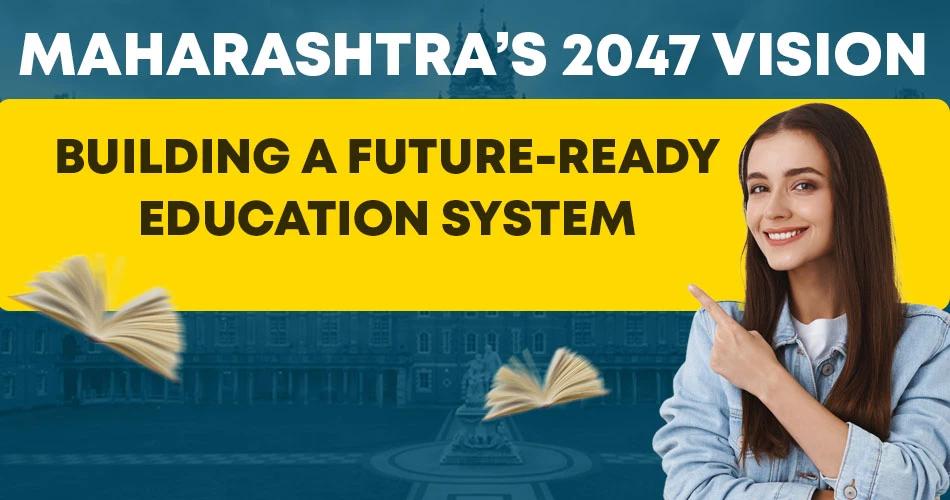
Maharashtra is setting a big, bold goal for its school education system, and it starts now. Over the next few decades, the state aims to transform how children learn, how teachers teach, and how schools function, with a clear vision for where it wants to be by 2047, India’s centenary year of independence.
Let’s break down what this means, and why it matters.
The Big Goals: Where We Are vs. Where We Want to Be
As of now, only 41% of eligible children in Maharashtra are enrolled in foundational schooling. The target? 70% by 2029, and 100% by 2047.
Other major targets include:
- Dropout Rate: From the current 7.7% at the secondary level, the aim is to reduce this to below 4% by 2029, and eventually reach near-zero across all age groups.
- Learning Outcomes: Currently, less than 22% of secondary students perform at proficient or advanced levels. The goal is to increase this to over 50% by 2029, and hit 100% by 2047.
What’s the Plan?
To reach these ambitious targets, Maharashtra has prepared a detailed roadmap. The plan is broken into three stages: short-term (2025–2029), mid-term (2030–2035), and long-term (2036–2047).
1. Modernising Schools
The vision involves turning every school into a smart, inclusive, and climate-resilient space. This means:
- Smart classrooms with digital boards and projectors
- Fully functional science labs, libraries, and sports areas
- AI-powered learning tools in model schools
- Safe buildings with electricity, water, and sanitation
2. Empowering Teachers
Teachers will receive at least 50 hours of annual training aligned with the National Education Policy (NEP) 2020. They’ll also be introduced to new teaching tools, digital methods, and global benchmarks like the PISA assessment system. Leadership training for principals and education officers is also a key part of this strategy.
3. Changing the Way Students Learn
The curriculum will move away from rote memorization and focus more on:
- Life skills, digital literacy, and coding
- Project-based learning and real-world problem solving
- Early exposure to vocational education, even from Grade 6 onwards
Subjects like EV technology, digital media, and basic electronics will become part of school life.
Why This Is Important
While Maharashtra has already made progress — with high scores in national surveys and strong digital infrastructure — several challenges remain:
- Low learning levels in science and math (especially in Class 10)
- A shortage of subject-specific teachers
- Gaps in quality across rural, tribal, and private-aided schools
- Poor infrastructure in many government schools
Without fixing these, true educational equality can’t be achieved.
The Good News
Despite these challenges, Maharashtra’s school system is already outperforming the national average in many learning assessments. Over 90% of students aged 14–16 have access to smartphones, and 60% use them for educational purposes.
The government is also planning to introduce PM Shri and CM Shri model schools in every block, serving as innovation hubs and examples of what education can look like when done right.
A Future-Ready Vision
By 2047, Maharashtra wants to lead the way in Indian education. That means:
- Every student enrolled in school and ready to succeed
- Every teacher trained and empowered
- Every school smart, inclusive, and safe
- And every child equipped not just to pass exams, but to thrive in life
The state is not just chasing numbers it’s building an education system rooted in Indian values but aligned with global needs. With continued effort, policy support, and community involvement, this vision has the power to shape not just Maharashtra’s future, but serve as a model for the entire country.
Official Government Decision by Maharashtra School Education and Sports Department, 15 July, 2025: click here to read.
Kindly note that any and all information is subject to change as per the Maharashtra School Education and Sports Department, Education Ministry, and Government of India.