
Choosing the right career path after your SSC exams can feel like a big decision. With so many exciting possibilities, it's easy to feel a bit overwhelmed. You're not alone in wondering, ‘How do I figure out what's right for me?’.
This blog aims to cut through the confusion by answering the questions students ask most often. Consider this your guide to making informed and confident choices about your next steps.
Flow of the Blog
Here is an overview of what you’ll learn in this blog:
1. Core Career Exploration:
Explore fundamental questions such as how to choose the right career path, which academic stream to select, and the best fields to pursue after completing 10th grade.
2. Stream-Specific Queries:
Discover the various career opportunities linked to each academic stream and learn about the diverse professional options available within them.
3. Profession-Related Questions:
Get detailed step-by-step information on how to become different professionals across various fields, helping you plan your journey effectively.
Core Career Exploration
1. What factors should students consider while choosing a stream after 10th in Maharashtra?
If you are thinking what to do after 10th, remember that selecting a stream is more than just picking subjects. It's about aligning your education with your interests, strengths, and long-term goals. Here are the key factors to consider:
- Interest and Passion:
Choose subjects you genuinely enjoy. Success comes easier when you are passionate about what you study.
- Strengths:
To analyse your strengths, take aptitude tests. Based on your results, choose a stream that not only aligns with your strengths but also supports the development of your weaker areas. The Maharashtra Career Counselling Portal offers extensive assistance and direction in determining future career paths.
- Career Aspirations:
Think ahead. Research list of career options after 10th that interest you and check which streams are required for those professions (e.g., Engineering, Medicine, Law, etc.).
- Market Demand:
Researching current job trends and future job opportunities in specific fields can offer insights into career opportunities, various streams can offer.
- Vocational Interests:
If you prefer hands-on learning, consider vocational courses after 10th that offer practical training in specific industries.
Institutes Offering Vocational Courses After 10th
Several renowned institutes in India offer vocational courses:
- National Institute of Open Schooling (NIOS)
- Industrial Training Institutes (ITIs)
- Polytechnic Institutes
- Vocational Training Centers (VTCs)
- Private Training Institutes
- Institute for Design of Electrical Measuring Instruments (IDEMI)
- Seek Professional Guidance:
Speak to counsellors for career guidance after 10th and personalised advice based on your own abilities and interests. Like mentioned earlier, aptitude tests can help you make a better decision.
2. What are the best career options after 10th in Maharashtra?
Maharashtra, being a major educational and industrial hub, offers a wide range of career options after the 10th grade. Your career options depend on the stream you choose, but here are some of the most promising paths you can explore:
- Science:
Medicine, Engineering, Biotechnology, Computer Science, Architecture, Forensic Science, Environmental Science, etc.
- Commerce:
Chartered Accountant (CA), Company Secretary (CS), Cost and Management Accountant (CMA), B.Com, BBA, Banking, Investment Banking, Financial Analysis, etc.
- Arts:
Journalism, Law, Psychology, Fashion Design, Fine Arts, Mass Communication, Photography, Animation, Culinary Arts, etc.
- Vocational:
Medical Lab Technician, Digital Marketer, Electrician, Plumber, Hospitality Management, Graphic Designer, etc.
3. What are the different streams available after 10th?
After the 10th grade, you can choose from the following primary streams:
- Science Stream:
Covers subjects like Physics, Chemistry, Biology, or Mathematics. Ideal if you are interested in engineering, medical sciences, or research.
- Commerce Stream:
This stream consists of subjects like Accountancy, Business Studies, and Economics. Suitable if you are aspiring to become CA, financial analyst, or a business entrepreneur.
- Arts Stream:
Includes subjects like History, Political Science, Geography, Psychology, and Fine Arts. It offers paths to careers in journalism, law, and social services, etc.
4. Can I get a job after 10th?
While internship opportunities may or may not be available after completing 10th standard, it's important to note that the minimum legal age for employment in India is 18 years. So, in the meantime, you can explore options such as skill development courses, diploma courses after 10th, or pursue further degree education to enhance your knowledge and experience until you reach the eligible age for employment.
5. Are there any government job opportunities after 10th?
While some government job notifications list 10th pass as a minimum qualification, the legal employment age in India is 18. Therefore, even if academically qualified after 10th standard, you can only apply for these positions once you reach the age of 18.
Following are some examples of government jobs and roles you can pursue:
A) Staff Selection Commission Entrance Exam (SSC)
Opportunities:
Multi-Tasking Staff (MTS), General Duty (GD) Constable (for Central Armed Police Forces (CAPFs) like BSF, CRPF, CISF, ITBP, SSB, Assam Rifles).
Eligibility:
Educational Qualification: 10th pass or equivalent.
Minimum Age Requirement: You must be at least 18 years at the time of application.
SSC releases official notifications on its website (www.ssc.nic.in) detailing vacancies, eligibility, and the application process. Keep an eye on the website for updates.
B) Indian Railways
Opportunities:
Various Level-1 posts (formerly Group D), such as Track Maintainer Grade-IV, Helper/Assistant in various technical departments, Assistant Pointsman.
Eligibility:
Educational Qualification: 10th pass, ITI or equivalent, or National Apprenticeship Certificate (NAC) granted by NCVT.
Minimum Age Requirement: You must be at least 18 years at the time of application.
Railway Recruitment Board, Mumbai (RRB) release notifications when vacancies arise. Keep checking this website for updates.
C) Defence Forces (Indian Army, Navy, Air Force)
Opportunities:
Soldier (General Duty, Tradesman, Clerk/Store Keeper Technical), Agniveer.
Eligibility:
Educational Qualification: 10th pass (with varying percentage requirements depending on the post). For some technical roles, 10+2 might be preferred or required.
Age Limit: Varies depending on the entry and branch (e.g., for Soldier GD, it's often 17½ –21 years, but can be different for other roles like Tradesman or Agniveer). Ensure you meet the specific age criteria at the time of application.
The Indian Army (www.joinindianarmy.nic.in), Indian Navy (www.joinindiannavy.gov.in), and Indian Air Force (careerindianairforce.cdac.in) publish recruitment notifications on their respective websites.
D) Postal Department (India Post)
Opportunities:
Gramin Dak Sevak (GDS) [Branch Postmaster (BPM), Assistant Branch Postmaster (ABPM), Dak Sevak], Multi-Tasking Staff (MTS).
Eligibility (for GDS):
Educational Qualification: 10th pass with passing marks in Mathematics and English. Must have studied the local language at least up to the 10th standard. Basic computer knowledge is usually required.
Age Limit: 18 to 40 years (with relaxations for reserved categories). You need to be within this age range when applying.
India Post releases notifications for GDS recruitment on its website (indiapostgdsonline.gov.in). Keep checking for new notifications.
Eligibility (for MTS):
Educational Qualification: 10th pass.
Age Limit: Generally 18-25 years (may vary).
Application Process (for MTS): Similar to SSC MTS, as the recruitment is often conducted through SSC.
Stream-Specific Queries
1. What are the career options in the Science stream after 10th?
When considering career options in the Science stream after 10th, you have several pathways to explore depending on your subject groups.
Here’s a breakdown of career options by subject combination:
A) What career options exist if I choose PCM (Physics, Chemistry, Math) after 10th?
Choosing the PCM combination opens up numerous career opportunities, like:
- Engineering (Civil, Mechanical, Electrical, Aerospace, etc.)
- Pure Sciences (Physics, Chemistry, Mathematics)
- Computer Science and IT
- Data Science and Machine Learning
- Architecture
- Pilot Training
B) What are the career options in Science PCB (Physics, Chemistry, Biology)?
With PCB, students can pursue careers in:
- Medicine (MBBS, BDS)
- Pharmacy
- Nursing
- Biomedical Engineering
- Veterinary Science
- Biotechnology
2. What are the career options in Commerce after 10th?
Choosing the Commerce stream after 10th provides a strong foundation for various professional courses and degree programs.
- Core Subjects:
Accountancy, Business Studies, Organization of Commerce and Management, Secretarial Practice, Economics, Mathematics (optional).
- Career Paths:
Chartered Accountancy, Company Secretary, Cost and Management Accountancy, Banking, Investment Banking, Financial Analysis, Stock Broking, Economics, Marketing, HR, Data Analysis, Civil Services, etc.
3. What are the career options in Arts after 10th?
If you’re wondering what are the career options after 10th without maths or science, you’ll be relieved to know that there are numerous career paths available. These options offer fulfilling and successful futures without a heavy reliance on mathematical skills. The Arts stream, in particular, provides a rich landscape for individuals who are more inclined towards subjects like languages, social sciences, and creative expression.
- Core Subjects:
History, Political Science, Sociology, Psychology, Literature, Geography, Fine Arts.
- Career Paths:
Journalism, Law, Psychology, Fashion Design, Fine Arts, Mass Communication, Photography, Animation, Culinary Arts, Theatre, etc.
4. What are the career options after 10th CBSE or ICSE?
The streams and career options after 10th remain largely the same, but subject combinations and assessment patterns may vary slightly. Both Boards provide a strong foundation for higher studies and competitive exams.
Profession-Related Questions
1. How to become an Investment Banker?
Becoming an Investment Banker is a prestigious career option that involves providing financial advice, managing investments, and helping businesses with mergers, acquisitions, and other important financial decisions.
Educational Qualification:
Complete a Bachelor’s degree in fields such as Finance, Economics, or Business.
Pursue Master’s in Business Administration (MBA), preferably from a reputed institution. Certifications like CFA (Chartered Financial Analyst) can help in improving skills and chances of employment.
Skills Required:
Strong analytical, communication, and financial skills are crucial.
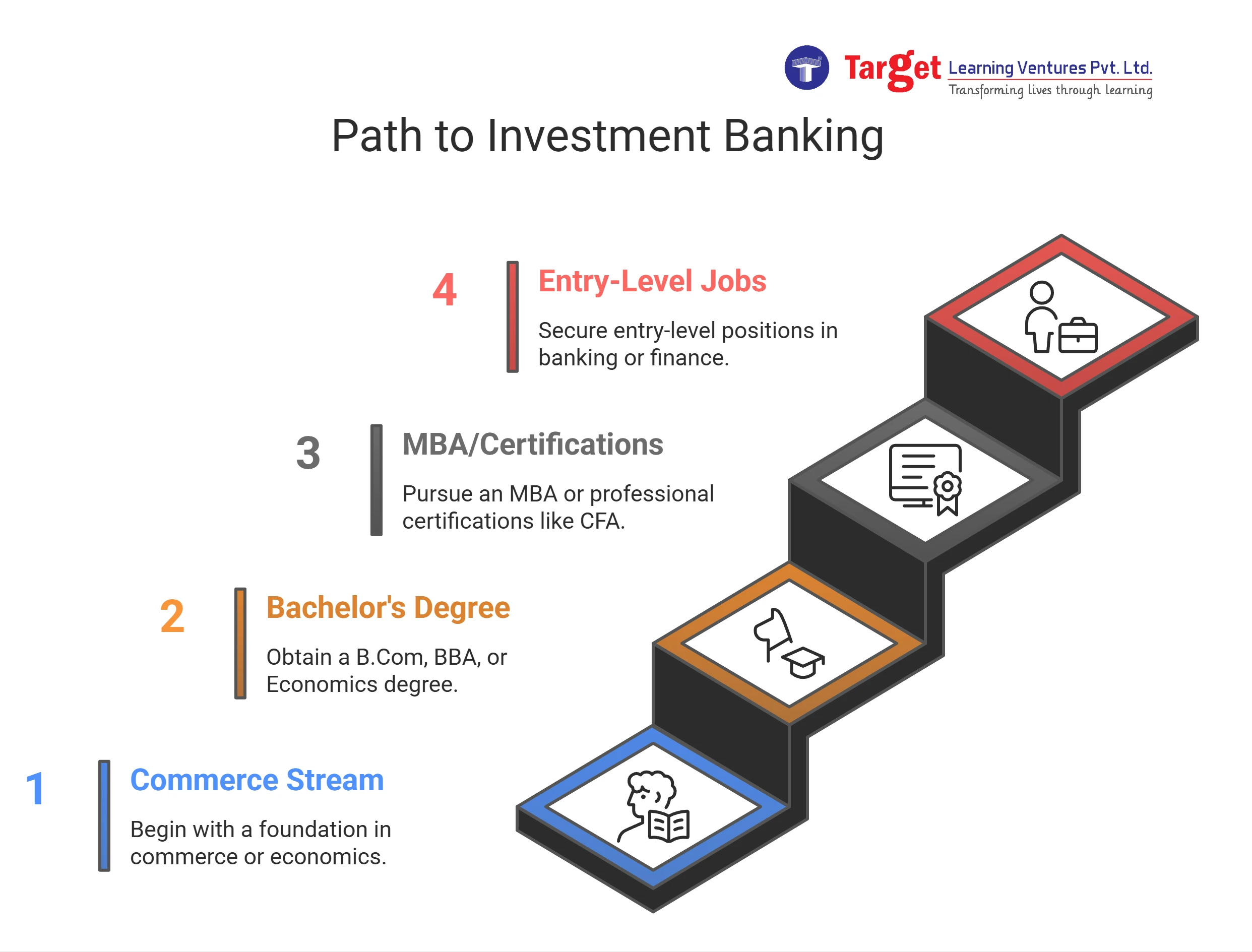 Path to Investment Banking
Note: While this is a common pathway to a career in investment banking, it's important to know that the journey can vary based on individual preferences, opportunities, and industry requirements.
2. How do I become a Pilot?
Becoming a pilot involves training and meeting specific medical and educational requirements. Here’s how to become one:
Educational Requirements:
You must select Science stream and complete 12th grade with Physics and Mathematics. Join a flight school and undergo Commercial Pilot training. The course includes theory and practical flight hours.You must earn a Private Pilot License (PPL) first and then a Commercial Pilot License (CPL).
Medical Requirements:
Pass a Class 1 Medical Examination to ensure fitness for flying.
Additional Skills:
Strong communication, quick decision-making, and problem-solving skills are important for Pilots.
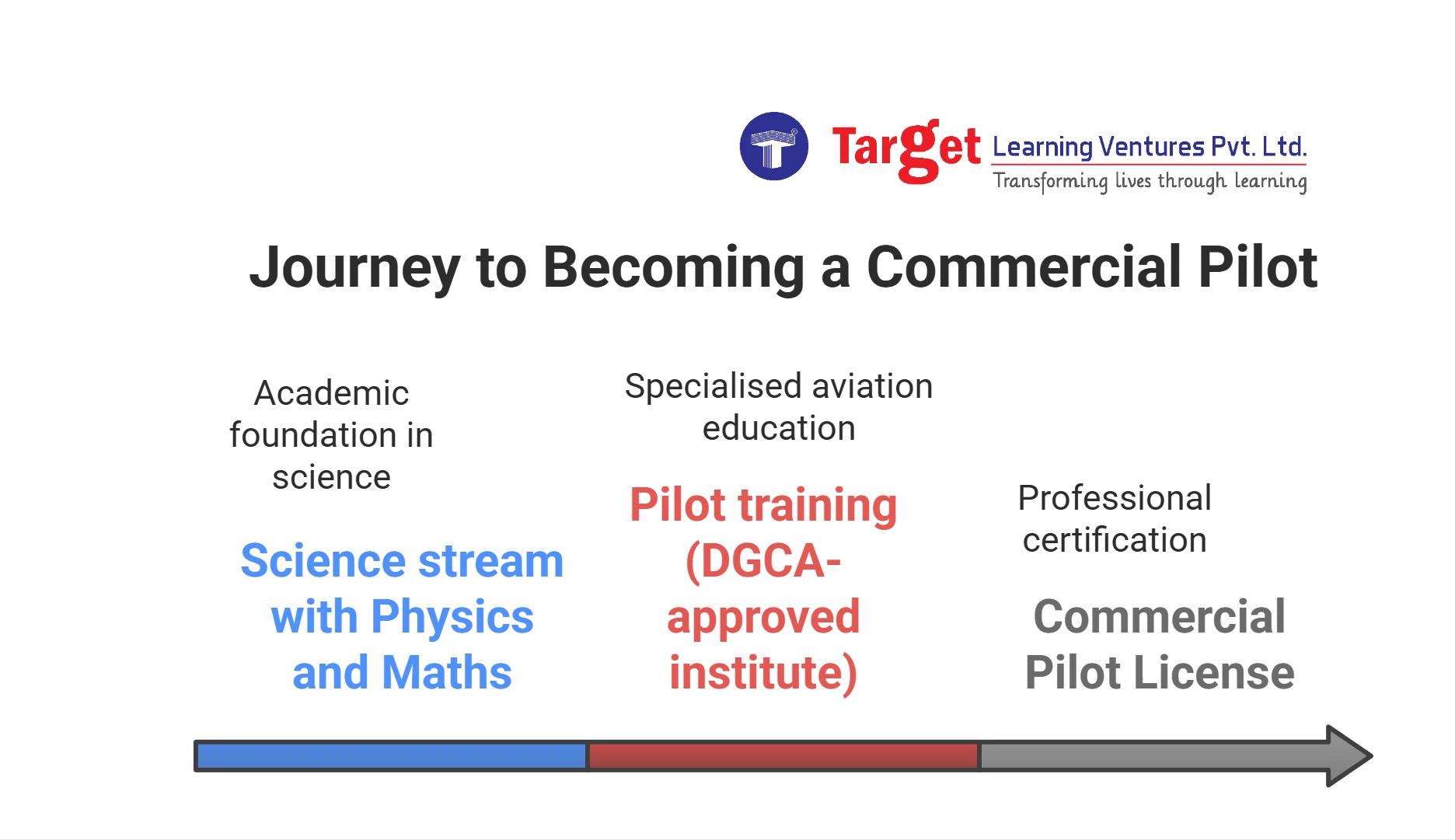 How to become a Commercial Pilot
Note: While this is a common pathway to becoming a Pilot, it's important to know that the journey can vary based on individual preferences, opportunities, and industry requirements.
3. How do I become a Software Engineer?
To become a Software Engineer, refer to the following criteria:
Educational Path:
Enroll for Science stream. After 12th, opt for a B.Tech or B.E. in Computer Science or Information Technology. Enroll in a reputed engineering college. Learn programming languages (e.g., Python, Java, C++) and software development frameworks. Gain practical experience by participating in internships and working on software development projects.
Additional Certifications:
Microsoft Certified Developer or Oracle Java Certification can boost your profile. After completing your degree, apply for Software Engineer positions with tech companies.
 Path to Software Engineering
Note: Although this is a common route to becoming a Software Engineer, the path may differ depending on individual choices, opportunities, and industry demands.
4. How to become a Doctor after 10th?
Becoming a Doctor is a long but rewarding journey, so make sure to follow these steps:
Educational Requirements:
Choose the Science stream and complete Std. 12th with PCB (Physics, Chemistry, Biology). After 12th, appear for NEET (UG) exam and score well to secure admission in medical colleges. Join a medical college and complete your MBBS degree.
Specialisation:
After MBBS, you can pursue a specialisation like surgery, pediatrics, or internal medicine via a MD/MS degree. After completing MBBS and any specialisations, register with the Medical Council to practice as a licensed Doctor.
 Path to Become a Doctor
Note: While this represents a common route to a career in medicine, individual experiences may vary depending on preferences and market needs.
5. Steps to become IAS after 10th
Becoming an Indian Administrative Service (IAS) officer is a prestigious career goal. You will need to follow the steps given below to achieve it.
Educational Requirements:
First, complete a bachelor’s degree in any stream (BA, B.Sc, B.Com, etc.). After graduation, begin preparing for the UPSC Civil Services Examination, which includes three stages—Prelims, Mains, and Interview. Preparing for the UPSC exam typically takes 1–3 years, depending on your pace and dedication. After qualifying the Prelims and Mains, you’ll need to attend a in-person interview round to become an IAS officer.
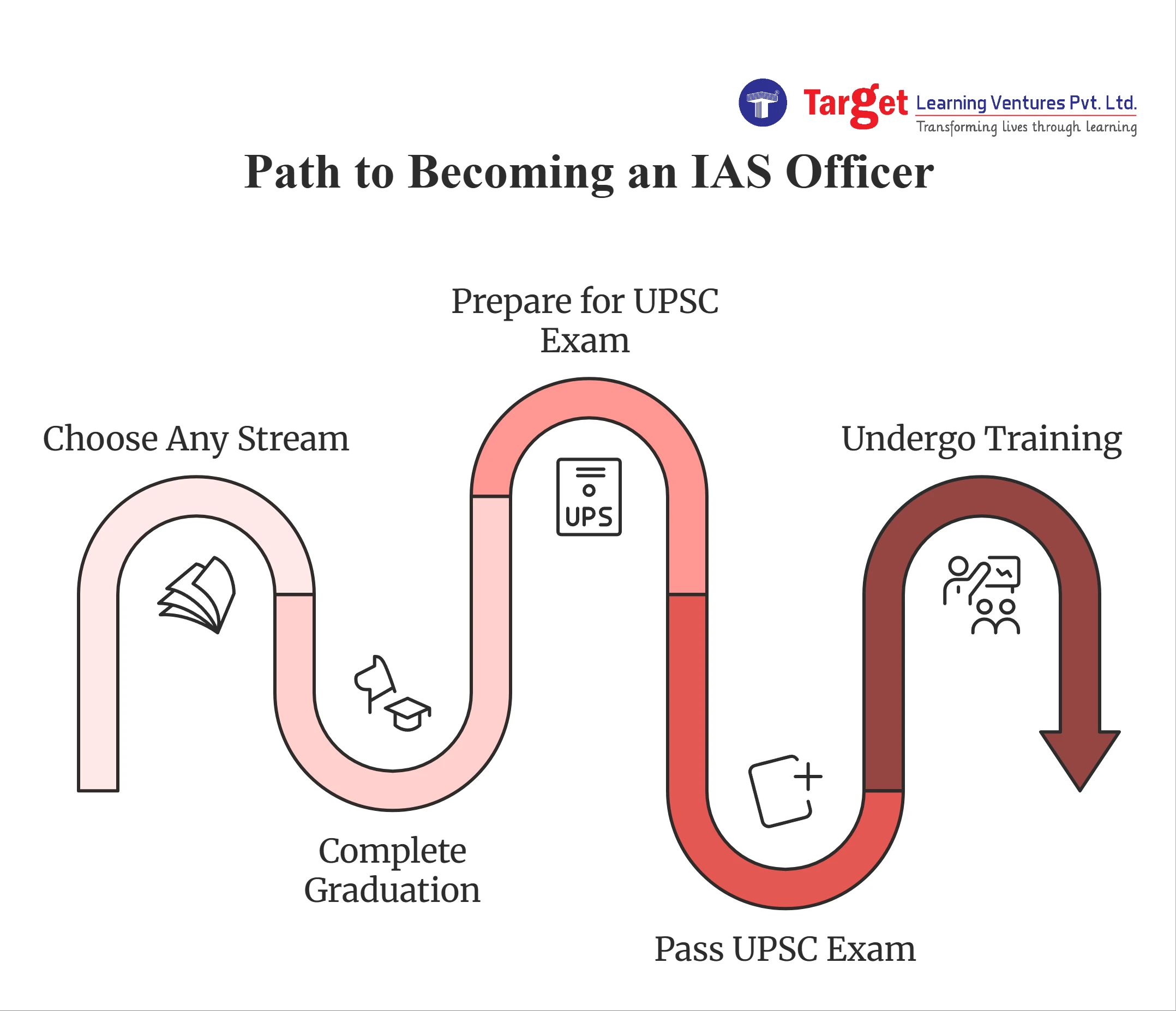 How to Become an IAS Officer
Note: The journey to becoming an IAS officer usually follows this pattern, though it can vary with personal circumstances and the changing requirements of the country.
6. Steps to become CA after 10th
To become a Chartered Accountant (CA) after the 10th, you need the following qualifications:
Educational Requirements:
After 10th, opt for the commerce stream. Enroll in the CA Foundation program under the Institute of Chartered Accountants of India (ICAI). After clearing the Foundation, you move to the Intermediate course, which requires passing two groups of exams. During the Intermediate course, you'll also need to complete a 3-year Articleship under a practicing CA. After completing your Articleship, you can appear for the CA Final exam. Upon clearing the final exams, you can register as a qualified Chartered Accountant.
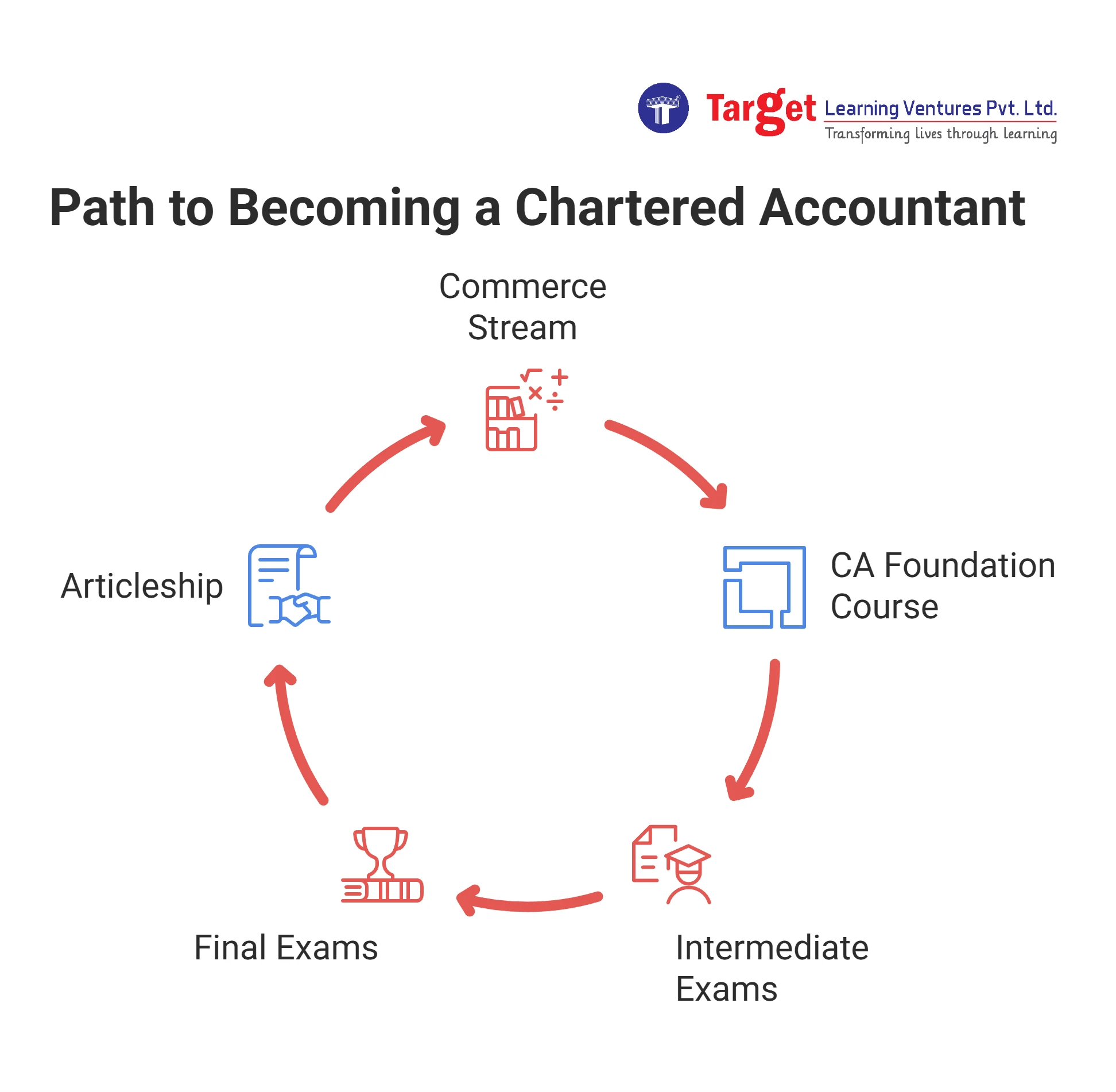 Path to Become a CA
Note: This pathway is often followed by aspiring CAs, but variations occur depending on individual choices and the demands of the industry.
7. How do I become a Lawyer?
If you want to become a Lawyer after 10th, you need to fulfill the following criteria:
Educational Path:
Choose any stream after 10th. To become a Lawyer, you must first complete either a 5-year integrated law degree (BA LLB) after 12th grade or a 3-year LLB degree after graduation in any discipline.
After earning your law degree from a recognised university, you need to enroll with the State Bar Council and pass the All India Bar Examination (AIBE) conducted by the Bar Council of India. Once you clear the AIBE, you get a ‘Certificate of Practice’ allowing you to practice law in Indian courts. Practical training through internships during your studies is also highly recommended to gain experience.
 Steps to Become a Lawyer
Note: Although many follow this path to become a Lawyer, the route can change according to one’s goals, opportunities, and evolving industry requirements.
8. How to become an Engineer after 10th?
To pursue a career in engineering, you need the following qualifications:
Educational Qualifications:
Choose Science stream. Complete 12th with Physics, Chemistry, and Mathematics (PCM). Appear for entrance exams such as JEE Main, JEE Advanced, or state-level MHT CET entrance exam.
After clearing the entrance exams, enroll in a B.Tech or B.E. program in your preferred branch of engineering.
After completing your undergraduate course, you can pursue a master’s degree (M.Tech) in a specialised field.
 How to Become an Engineer
9. How to become a Journalist?
Let’s see what the eligibility and steps are to become a Journalist:
Educational Qualifications:
To become a Journalist, start by choosing the Arts stream after 10th, focusing on subjects like English, History, or Mass Communication. Pursue a bachelor's degree in Journalism, Mass Communication, or related fields. Gain practical experience through internships. Begin your career with entry-level roles such as junior reporter or content writer. With experience, progress to senior positions like editor, anchor, or specialise in investigative or digital Journalism.
 Steps to Become a Journalist
Note: While this pathway is common for becoming a Journalist, the process can vary greatly depending on individual goals, opportunities, and industry trends.
Summary
Your journey after 10th is unique—there’s no one-size-fits-all path. Take time to understand your interests, strengths, and goals. Seek guidance from counsellors, research thoroughly, and choose a path that excites you and aligns with your aspirations. Remember, every stream and course can lead to a successful and fulfilling career if you are passionate and committed.