
If you’re wondering what to do after 10th board SSC results, trust me, you’re not alone. This is one of the biggest turning points in a student’s academic journey, and it’s completely normal to feel confused, excited, or even a little overwhelmed.
In this blog, we’ll not only help you understand what to do after SSC exam, but also what you can start doing before getting your Maharashtra SSC results 2026, explore your options, and make smart choices for a successful future.
1. Understand Your Strengths and Discover Your Interests
Before rushing into any decisions, pause for a moment and think about what truly interests you.
Ask yourself:
- Which subjects did I enjoy the most during my SSC years?
- What topics made me genuinely excited to learn?
- Which activities made my time fly without me even noticing?
These questions can help you identify your strengths and passions. Whether your interests lie in science, arts, commerce, sports, design, technology, or something completely different, knowing what excites you is the first step toward choosing the right path.
2. Explore Courses and Career Path Options
Your Maharashtra SSC results 2026 are not the end; they are the beginning of a new journey filled with opportunities.
This is the right time to explore the many courses and best career options after 10th available based on your interests and career goals. As we mentioned in one of our blogs, How to Choose the Right Career Option After 10th – A Simple Guide, it helps to talk to your parents, teachers, friends, and seniors.
At the same time, don’t let their opinions pressure you. Use their advice to understand the available options better, but make a choice that feels right for you.
Science, Commerce, or Arts?
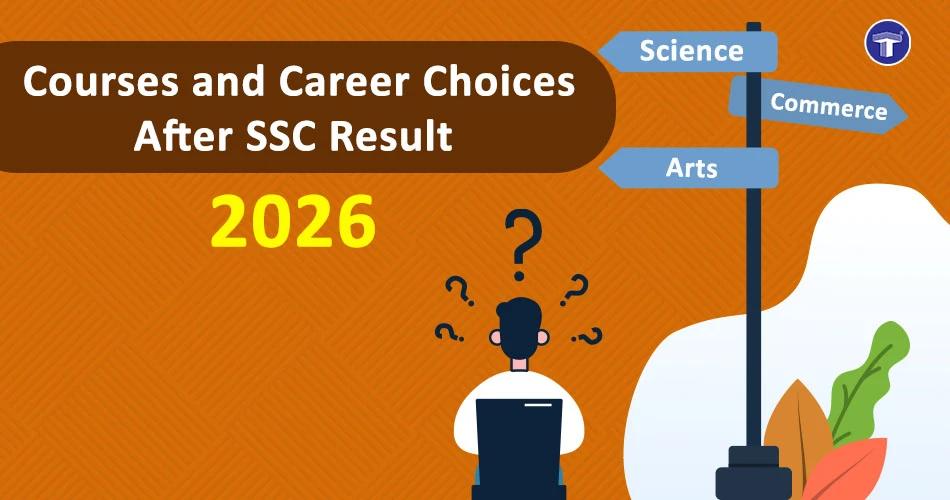
The most common options after 10th SSC exam are the three major streams: Science, Commerce, and Arts.
If you’re still unsure, that’s perfectly okay. Here’s a simple guide:
| Science | Commerce | Arts |
| Ideal for you if you are interested in engineering, medicine, research, or technical careers. If you enjoy subjects like physics, chemistry, mathematics, and biology, this could be the right stream for you. | A great option if you are interested in business, finance, economics, accounting, and entrepreneurship. If numbers, management, and the world of business excite you, Commerce may be the perfect fit. | Best suited if you have a creative and analytical mind and are interested in subjects like literature, psychology, history, sociology, law, journalism, and social sciences. |
If traditional streams don’t feel right, you can also explore vocational or skill-based courses.
Fields like Animation and Graphic Design, Web Development, Hospitality and Tourism Management, Interior Design, Fashion Designing, and Marketing are highly in demand today and offer excellent career opportunities.
3. Research Colleges and Educational Institutions
Once you have clarity about the direction you want to take, start researching colleges and institutions that offer your preferred course.
Here’s how you can begin:
- Make a list: Note down colleges that offer your desired course and check their websites for details about faculty, facilities, and campus culture.
- Check admission criteria: Understand whether admission process after 10th in Maharashtra is based on merit, cut-offs, or entrance exams.
- Visit campuses: If possible, visit the colleges to get a better feel of the environment and speak to students or faculty members.
- Explore beyond traditional colleges: There are also excellent online courses after 10th, diploma programs, and specialised institutes that can help you build valuable skills.
4. Build and Strengthen Future-Ready Skills
Along with choosing the right stream, it is equally important to build future-ready skills.
Skills such as:
- Digital literacy
- Communication skills
- Critical thinking
- Problem-solving
- Time management
- Adaptability
They can give you a strong competitive edge and prepare you for future academic and career opportunities.
Today, success is not only about marks but also about how well you can adapt and grow.
5. Gain Exposure Through Internships
If you are still unsure about what next after 10th, consider applying for an internship after 10th. Short-term internships can give you real-world exposure and help you understand what working in a particular field actually feels like. They are also a great way to gain practical knowledge, improve your confidence, and build connections.
The pressure of making the ‘perfect’ choice may feel heavy right now, but remember, this is only the beginning of your journey.
Your interests and goals can evolve with time. College and future experiences will help you discover yourself better. Take your time, explore your options, and remember that there are no mistakes; just good and and choices. Therefore, in future, if your choice doesn’t seem right, it’s completely okay to change direction if your passion changes.
FAQs
1. How do career counselors guide students after Maharashtra SSC result 2026?
Ans: They assess aptitude + interests, suggest suitable streams/careers, explain scope, and help with college planning.
2. What are the biggest mistakes students make after 10th SSC exam?
Ans: Following the crowd, choosing based only on marks, ignoring interests, and lack of proper research.
3. What documents are required for FYJC admission process after 10th in Maharashtra?
Ans: SSC marksheet, school leaving certificate, caste/income/domicile (if applicable), Aadhaar copy, and photos.
4. Is it possible to change stream after FYJC admission?
Ans: Yes, but only early in the year and subject to seat availability. Science switches are harder later.
5. Are online courses useful after 10th SSC exam?
Ans: Yes, if done seriously. Platforms like Coursera and Udemy help build skills and explore careers.
6. What should parents consider before finalizing a career path?
Ans: Child’s interests, strengths, mental well-being, career scope, and long-term goals not just marks or societal pressure.
7. What is the diploma admission process after 10th in Maharashtra?
Ans: Apply through state portals or institutes, submit 10th marks, choose colleges/courses, and attend merit-based counselling or direct admission (depends on state and course).