
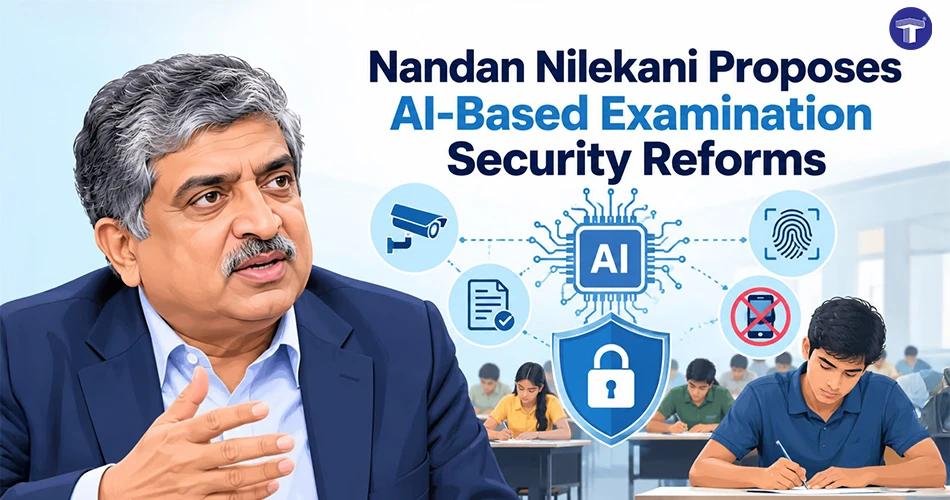
Amid recurring allegations of question paper leaks in NEET and other competitive examinations across India, Nandan Nilekani, non-executive chairman of Infosys, who heads a task force examining examination reforms, has proposed technology-based measures to improve security. On Tuesday, he recommended preparing question papers shortly before examinations by randomly selecting questions from a large question bank. The approach is intended to minimise the possibility of confidential papers being leaked or sold in advance. Nilekani also called for wider adoption of computer-based testing, stating that technological improvements and changes to existing examination procedures could help address vulnerabilities in the current system and strengthen the integrity of competitive examinations nationwide.
Random Question Selection on the Day of Examination
Nilekani explained that preparing question papers well before examinations creates opportunities for confidential material to be illegally obtained and sold for financial gain. To address this vulnerability, he proposed selecting questions randomly from an extensive question bank on the examination day. Under this approach, the final question paper would not be available in advance, potentially reducing the incentives for individuals attempting to obtain or distribute it illegally. The proposal aims to make advance access less valuable by ensuring that the exact combination of questions is determined closer to the examination. This method could offer examination authorities another way to strengthen confidentiality and discourage organised paper leak activities.
Artificial Intelligence Could Automate Question Paper Creation
Responding to a question about using artificial intelligence to prepare question papers on the day of an examination, Nilekani expressed confidence in the technology's potential, according to news agency ANI. He suggested that AI could draw questions from a large question bank and assemble the final paper shortly before the examination begins. Such a system could reduce the risk of confidential papers circulating beforehand because the final selection would happen closer to the test. Automating this process may also help examination authorities manage question selection more efficiently. However, effective implementation would require secure technology, carefully designed question banks and appropriate safeguards to ensure fairness, accuracy and consistent difficulty levels across different question paper sets.
Expansion of Computer-Based Testing Centres Recommended
Nilekani also advocated shifting examinations towards computer-based testing (CBT), highlighting the need to expand the infrastructure required to support the transition. He stressed that a larger network of examination centres would be essential to make digital testing accessible to candidates across the country. Referring to the availability of approximately 1,50,000 centres, he said the existing network needed further expansion. A wider distribution of facilities could help accommodate more candidates while supporting the move away from conventional examination methods. However, expanding CBT would also require reliable computer systems, stable internet connectivity where necessary, adequate technical support and effective security arrangements to ensure that examinations can be conducted smoothly across different locations.
Government Signals Interest in Implementing Reforms
Nilekani indicated that the government was keen to consider and implement recommendations aimed at addressing structural weaknesses in the examination system. He said the committee would discuss these issues and suggested that the Prime Minister wanted its decisions to be acted upon. The proposals come amid continuing concerns over alleged question paper leaks involving NEET and other competitive examinations, which have raised questions about examination security and public confidence. Random question selection, AI-assisted paper generation and expanded computer-based testing are among the measures being considered to improve the process. However, these remain proposals, and their adoption will depend on further discussions, assessments and decisions by the relevant authorities.
Important Links
| NEET NCERT vs Reference Books: What Should You Study First | Where can I find the latest NEET news and official updates from NTA and other credible sources |