
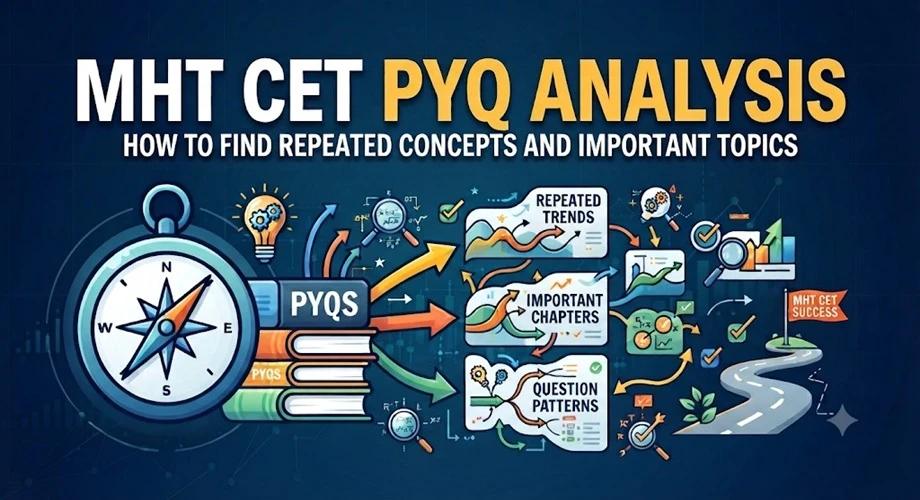
Preparing for MHT CET becomes more effective when you understand how questions are framed across different years. Use MHT CET PYQ analysis to identify recurring concepts, frequently tested chapters and common question patterns. This can help you prioritise revision.
Follow Education News by Target Publications on WhatsApp for exam updates and preparation tips. The Tayari App can also support regular practice and revision.
What Is MHT CET PYQ Analysis?
MHT CET previous year question analysis means examining past papers to identify patterns in concepts, chapters, question formats and difficulty levels. The aim is not to memorise answers. Understand which concepts recur and how they can be tested differently.
When reviewing MHT CET previous year questions, look beyond identical questions. A concept may return with changed values, wording, diagrams or applications.
How to Analyse MHT CET PYQs Effectively
1. Collect Multiple Years of Question Papers
Start with several years of authentic MHT CET previous year questions. Do not draw conclusions from one paper or shift. Reviewing multiple shifts gives you a clearer view of recurring patterns.
Keep separate sections for each subject.
2. Create an MHT CET Chapter-Wise PYQ List
Organise questions according to chapters. This MHT CET chapter-wise PYQ analysis helps you identify chapters that have been tested repeatedly.
Record:
- Subject
- Chapter
- Concept tested
- Question type
- Difficulty level
- Year or shift
- Your answer
- Mistake made
This makes MHT CET chapter-wise PYQs easier to review.
3. Identify Repeated Concepts, Not Just Questions
An important part of how to analyse MHT CET PYQs is distinguishing repeated questions from repeated concepts.
Two questions may use different numbers but test the same formula or principle. Similarly, a Chemistry question may use a different compound while testing the same reaction or concept.
Mark these as recurring concepts. They are more useful than memorising previous answers.
4. Find MHT CET Important Chapters
After classifying questions, count how frequently each chapter appears in your collected papers. This can help identify MHT CET important chapters for revision.
Frequency should not be your only criterion. A less frequent chapter can still contain important concepts. Use frequency for prioritisation, not prediction.
Understanding MHT CET PYQ Trends
Your MHT CET PYQ trends sheet should record whether questions are conceptual, numerical, application-based, formula-driven or diagram-based.
For Mathematics, MHT CET Maths PYQ analysis can help you identify areas where calculation speed matters. In Physics, look for recurring formula applications and conceptual combinations. In Chemistry, track reactions, calculations and conceptual areas. For Biology, observe recurring diagrams, definitions, processes and match-the-following patterns.
This MHT CET question paper analysis shows where to focus practice.
Build Your MHT CET PYQ Analysis Strategy
Divide your preparation into three categories:
- High priority: Recurring concepts needing thorough understanding and practice.
- Medium priority: Occasional concepts that remain part of the syllabus.
- Revision priority: Concepts you know but frequently answer incorrectly.
Combine this list with your MHT CET syllabus, notes and mock tests. Revisit PYQs after each chapter to check your accuracy and speed.
You can compare your PYQ findings with your mock-test performance. If a frequently recurring concept remains difficult, schedule extra practice instead of marking it as important. This turns your analysis into an actionable revision plan and helps you use study time efficiently.
Use PYQs Without Over-Relying on Predictions
A good MHT CET PYQ analysis strategy helps you understand the exam, not predict the exact paper. Trends can change, so cover the complete syllabus while practising recurring concepts.
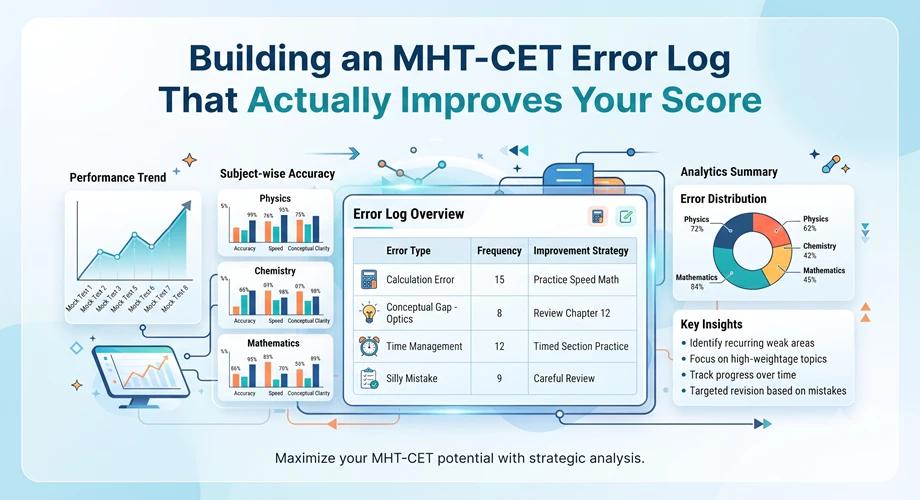
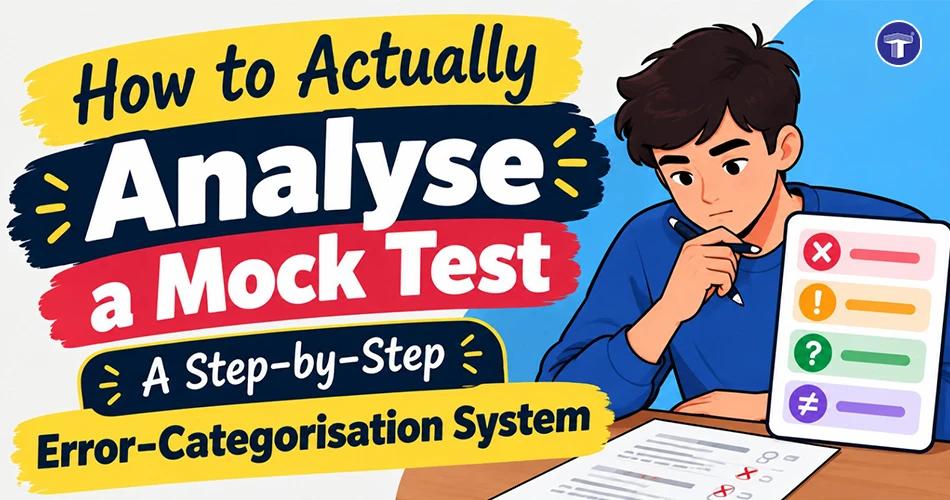
Maintain an error log. Incorrect answers can reveal gaps in concepts, calculations or time management.
Important Links:
| How to Master Organic Chemistry Reaction Mechanisms for MHT-CET Without Rote Memorization | Solving MHT-CET Physics Numericals Faster: A Formula-Application Framework |
FAQs on MHT CET PYQ Analysis
1. How many years of MHT CET PYQs should I analyse?
Analyse as many authentic previous-year papers as reasonably possible, particularly across different shifts. A larger sample provides a broader view of recurring concepts and formats.
2. Do repeated MHT CET questions appear exactly again?
Not necessarily. A similar concept may be tested with different values, wording or applications. Focus on understanding the underlying concept.
3. How can I find MHT CET important topics from PYQs?
Classify questions chapter-wise and record how frequently concepts appear across papers and shifts. Combine frequency with your performance to set revision priorities.
4. Is chapter-wise PYQ analysis enough for MHT CET?
No. MHT CET chapter-wise PYQ analysis is useful, but you should also cover the complete syllabus, revise concepts and formulas, practise questions and take mock tests.
5. What is the benefit of MHT CET PYQ analysis?
It helps you identify recurring concepts, question formats, chapter patterns, common mistakes and areas requiring more practice. This makes revision more targeted and systematic.