
Students applying for the PCB (Physics, Chemistry, Biology) group must meet the eligibility conditions prescribed by the State Common Entrance Test Cell, Maharashtra.
Here's a quick overview of the MHT CET PCB eligibility criteria 2026:
- Candidates should have passed or be appearing for Class 12 (HSC) or an equivalent examination.
- Physics and Chemistry are compulsory subjects, along with Biology (Botany and Zoology).
- Students from Maharashtra State Board, CBSE, ICSE, and other recognized boards are eligible.
- There is no upper age limit for appearing in the examination.
- Candidates must satisfy the eligibility conditions of the professional course they wish to pursue during the admission process.
If you're wondering who can apply for MHT CET PCB, the answer includes fresh Class 12 students, students awaiting results, and eligible repeaters who wish to improve their scores.
What is included in the MHT CET PCB syllabus?
The MHT CET PCB syllabus is based on the Maharashtra State Board curriculum of Classes 11 and 12.
The paper consists of:
- Physics
- Chemistry
- Biology (Botany and Zoology)
Typically, around 20% of the questions are based on the Class 11 syllabus, while nearly 80% come from Class 12. This makes Class 12 preparation especially important without ignoring Class 11 fundamentals.
MHT CET PCB chapter list
The exact MHT CET PCB chapter list is updated whenever the syllabus is revised, but the following topics consistently carry significant weight.
Physics
Important units include:
- Rotational Motion
- Electrostatics
- Current Electricity
- Magnetic Effects of Current
- Electromagnetic Induction
- Oscillations
- Waves
- Semiconductor Electronics
- Dual Nature of Radiation
Chemistry
Major chapters include:
- Chemical Thermodynamics
- Ionic Equilibrium
- Solutions
- Chemical Kinetics
- Electrochemistry
- p-Block Elements
- d- and f-Block Elements
- Coordination Compounds
- Biomolecules
- Polymers
Biology
High-priority chapters generally include:
- Reproduction in Organisms
- Human Reproduction
- Reproductive Health
- Principles of Inheritance and Variation
- Molecular Basis of Inheritance
- Evolution
- Biotechnology
- Human Health and Disease
- Ecology
- Biodiversity and Conservation
These are widely regarded as MHT CET PCB Important Chapters, but students should prepare the complete syllabus rather than relying only on high-weightage topics.
Is NCERT enough for MHT CET PCB?
A common question among aspirants is, Is NCERT enough for MHT CET PCB?
The short answer is: No, NCERT alone is not sufficient.
While NCERT builds strong conceptual understanding, the MHT CET paper primarily follows the Maharashtra State Board syllabus and often includes application-based and objective questions that require additional practice.
A balanced preparation strategy includes:
- Thorough study of Maharashtra State Board textbooks.
- Concept revision using trusted notes.
- Regular practice of chapter-wise MCQs.
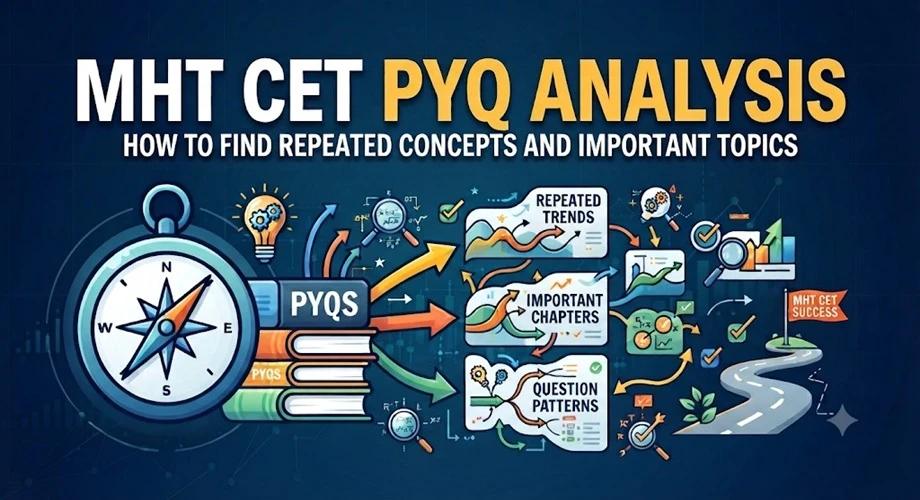
- Previous years' question papers.
- Mock tests to improve speed and accuracy.
How should students prepare using the syllabus?
Understanding the MHT CET PCB syllabus is the first step, but using it strategically makes the real difference.
Students should:
- Complete Class 12 chapters before intensive revision.
- Revise Class 11 concepts regularly.
- Prioritize MHT CET PCB Important Chapters without skipping less frequently tested ones.
- Solve topic-wise MCQs after every chapter.
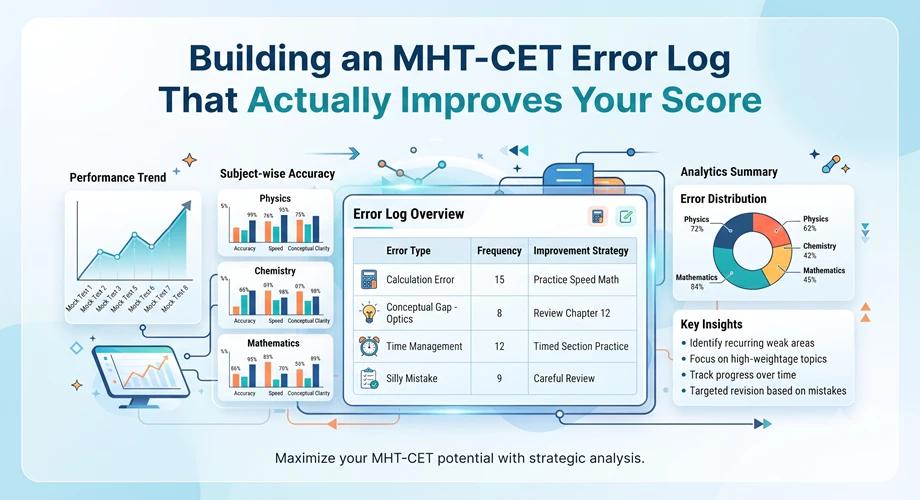
- Analyse mistakes after mock tests and revise weak areas.
Instead of studying randomly, preparing according to the official syllabus and chapter list ensures better time management and comprehensive coverage. When combined with consistent practice and quality study resources, this approach helps students meet both the MHT CET PCB eligibility requirements and the academic demands of the examination with confidence.
Final thoughts
Understanding the MHT CET PCB eligibility criteria and syllabus gives you a clear starting point for your preparation. Make sure you meet the required eligibility conditions, follow the latest official syllabus, and give adequate attention to both Class 11 and Class 12 topics. Use the MHT CET PCB chapter list to structure your study plan, but avoid limiting your preparation to only important chapters. Consistent revision, MCQ practice, and previous-year question solving can help you prepare more effectively for the exam.
FAQs
1. What subjects are included in MHT CET PCB?
The MHT CET PCB stream includes Physics, Chemistry, and Biology, with Biology covering Botany and Zoology.
2. How much of MHT CET PCB is based on Class 12?
Around 80% of the questions are based on Class 12, while approximately 20% are based on Class 11.
3. Is Maharashtra State Board syllabus enough for MHT CET PCB?
The exam is based on the Maharashtra State Board curriculum, so you should thoroughly study the prescribed State Board syllabus along with MCQ and previous-year question practice.
4. Where can you find the MHT CET PCB syllabus PDF?
You should refer to the latest official syllabus released by the State Common Entrance Test Cell, Maharashtra for the most accurate and updated syllabus.
5. Which chapters should you prioritise for MHT CET PCB?
You should prioritise high-weightage and frequently tested chapters, but complete syllabus coverage is recommended rather than preparing only selected chapters.