
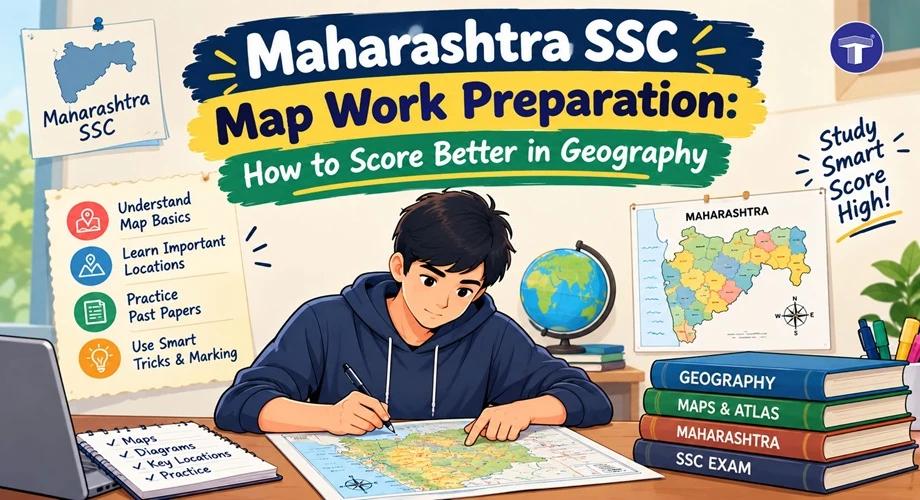
Map work is an important part of preparing for Maharashtra SSC Geography because it helps students develop location, identification and geographical interpretation skills. Maps present geographical information visually and help students understand the location and spatial relationships of different physical features.
The Maharashtra State Board of Secondary and Higher Secondary Education (MSBSHSE) syllabus includes Geography of Maharashtra for Std. IX and Geography of India for Std. X. The Std. IX syllabus includes Cartography, Isopleths maps and Field Study under practical work, while the Std. X syllabus includes Cartography and diagram-based practical work. MSBSHSE SSC Geography syllabus
The Board's official question-paper portal also lists Geography as SSC Subject Code 39, providing students with access to official question-paper resources. MSBSHSE official question-paper portal
Want quick education updates? Join the Education News by Target Publications WhatsApp Channel for timely exam and result updates.
Why Are Maps Important in Geography?
Maps help students understand where geographical features are located and how different places are connected. They also develop observation, identification and location skills.
For Maharashtra SSC, the official syllabus includes geographical regions and physical features along with practical work involving cartography. For Std. X, the syllabus covers India's physical divisions, North Indian Mountains, North Indian Plain Region, Peninsular Plateau Region, Western and Eastern Ghats, Coastal Region and Indian Islands. Cartography is also included under practical work. View the official SSC syllabus
Maharashtra SSC Map Work Strategy
Maharashtra SSC Map Work Strategy should begin with understanding locations instead of trying to memorise an entire map at once. Divide the syllabus into smaller geographical regions and study one group of features at a time.
After understanding a feature's location, practise identifying and marking it on an appropriate outline map. Repeated blank-map practice can help students improve familiarity with geographical locations.
SSC Map Work Preparation in Geography: Start with the Syllabus
SSC map work preparation in Geography becomes easier when students first identify the geographical topics and practical work prescribed in the current syllabus.
For Maharashtra SSC, the official syllabus includes Cartography under practical work. The Std. X Geography syllabus also covers major physical divisions and regions of India that students should understand geographically. Check the MSBSHSE SSC syllabus
Keep your textbook, classroom notes and official question-paper resources together while preparing. The MSBSHSE official question-paper portal provides SSC papers and lists Geography as Subject Code 39.
How to Learn Map Reading in Geography?
Learn map reading in Geography by paying attention to the map's title, symbols, direction, scale and labels where applicable. Before attempting a question, understand what the map represents.
Practise identifying features from their relative position instead of memorising isolated names. This can help you develop a clearer mental picture of the region.
How to Memorize Geography Maps?
Take a blank outline map and try to identify or mark locations from memory. Use short revision sessions and repeat difficult locations more frequently.
You can also group related features together—for example, features belonging to the same physical region, so that one location helps you remember another.
Important Maps in Geography: What Should You Revise?
Important maps in Geography should be selected from the topics and geographical features prescribed in the current syllabus and textbook.
For Std. X Maharashtra SSC, the official syllabus includes India's major physical divisions, North Indian Mountains, North Indian Plain Region, Peninsular Plateau Region, Western and Eastern Ghats, Coastal Region and Indian Islands. Students should use the textbook and current examination resources to identify the specific features required for their preparation.
What Are Map Skills in Geography?
Map skills include locating places, reading symbols and directions, understanding scale and interpreting geographical information. These skills help students move beyond memorising names and understand what a map communicates.
What Is Map Reading in Geography?
Map reading means extracting geographical information from a map using its title, symbols, directions, scale, labels and spatial relationships.
For SSC preparation, students should practise reading and interpreting a map before attempting to identify or mark a geographical feature.
How to Score Better in Geography Maps?
Read the question carefully and identify exactly what is being asked. Use the appropriate outline map and mark or identify the required feature as precisely as possible.
Keep labels clear and avoid unnecessary markings. Regular practice with previous and official question papers can also help students become familiar with the types of questions asked.
The MSBSHSE Student Corner provides access to Sample Question Paper resources, while the official question-paper portal provides SSC subject papers, including Geography.
Geography Map Work Questions: A Simple Revision Plan
Geography map work questions can be revised using a weekly cycle:
- Day 1: Learn the locations and geographical features from the textbook and notes.
- Day 2: Practise identifying or marking them on a blank map without assistance.
- Day 3: Check errors and revise difficult locations.
- Day 4: Attempt a short timed map exercise.
- Weekend: Re-test all locations and features studied during the week.
Different Types of Geography Maps
Different types of Geography maps serve different purposes. Physical maps show natural features such as mountains, plateaus and rivers, while political maps focus on administrative boundaries and locations.
For SSC preparation, students should use the type of map prescribed or required for the particular syllabus topic and question being practised.
Important Links
| Resource |
| MSBSHSE Official Question Papers |
| MSBSHSE Student Corner |
| MSBSHSE SSC Syllabus |
The official Student Corner currently includes access to Sample Question Paper resources and other student services.
Conclusion
Consistent practice is the foundation of effective map preparation. Maharashtra SSC Map Work Strategy should focus on understanding geographical locations, practising with blank maps, correcting mistakes and revising regularly.
Instead of trying to memorise every location in one sitting, divide the syllabus into manageable sections. Use the prescribed textbook, current syllabus and official question-paper resources for practice.
The Maharashtra SSC Geography syllabus specifically includes Cartography under practical work, while the Std. X syllabus covers India's major physical divisions and geographical regions. Check the official MSBSHSE SSC syllabus Regular map-reading and location practice can help students become more familiar with these topics.
Disclaimer: Kindly note that syllabus requirements, examination patterns and question-paper formats might be subject to change as per the Maharashtra State Board of Secondary and Higher Secondary Education and the Government of Maharashtra. Students should refer to the latest official syllabus and examination resources before preparing.
FAQs
Why are maps important in Geography?
Maps present geographical information visually and help students understand locations, regions and spatial relationships.
How to learn maps in Geography?
Study one region or group of features at a time, practise identifying them on a blank map and revise the locations using active recall.
How to memorize Geography maps?
Use blank-map practice, repeated revision and grouping of related geographical features.
What are map skills in Geography?
Map skills include locating places, reading symbols and directions, understanding scale and interpreting geographical information.
What is map reading in Geography?
Map reading is the process of understanding and extracting information from a map using features such as symbols, direction, scale and labels.