

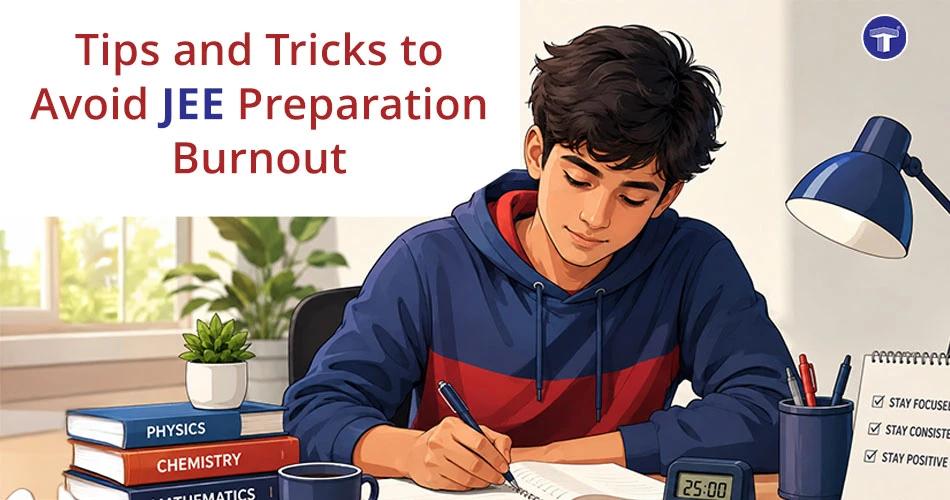
Burnout is a state of physical and mental exhaustion that develops when stress continues for too long without enough rest or recovery. During JEE preparation, it may begin with constant tiredness, reduced concentration, irritability, or a lack of interest in studying.
As the pressure of a large syllabus, changing mock test scores, and daily targets builds up, students may start studying for longer hours while taking fewer breaks. Over time, this can lead to JEE burnout, where motivation drops, focus becomes difficult, and even regular study sessions start to feel overwhelming.
What Is Burnout During JEE Preparation?
Burnout during JEE preparation is a state where you feel mentally tired, emotionally stressed and unable to study properly even when you want to. It can affect your concentration, memory, confidence, and performance in tests.
Many students ignore early signs because they think pressure is normal. Some pressure is expected, but constant exhaustion is not healthy for preparation. If you are preparing for JEE without coaching, this JEE Main 2027 self-study guide for beginner can help you organise preparation without overload.
Here’s how you can distinguish normal study tiredness from signs of JEE burnout:
| Normal Study Tiredness | JEE Burnout |
| You feel tired after a long study session | You feel tired even before starting |
| Rest helps you recover | Rest also does not feel enough |
| You can focus again after a break | You struggle to focus for days |
| Motivation goes up and down | You feel constantly stressed or blank |
Signs Of Burnout During JEE Preparation
You can identify JEE burnout through the common JEE burnout symptoms. These include lack of interest in studying, frequent headaches, irritation, poor sleep, low confidence, and fear of mock tests.
Some students also face emotional signs such as guilt after taking breaks, panic before tests, or constant comparison with others. These are also important signs of burnout during JEE preparation.
Why JEE Student Stress Builds Up
JEE student stress usually builds up because of unrealistic timetables, poor revision planning, too many books, and constant pressure to perform. If you are studying without a proper roadmap, every chapter may feel urgent. To create a balanced long-term routine, read JEE Main 2027 preparation roadmap.
JEE exam stress also increases when you look only at scores and ignore improvement. A bad mock test does not mean your preparation is weak. It only shows which topics need more attention. For better test performance, you can read a guide on common mistakes during JEE Main preparation.
How To Avoid Burnout During JEE Preparation
The best way to avoid burnout during JEE preparation is to create a balanced routine. Your day should include learning, practice, revision, breaks, sleep, and some exercise.
Do not study for very long hours without checking output. Instead of asking, “How many hours did I study?” ask, “What did I complete, revise, and improve today?”
Use these simple habits to keep your JEE preparation balanced and reduce the risk of burnout:
Area
| Area | What You Should Do |
| Study routine | Keep realistic daily targets |
| Revision | Revise weekly instead of piling up chapters |
| Breaks | Take short breaks between study sessions |
| Sleep | Maintain a fixed sleep schedule |
| Exercise | Add light exercise or walking in your routine |
| Tests | Analyse mistakes instead of panicking |
To plan weekly targets without overloading yourself, read the weekly study plan for Std. 11 JEE aspirants.
Importance Of Breaks During JEE Preparation
Breaks are not a waste of time. They help your brain recover and retain better. If you study continuously for many hours, your concentration can drop and mistakes might increase.
Effective study breaks for JEE are the ones that are short and refreshing. You can walk, stretch, drink water, meditate, or revise light notes. Avoid scrolling social media during every break because it can make your mind more distracted.
A simple method is to study for 50 minutes and take a 10-minute break. You can adjust this based on your attention span.
JEE Preparation Sleep Schedule
Sleep is one of the most ignored parts of preparation. Many students reduce sleep to study more, but this can affect memory, focus and test performance.
The importance of sleep during JEE preparation is simple. Your brain needs rest to store concepts, recall formulae, and stay alert during long tests. Try to sleep and wake up at fixed times. For chapter-wise planning, check JEE Main 2026 chapter-wise weightage guide.
Exercise During JEE Preparation
Exercise during JEE preparation does not mean hard core training. Even 20 to 30 minutes of walking, stretching, or light activity can help reduce stress.
Physical movement can refresh your mind and reduce stiffness from long sitting hours. If you feel sleepy or stuck, a short walk can help you return to your desk with better focus.
How To Manage Stress During JEE Preparation
To manage stress during JEE preparation, start by separating controllable and uncontrollable things. You cannot control the difficulty level of the paper or what others are studying. But you can control your timetable, revision, practice and test analysis.
You can also avoid stress during JEE preparation by keeping fewer but reliable resources. Too many books can create confusion.
How To Handle JEE Preparation Pressure
JEE preparation pressure becomes heavier when you compare yourself with others every day. Your friend’s mock score, coaching rank, or study hours should not decide your confidence.
Track your progress regularly. Look at whether your accuracy is improving, weak chapters are becoming stronger, and repeated mistakes are decreasing. These are better indicators of progress than simply counting study hours.
Important Links
| JEE Main Previous Years’ Question Papers | JEE Main 2027: How Many Questions Should You Solve Daily? |
Conclusion
JEE burnout can affect your preparation if you ignore stress, sleep, breaks, and health. Studying hard is important, but studying without recovery can reduce your focus and confidence.
To avoid burnout during JEE preparation, follow a realistic routine, take effective breaks, maintain a good sleep schedule, exercise regularly, and analyse tests calmly. A balanced schedule can help you in effective JEE preparation without stress and burnout.
FAQs
1. How Can I Manage Stress During JEE Preparation?
Ans: Make a realistic timetable, revise weekly, take breaks, sleep properly, and analyse mock tests calmly. Focus on your progress instead of comparing yourself with others.
2. Are Study Breaks Important For JEE Aspirants?
Ans: Yes, study breaks are important. Short breaks help you refresh your mind, reduce fatigue, and return to studying with better concentration.
3. How Much Sleep Is Important During JEE Preparation?
Ans: Most students need a consistent and sufficient sleep routine to stay focused. Avoid cutting sleep regularly because it can affect memory and problem-solving.
4. Should I Exercise During JEE Preparation?
Ans: Yes, light exercise, walking, or stretching can help reduce stress and improve focus. Even 20 to 30 minutes of movement can be useful.
5. How Do I Handle JEE Exam Stress Before Mock Tests?
Ans: Revise important concepts, attempt familiar questions first and treat mock tests as practice. After the test, focus on mistakes instead of only the score.