

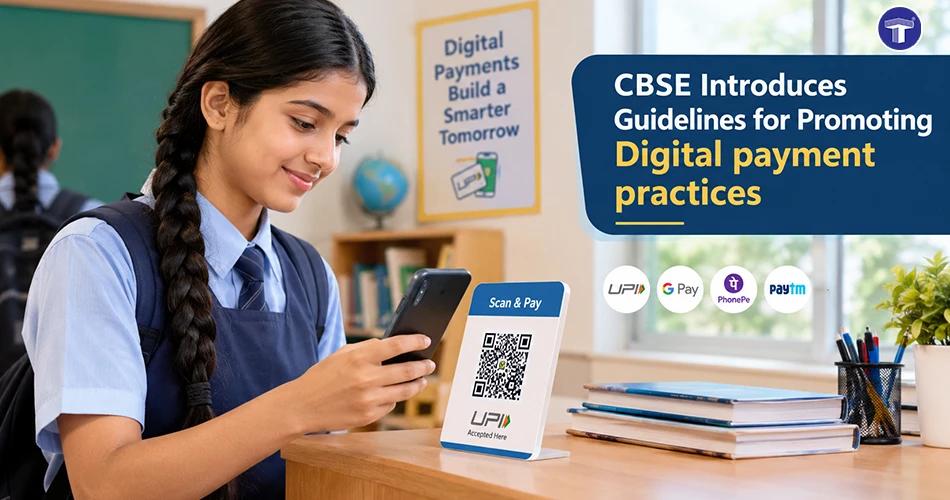
CBSE Introduces Guidelines to Promote Digital Payment Practices
The Central Board of Secondary Education (CBSE) has issued a notice advising its affiliated schools to promote digital payment practices across various school-related financial activities. The Department of Financial Services (DFS), Ministry of Finance, Government of India, regarding the adoption of digital payments across schools has developed a Digital Payments Promotion Plan for the same.
The initiative is undertaken to increase their usage and promote safe digital payment practices. The plan covers the wider education ecosystem, including schools, students, and parents.
For timely educational updates, follow Education News by Target Publications on WhatsApp.
CBSE Advises Schools to Enable Digital Payments
Schools have been advised to enable digital payment facilities at different payment touchpoints, including school fees, canteens, libraries, and other services. Payment options such as Unified Payments Interface (UPI) and RuPay cards can be made available to provide users with digital alternatives to cash payments.
The advisory is aimed at making digital payment facilities more widely available within schools while encouraging students, parents, and staff to become familiar with digital transactions.
Digital Payment Options for Low-Connectivity Areas
CBSE has also taken into consideration schools located in areas where internet connectivity may be limited. Such schools may consider alternative digital payment options, including UPI Lite, UPI LiteX and UPI 123PAY. The Board has also suggested that schools to conduct demonstrations and provide assisted usage facilities where required.
These measures are intended to help students, parents, and other members of the school community understand how digital payment systems work and use them more easily.
BBPS Recommended for Fee Payments
The guidelines also highlight the Bharat Bill Payment System (BBPS) as an option for school fee collection. Schools may onboard onto BBPS to facilitate standardised, secure, and interoperable fee payments.
In addition, schools may integrate digital payment facilities with their Enterprise Resource Planning (ERP) systems. This can help streamline recurring financial transactions and administrative processes, including payments such as staff salaries.
Focus on Digital Financial Literacy
Along with improving digital payment infrastructure, CBSE has placed emphasis on digital financial literacy and awareness.
Schools have been suggested to incorporate digital payment awareness through teacher training programmes and school-level campaigns. Financial literacy modules covering digital payments may also be promoted to help students understand the use of digital financial services.
Schools can also organise awareness programmes for parents on the safe and convenient use of digital payments. Such campaigns may be conducted on school campuses, during school events, and through parent-teacher interactions.
Important Links
Conclusion
The CBSE advisory focuses not only on increasing the availability of digital payment facilities but also on promoting their safe and responsible use. Awareness initiatives can help students, parents, and staff become more familiar with digital transactions and understand basic precautions while making payments.
The measures also provide schools with an opportunity to introduce digital financial awareness as part of the wider learning environment.
Source
CBSE Official Circular, 30 September 2026: Click here to read.
Kindly note that any and all information is subject to change as per CBSE, the Education Ministry, and the Government of India.