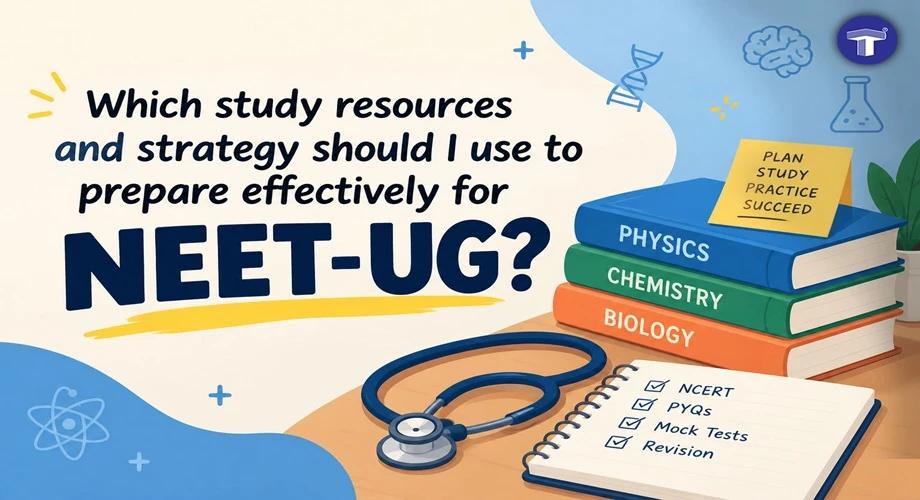


The best NEET preparation strategy combines NCERT study, daily MCQ practice, previous-year questions, regular revision and mock tests. Instead of collecting many books, use a limited set of reliable resources and revise them repeatedly.
Before planning your study, always check the latest official NEET syllabus on the NTA website so that your preparation matches the current requirements. You can also check the NEET 2027 syllabus guide to understand the chapter coverage before planning.
What Is the Best Strategy for NEET Preparation?
A practical NEET exam preparation strategy should follow this cycle:
- Learn
- Practise
- Analyse mistakes
- Revise
- Test
For every chapter:
- Understand concepts through NCERT and your notes.
- Solve topic-wise MCQs.
- Attempt previous-year NEET questions.
- Mark mistakes and difficult questions.
- Revise them again during your weekly revision.
These simple NEET prep tips help you identify weak areas instead of repeatedly studying topics you already know. For chapter-wise MCQ practice, you can use NEET UG topic-wise test series with solutions.
What Should a Daily Study Plan for NEET Include?
A balanced daily study plan for NEET should cover all three subjects regularly.
| Study Block | Main Focus |
| Biology | NCERT reading, diagrams and MCQs |
| Chemistry | Concepts, reactions and questions |
| Physics | Formulae, concepts and numerical problems |
The best time table for NEET aspirants is one you can follow consistently. You do not need to copy another student's 10-hour or 12-hour schedule.
Set chapter-based targets instead of only counting study hours. To decide which chapters need more attention in your daily plan, read the NEET important chapters 2027 guide.
Which Resources Are Best for NEET UG Preparation?
Your NEET study plan should use resources for different purposes:
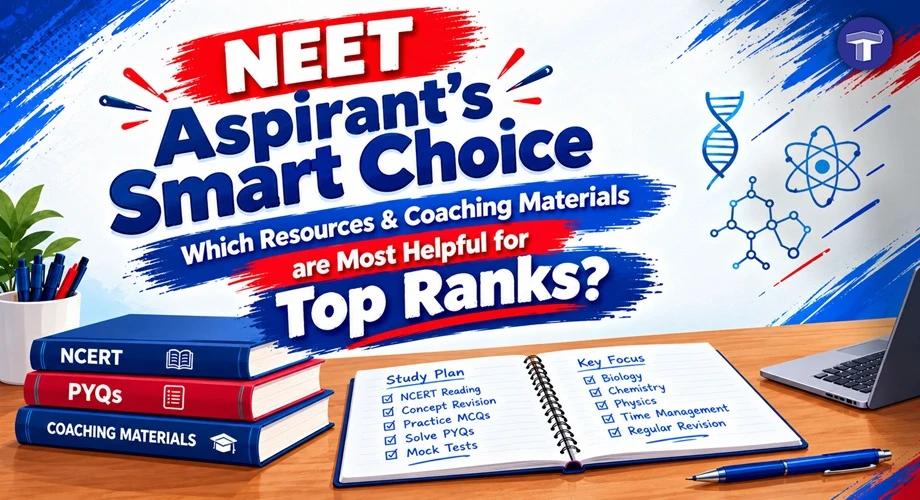
- NCERT Class 11 and 12 textbooks: Your core resource, particularly for Biology and Chemistry.
- NEET practice books: Useful for chapter-wise MCQs and application-based questions.
- Previous-year papers: Help you understand actual question patterns.
- Mock tests: Improve speed, accuracy and exam temperament.
- Short notes: Useful for formulae, reactions, facts and repeated mistakes.
The official NTA website should remain your source for the current syllabus, Information Bulletin and examination notices. To compare study material options, you can read the best NEET UG preparation books guide.
How Should You Revise for NEET?
An effective study plan for NEET should include revision throughout preparation.
Use this simple pattern:
- Daily: Revise recently studied concepts.
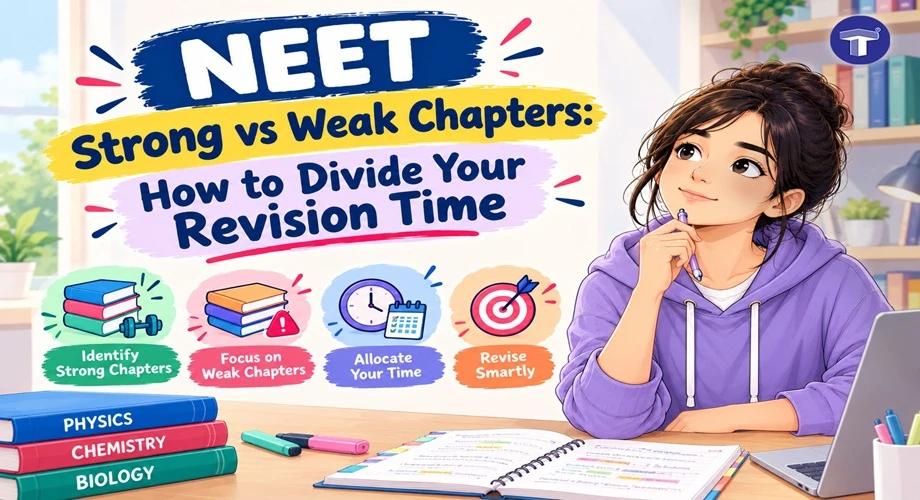
- Weekly: Revisit completed chapters and mistakes.
- Monthly: Attempt mixed-syllabus tests and review weaker topics.
One of the most useful tips for preparation of NEET is to reattempt incorrect questions. Simply checking the solution is not enough. To review mistakes better after practice tests, read the NEET mock test analysis guide.
Important Links
| NEET Biology NCERT Line by Line Preparation: How to Study Every Chapter | NEET 13 Years PYQ and 10 Mock Tests Book: Which One Boosts Your Score? |
Conclusion
The best strategy for NEET preparation is simple: use NCERT as your base, practise questions regularly, revise consistently and analyse your tests. A focused routine with limited resources is more useful than constantly changing study material.
FAQs
1. What is the best strategy for NEET?
Ans: Focus on NCERT, MCQs, PYQs, revision and regular mock-test analysis.
2. How many hours should I study for NEET daily?
Ans: There is no fixed number. Focus on completing realistic daily chapter and practice targets.
3. Is NCERT enough for NEET preparation?
Ans: NCERT is essential, but additional MCQ practice, PYQs and mock tests are also important.
4. Should I study all three subjects every day?
Ans: Regularly studying Physics, Chemistry and Biology helps maintain continuity, though the time given to each can vary.
5. When should I start taking NEET mock tests?
Ans: Start chapter and unit tests early. Add full-syllabus mocks once a substantial portion of your syllabus is complete.