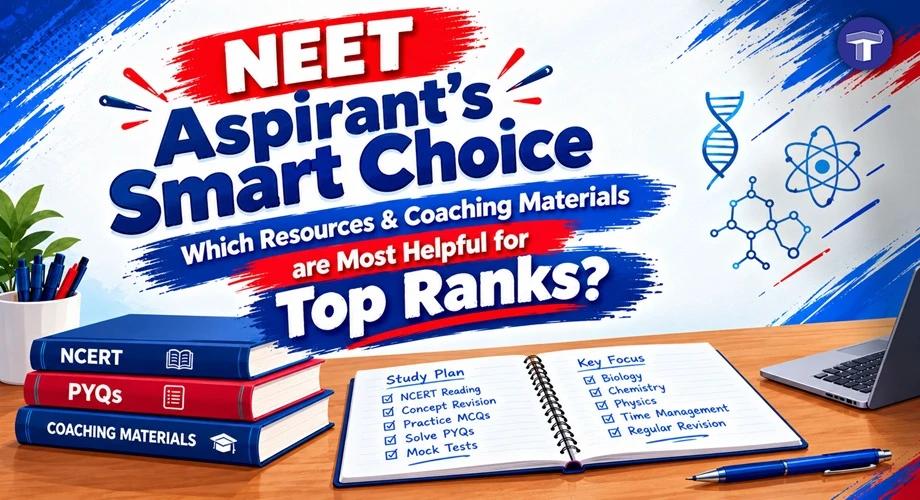
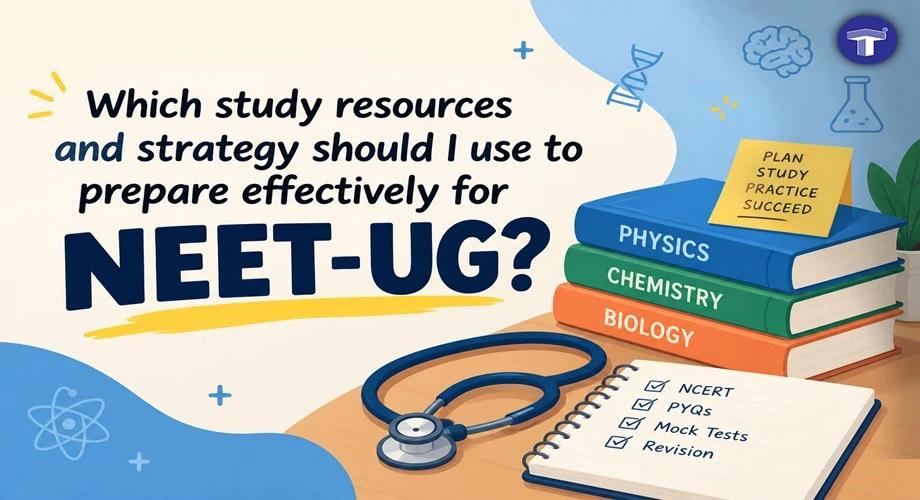
For effective NEET-UG preparation, use NCERT as your core resource, one reliable question bank per subject, chapter-wise PYQs and regular mock tests. Your NEET preparation strategy should follow a simple cycle: learn concepts, practise MCQs, analyse mistakes and revise repeatedly.
Avoid collecting too many books. A smaller set of resources that you complete multiple times is usually more useful.
Which Books Are Best for NEET Exam Preparation?
A practical resource combination is:
| Subject | Resources to Prioritise |
| Biology | NCERT + NCERT-based MCQs + PYQs |
| Chemistry | NCERT + topic-wise practice questions + PYQs |
| Physics | Concept notes + numerical practice + PYQs |
| All subjects | Mock tests + error notebook + short revision notes |
If you are searching for the best book for NEET all subjects, remember that one book rarely serves every purpose equally well. Use NCERT for concepts and separate practice material for MCQs and previous-year questions.
Your basic books for NEET preparation should always remain aligned with the official syllabus. NTA publishes the official NEET syllabus and Information Bulletin on its website.
For students who need detailed concept support followed by numerical and MCQ practice, the NEET UG & JEE Mains Absolute Physics Vol. 1 can be used alongside NCERT and class notes.
For Chemistry theory, formulae, MCQs and chapter-level self-evaluation, you can use NEET UG & JEE Mains Chemistry Absolute Vol. 1 as a structured practice resource.
What Is the Best Strategy for NEET UG Preparation?
An effective NEET preparation strategy can follow this order:
- Study NCERT
- Solve MCQs
- Attempt PYQs
- Analyse errors
- Revise
- Take tests
While studying a chapter:
- Understand the concepts first.
- Solve topic-wise questions.
- Attempt previous-year NEET questions.
- Record mistakes in an error notebook.
- Reattempt difficult questions during revision.
For NEET preparation strategy 2027, follow the latest official NTA syllabus once it is released rather than relying only on an older exam plan.
For a broader roadmap covering syllabus planning, NCERT, MCQs, revision and testing, follow this NEET exam preparation study plan.
How Should You Plan Self-Study and Mock Tests?
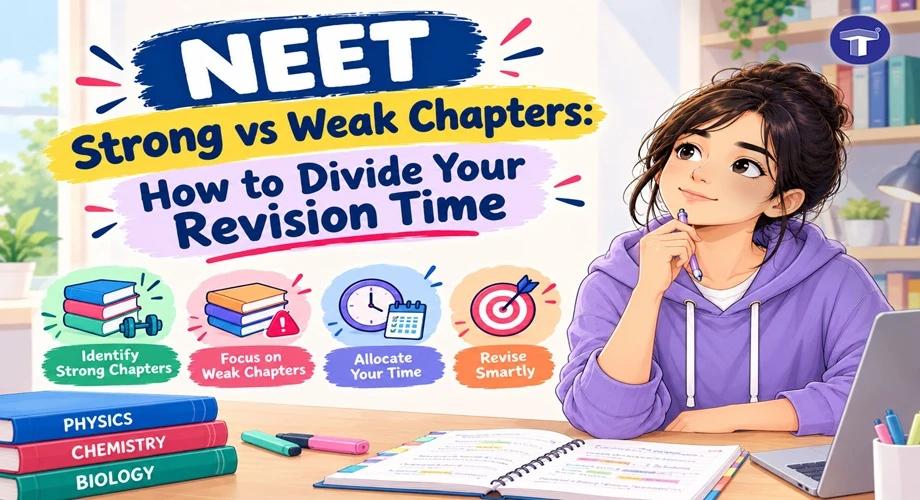
Your self study time table for NEET preparation should include Physics, Chemistry and Biology regularly, with extra time for weaker areas.
Use self study NEET mock test chapter wise during the early stages. Then move through:
- Chapter tests
- Unit tests
- Part-syllabus tests
- Full mock tests
A good NEET time management strategy is to practise timed tests instead of trying a new approach on exam day.
If you are preparing largely on your own, this NEET preparation without coaching guide explains how to organise study material, scheduling and practice during self-study.
What Is the Best Revision Strategy for NEET?
The best revision strategy for NEET is repeated, spaced revision:
- Daily: Revise what you studied recently.
- Weekly: Revisit completed chapters and errors.
- Monthly: Attempt mixed-topic tests and identify weak areas.
During the final phase, focus on NCERT, PYQs, mock-test mistakes, formulae and short notes instead of starting several new books.
Mock tests become more useful when you use their results to decide what to revise next. Read this guide on using NEET mock tests strategically to connect testing with revision and error correction.
Conclusion
The best NEET-UG preparation combines NCERT, focused question practice, PYQs, mock tests and repeated revision. Keep your resources limited, analyse mistakes carefully and follow a consistent study plan rather than frequently changing books or strategies.
Important Links
| NEET Reference Books 2026: Why Choose the Challenger Series | NEET (UG) Test Series with Answer Key and Solutions for Exam Preparation |
FAQs
1. Can I crack NEET in the first attempt?
Ans: Yes, with consistent syllabus coverage, MCQ practice, PYQs, revision and mock-test analysis. No strategy can guarantee a result, but disciplined preparation improves your chances.
2. Is NCERT enough for NEET?
Ans: NCERT is essential, particularly for Biology and Chemistry, but additional MCQ practice, PYQs and tests are important.
3. How many books should I use for NEET?
Ans: NCERT plus one dependable practice resource per subject and a PYQ resource is usually sufficient.
4. When should I start mock tests?
Ans: Begin chapter tests early and introduce full-syllabus mocks as your syllabus coverage increases.
5. What should I do in the final weeks before NEET?
Ans: Prioritise revision, PYQs, mock analysis and weak areas. Avoid changing your entire study strategy at the last minute.