
The best books for JEE Main preparation are the ones that help you build concepts, practise JEE-level questions, and revise quickly. A practical resource set includes NCERT textbooks, one reliable practice book per subject, chapter-wise PYQs, and mock tests.
Avoid collecting too many JEE Main preparation books. Completing and revising a limited set is more useful than switching between several resources. To build a practical preparation structure, read the JEE Main 2027 complete guide.
Which Books Are Best for JEE Main Preparation?
If you are wondering which books are best for JEE Main preparation, organise your resources by purpose. This can be as follows:
| Resource | Best Use |
| NCERT textbooks | Concepts, theory, and basic examples |
| Subject-wise practice books | Numerical and application-based practice |
| Chapter-wise PYQ books | Understanding actual JEE Main question patterns |
| Mock-test papers | Speed, accuracy, and exam strategy |
| Personal notes | Quick revision of concepts, errors, and formulae |
Your JEE Main study material should match the latest syllabus and provide clear solutions rather than only large question banks. For structured subject-wise preparation, you can check the JEE Main Absolute Series, which supports concept revision, MCQ practice, PYQs, and exam-focused preparation.
Take a look at the Absolute Series and let us know in the comments which feature you find most useful for your JEE Main preparation.
What Should JEE Main 2027 Study Materials Include?
Useful JEE Main 2027 Study Materials should cover:
- Updated syllabus topics
- Chapter-wise concepts
- JEE Main-level practice questions
- Previous-year questions
- Detailed solutions
Also maintain important notes for JEE Mains containing key concepts, reactions, exceptions, shortcuts, and important formulae.
Your JEE Mains preparation notes should remain short enough to revise quickly before tests.
How Should You Plan Your JEE Main Revision?
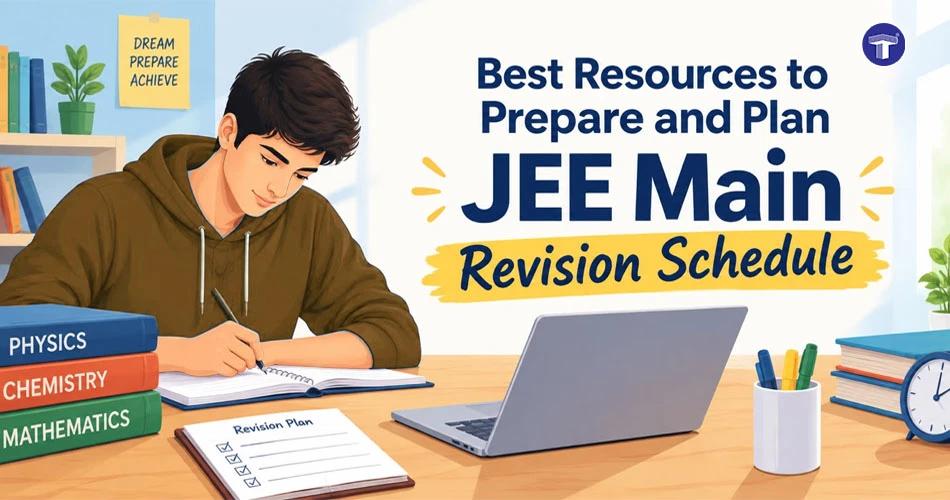
A good JEE Main revision strategy divides your remaining time into three stages.
Stage 1: Chapter revision
Review concepts and solve selected PYQs from every completed chapter.
Stage 2: Mixed practice
Combine chapters and take subject-wise tests to improve recall.
Stage 3: Full mock tests
Attempt previous years’ question papers under exam conditions and analyse every mistake.
This simple JEE Main revision plan prevents revision from becoming only passive reading. To plan revision by priority, read JEE Main 2026 chapter-wise weightage guide.
For JEE Main last month preparation, focus on PYQs, mock tests, short notes, and your weak areas.
If you are asking how to revise for JEE Main, use this cycle:
- Revise concept
- Solve questions
- Take test
- Analyse mistakes
- Reattempt
For students wondering how can I revise the JEE Main syllabus, divide chapters into strong, moderate, and weak categories. Spend more time on moderate and weak chapters while continuing quick revision of strong ones.
What Should Your JEE Main Mock Test Strategy Be?
A useful JEE Main mock test strategy is to attempt tests at the same time of day as your expected exam shift whenever possible. After every test, analyse. You can maintain a mistake notebook and note down the different kinds of mistakes you made.
Mock-test analysis is an important part of JEE Main revision strategy. To avoid burnout, read a guide on how to avoid burnout during JEE preparation.
Important Links
| How To Use PYQs The Right Way For JEE Main | JEE Main 2027: How Many Questions Should You Solve Daily? |
Conclusion
For JEE Main, use NCERT, one dependable practice resource per subject, PYQs, mock tests, and concise revision notes. A structured revision plan with regular tests and analysis will help you ace JEE Main.
FAQs
1. Is NCERT enough for JEE Main?
Ans: NCERT is essential, especially for Chemistry, but additional problem-solving and PYQs are also very important.
2. When should JEE Main revision start?
Ans: Revision should continue throughout preparation, with more intensive revision once the syllabus is completed.
3. How many mock tests should I take before JEE Main?
Ans: There is no fixed number for mock tests but you can increase the frequency gradually after each test.
4. Should I make separate revision notes?
Ans: Yes. Keep them concise and include difficult concepts, reactions, common mistakes, and important formulae.