
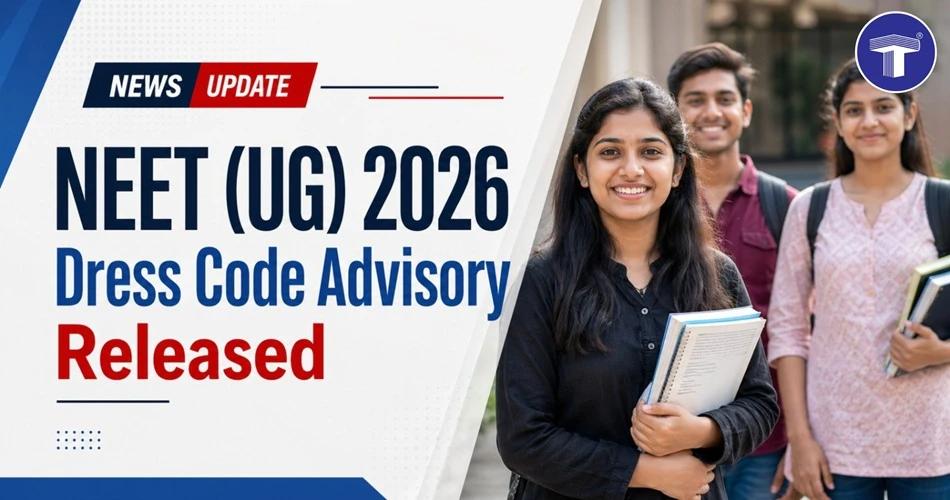
The National Testing Agency (NTA) has issued an important public notice outlining the dress code and permissible items for candidates appearing in the upcoming NEET (UG) 2026 examination.
NEET (UG) 2026 Exam Overview
| Exam Name | NEET (UG) 2026 |
| Conducting Body | National Testing Agency (NTA) |
| Exam Date | 3rd May, 2026 (Sunday) |
| Mode | Offline (Pen and Paper) |
If you’re looking to make the most of the final days, consistent practice can help reinforce concepts and improve confidence. You can explore free app platforms like Tayari App for quick revision, mock tests, and practice questions designed for competitive exams like NEET.
A few focused practice sessions now can make a real difference in how you perform on exam day.
NEET (UG) 2026 Dress Code Guidelines
To maintain uniformity and prevent malpractice, NTA has specified the following dress code:
Light and Comfortable Clothing Preferred
You are encouraged to wear light, simple clothing. However, in case of personal comfort or weather conditions full sleeves are allowed and woollen clothes are permitted as well.
Important: If you wearing such clothing, you must report early at the exam centre to allow additional time for security checks.
Footwear Instructions for NEET (UG) 2026
Slippers and sandals with low heels are recommended
Permissible Items at NEET (UG) 2026 Exam Centre
You can carry a transparent water bottle and articles of faith
Note: Candidates carrying religious items must report well in advance for proper frisking and verification.
Final Words
With just days left for NEET (UG) 2026, you should now focus on revision and exam readiness while ensuring that you strictly follow all guidelines issued by NTA.
We wish all aspirants the very best for their NEET 2026 journey.
Helpline
For any clarification regarding NEET (UG) 2026, candidates can contact 011-40759000 / 011-69227700 or email [email protected]
Source
Official Public Notice by NTA, 30 April, 2026: click here to read.
Kindly note that any and all information is subject to change as per the National Testing Agency, Education Ministry, and the Government of India.