
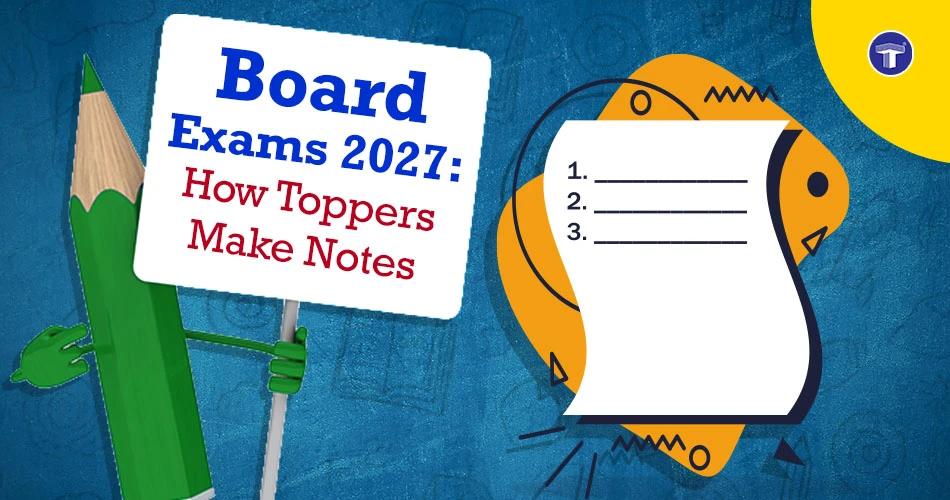
Good notes can turn a long chapter into a few pages that you can revise quickly before an exam. They highlight concepts, formulae, keywords, diagrams and mistakes that you actually need to revisit.
If you are wondering how to make notes for board exams, begin with one simple rule: understand the chapter first and shorten it later.
For Std. 10 students, Maharashtra SSC 2027 complete guide can help you connect note-making with syllabus, exam pattern, and yearly planning before you start reading this blog.
What Makes a Good Board Exam Note?
The best way to make notes for board exams is to keep only information that helps you understand, remember or answer questions, and this is how toppers make notes: by focusing on what is useful for revision instead of rewriting the entire textbook. Your notes should contain:
- Important definitions and keywords
- Formulae and conditions
- Diagrams and flowcharts
- Comparisons and differences
- Difficult facts or exceptions
- Common mistakes
- Short answer structures
The aim is faster revision, not creating another textbook. To understand what to include in notes, you should first check the Maharashtra Board 10th SSC syllabus guide.
Read First, Write Later
For students asking how to prepare notes for exams, use two stages. First, read the topic and understand its main idea. Then close the textbook and write what you remember in your own words.
Check the textbook again and add only important details you missed. This method makes your notes shorter and also tests your understanding.
For Class 12 Science students, practising with Std 12th Science PCMB Board Questions With Solutions Book can help you understand the type of questions asked in HSC exams, review step-wise answers, and focus your notes on important Board-level concepts.
Use Different Note Formats for Different Subjects
The same note style does not work for every subject. Class 10 notes can stay simple and textbook-focused, while Class 12 notes should be more subject-specific based on the stream and level of detail required.
| Subject Type | Useful Note Format |
| Mathematics / Physics | Formula sheets, solved steps and mistake lists |
| Chemistry | Reaction charts, formulae and comparison tables |
| Biology | Flowcharts, diagrams and keywords |
| History / Geography | Timelines, maps, causes and effects |
| Languages | Grammar rules, formats, vocabulary and lesson summaries |
| Commerce subjects | Definitions, formats, working steps and key concepts |
Choosing the right format makes notes easier to revise and is an important part of how do you make effective notes for studying. For HSC Science revision, Std. 12 Science PCMB Perfect 2.0 Notes can support subject-wise concepts, formulae and revision.
Make Notes for Quick Revision
If you are learning how to make notes for revision, shorten the material further after completing your first revision.
A chapter that originally needed four pages of notes may later need only one page containing formulas, diagrams, keywords and confusing points. These become your final revision sheets.
Students searching how to make notes for quick revision can divide one page into three parts: key concepts, must-remember information and personal mistakes.
Keep a Separate Mistake Section
A strong notes making strategy for board exams should include mistakes from tests and practice papers.
Write down formulae you repeatedly forget, grammar errors, incorrect scientific terms, confusing dates, missed diagram labels or weak answer formats.
Do not copy the complete wrong question. Record only enough information to remind yourself what went wrong and how to correct it.
This turns your notes into a personal revision tool rather than generic study material. To practise and update your mistake notes, use the SSC Board Papers download section.
Combine Notes with Active Recall
Simply reading notes again and again may make information look familiar without testing whether you remember it.
This is an important part of board exam preparation tips because revision should test memory, not only expose you to the same page repeatedly.
For 10th board exam preparation tips, short self-tests after each chapter work well. For 12th board exam preparation tips, combine active recall with Board-style written questions and timed practice.
Review and Update Notes Throughout the Year
Notes should not remain unchanged from the first month until the final exam. Add missing points after tests and remove information you no longer need explained in detail.
If you’re confused about how to make revision notes, you should review each chapter after completing it, after the first major revision and again before prelims. Each time, reduce the material to what still needs active attention.
This gradual shortening makes final revision faster. To plan revision through the year, read an 8-month study strategy for Std. 12 HSC Maharashtra Board exam.
Avoid These Note-Making Mistakes
Avoid collecting notes from too many sources and combining them without checking your prescribed syllabus. Also, do not believe there is only one best way to make notes for board exams. The best method is the one that helps you recall information quickly and answer questions correctly.
Important Links
| Maharashtra State Board HSC 2027: Complete Guide for Class 12 Students | Maharashtra HSC Previous Year Question Papers: Subject-Wise PDFs with Preparation Tips |
Conclusion
Good Board exam notes are short, accurate and personal. Understand the textbook first, organise information according to the subject and gradually turn detailed notes into quick revision sheets.
The most effective board exam preparation tips are not about producing more pages. They are about creating notes you can actually revise, test yourself with and use to correct mistakes before the exam.
FAQs
1. Should students make notes for every chapter?
Ans: Yes, but every chapter does not need detailed notes. Simple chapters may need only a one-page summary, while difficult topics may require diagrams, examples or formula sheets.
2. Are handwritten notes better than digital notes?
Ans: Both can work. Handwritten notes are useful for formulas, diagrams and active writing, while digital notes are easier to search and update. Choose the method you revise consistently.
3. When should students start making Board exam notes?
Ans: Start while completing the syllabus. Do not wait until the final month, because useful notes improve through repeated revision and test feedback.
4. How long should revision notes be?
Ans: There is no fixed length. Keep them short enough to review quickly while still containing the information you repeatedly forget or need for answering questions.
5. Should students copy toppers’ notes?
Ans: You can learn from their organisation, but create your own notes. Personal notes reflect your weak areas, mistakes and understanding better.