
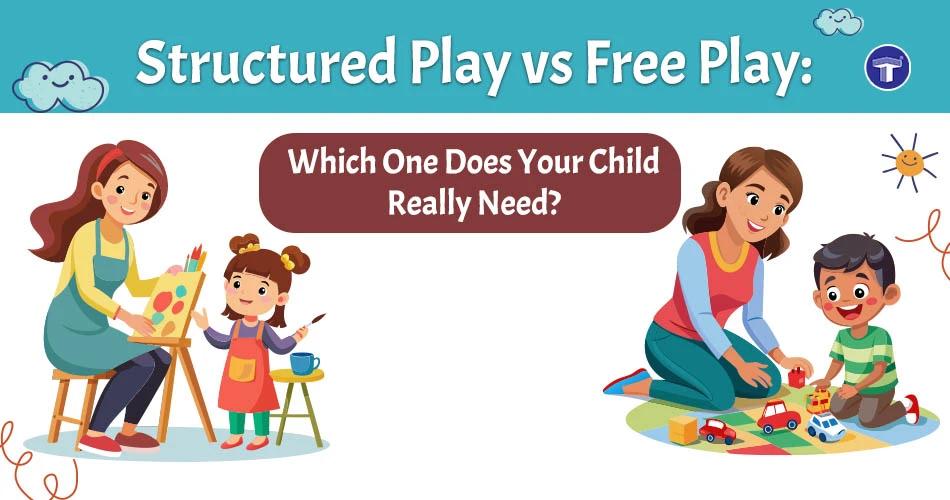
As a parent, you have probably watched your toddler knock over a tower of blocks and laugh like it is the funniest thing ever, then quietly wondered: is this helping them? The debate of structured play vs. free play for children is one many parents think about.
Understanding what each offers is the first step to giving your child the best of both worlds.
What is Structured Play for Kids?
Structured play for kids is an adult-guided activity with clear rules or instructions. It targets a specific skill like counting, colouring, or coordination. It is purposeful, with a clear direction.
Benefits of Structured Play for Children
- Builds cognitive skills like problem-solving and logic
- Strengthens attention span and the ability to follow instructions
- Teaches teamwork and turn-taking
Structured play gives children a safe framework to practise new skills. Well-curated activity-based learning kits make structured play feel enjoyable to kids and not like a chore.
What is Free Play for Kids?
Free play, or child-led play, has no agenda. Your child picks what to do and how. There are no fixed rules or ‘correct’ outcome. Pure imagination at work.
Benefits of Free Play for Child Development
- Boosts creativity and imagination
- Develops emotional regulation and resilience
- Builds social skills through peer interaction
Research from the American Academy of Pediatrics confirms that free play is essential for healthy brain development and stress regulation in young children. It is not just fun; it is science.
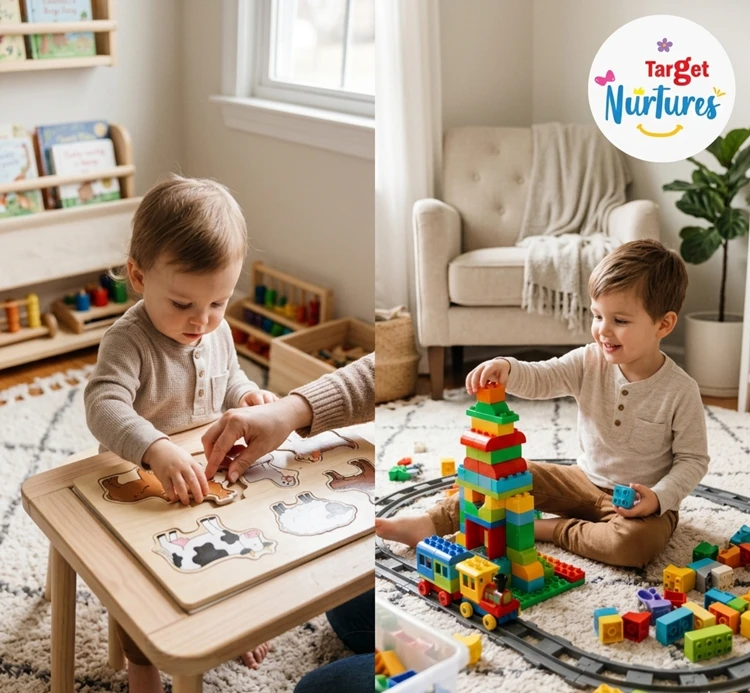
Structured Play vs Free Play: What Your Child Really Needs
How Each Type of Play Shapes Your Child
Both types of play shape your child differently. Neither of these can be termed ‘better.’ A child who only does structured activities may miss out on creativity, whereas one who only plays freely may struggle to build focused skills. Balance is the real secret.
Age Matters: The Right Play Balance at Every Stage
1. Toddlers (Ages 1 to 3)
Free play for toddlers should lead the way. Let them explore different textures and sounds freely. Add short, structured activities like stacking coins.
2. Preschoolers (Ages 3 to 5)
Preschoolers handle a bit more structure. Guided crafts and group play can support their growing attention span. But keep child-led play as a daily staple.
3. Early School-Age Children (Ages 5 to 7)
Games with rules, reading exercises, and team activities work well at this age. Play-based learning at home is just as important when structured academics begin.
Important Links
Conclusion
Structured play vs free play: which does your child really need? Both. When you guide your toddler through a puzzle and step back to let them lead, you are already doing it right.
Trust their curiosity. Support it with the right tools and a healthy mix of play. Every moment, structured or free, is a moment of learning through play that shapes who they become.
Frequently Asked Questions (FAQs)
1. Is free play better than structured play for toddlers?
Ans: Both are valuable. Free play builds creativity and emotional skills, while structured play develops focus and cognitive abilities. A balance of both works best.
2. How much free play does a child need daily?
Ans: Experts suggest at least 60 minutes of active, unstructured free play per day for young children to support healthy development and well-being.
3. Can structured play be fun for toddlers?
Ans: Yes, absolutely! Short, colourful, and age-appropriate activities make structured play feel like fun. Children rarely notice passive learning happening.
4. Does screen time count as free play?
Ans: Not quite. Passive screen time lacks the physical, social, and creative elements that make real free play so beneficial for child development.
5. How do I know if my child has the right play balance?
Ans: Watch their mood and engagement. A well-balanced child is curious and settled. If they seem restless and withdrawn, gently adjust the play mix